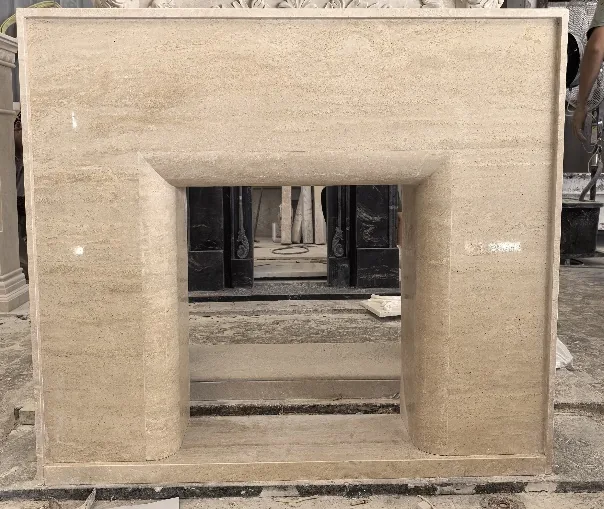
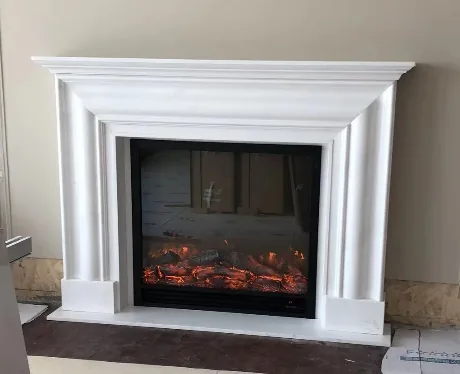
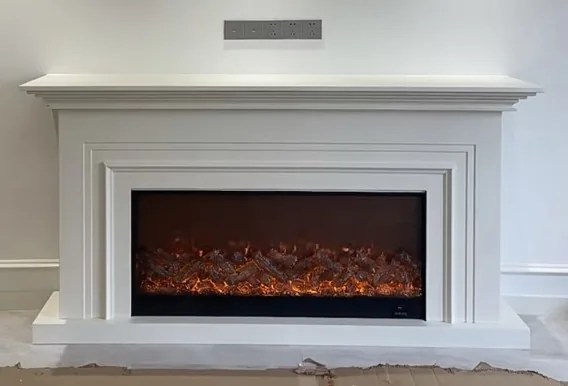
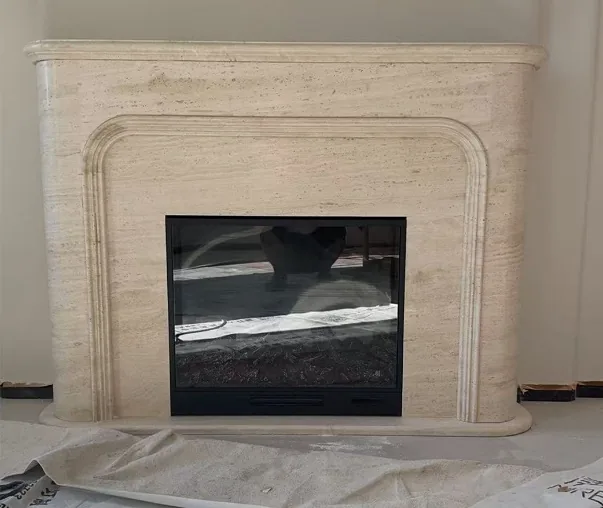
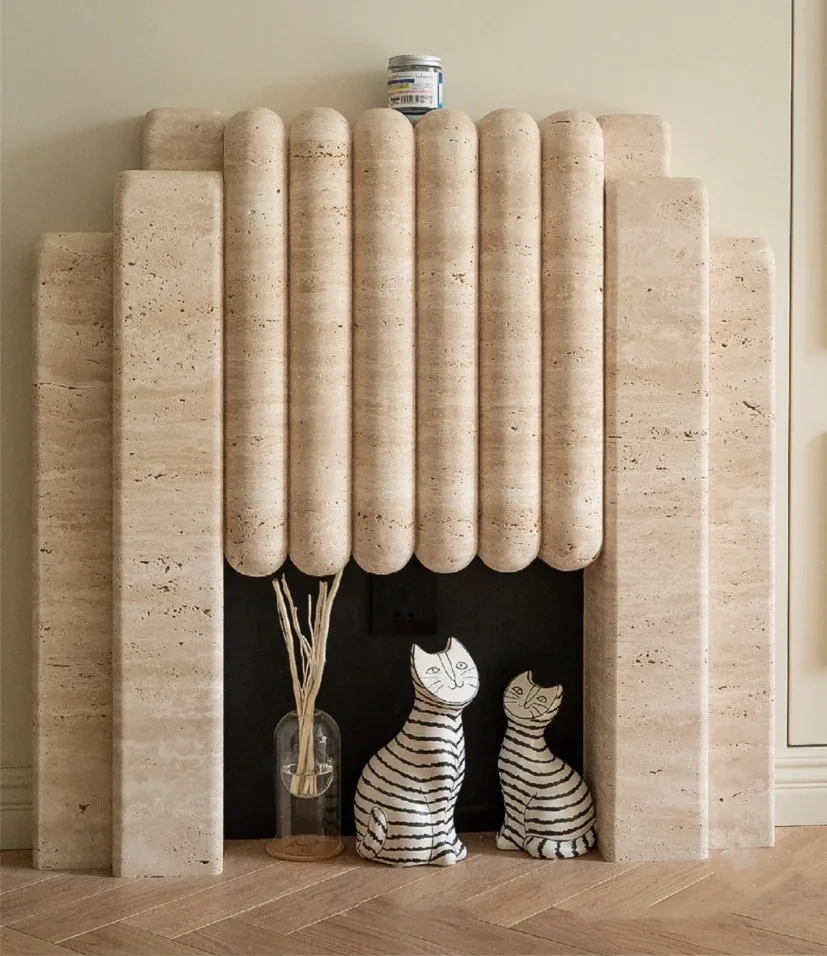
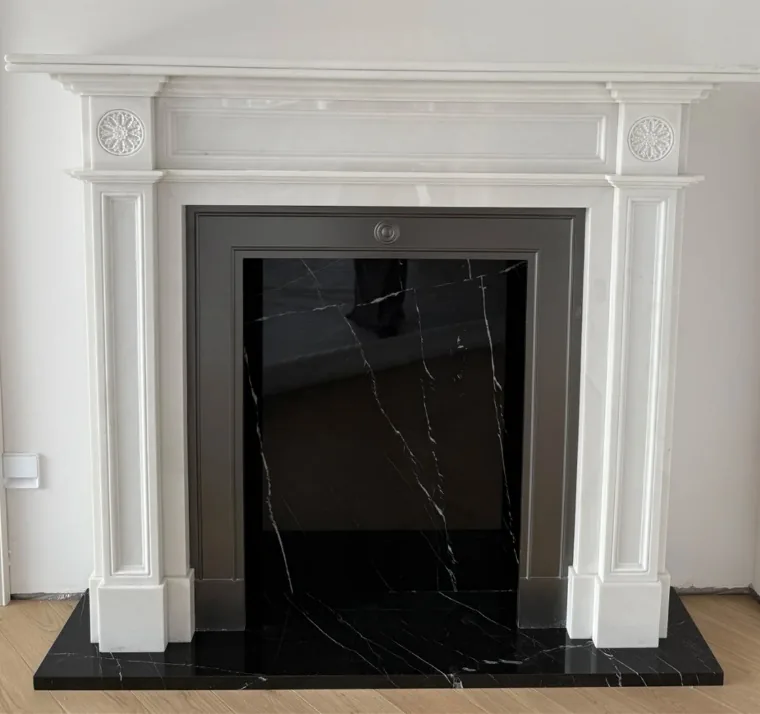
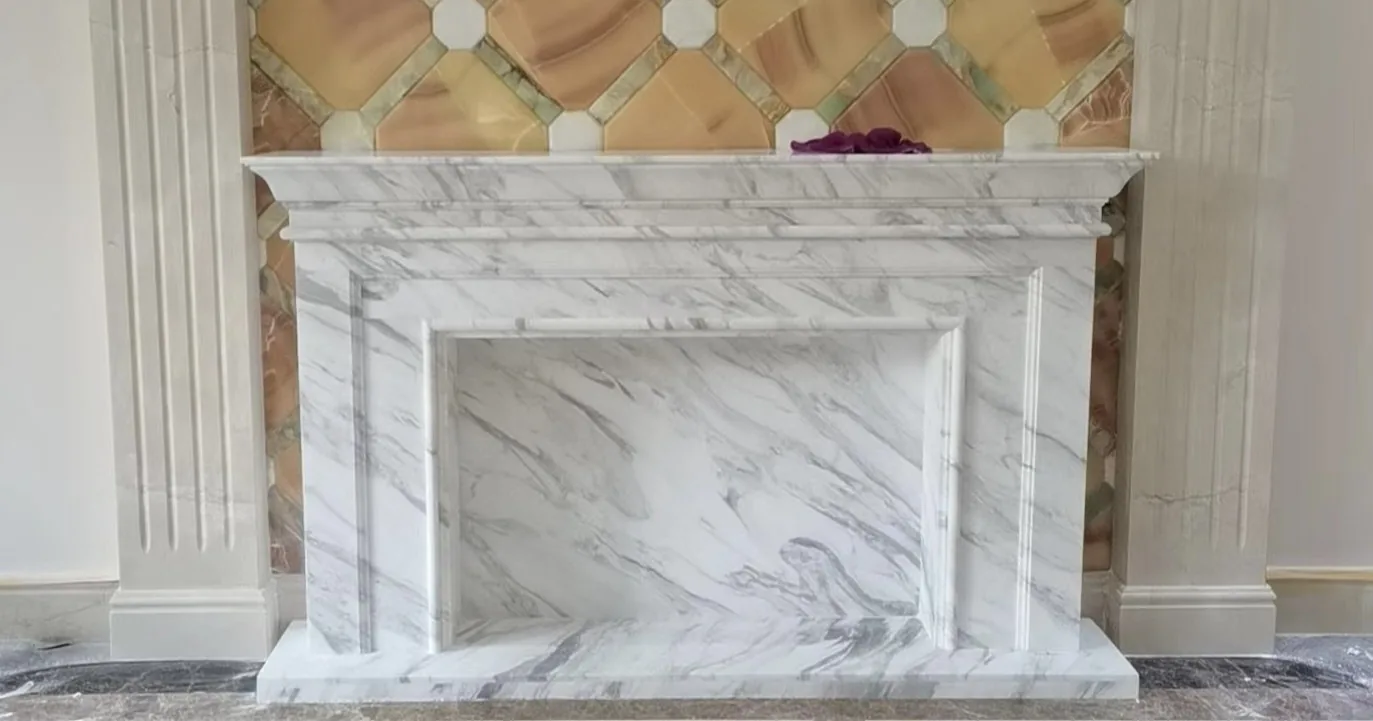
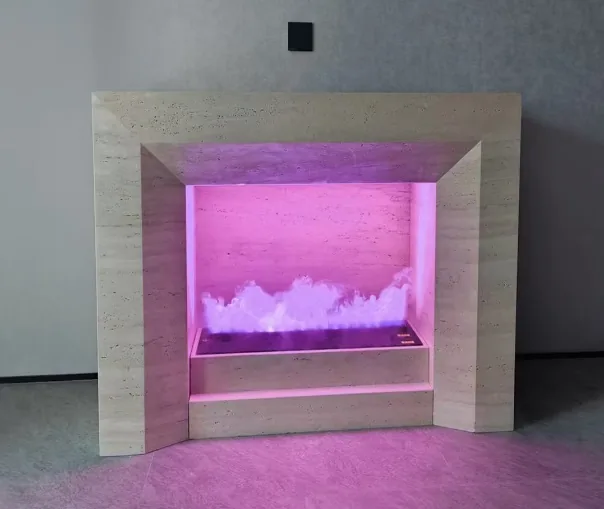
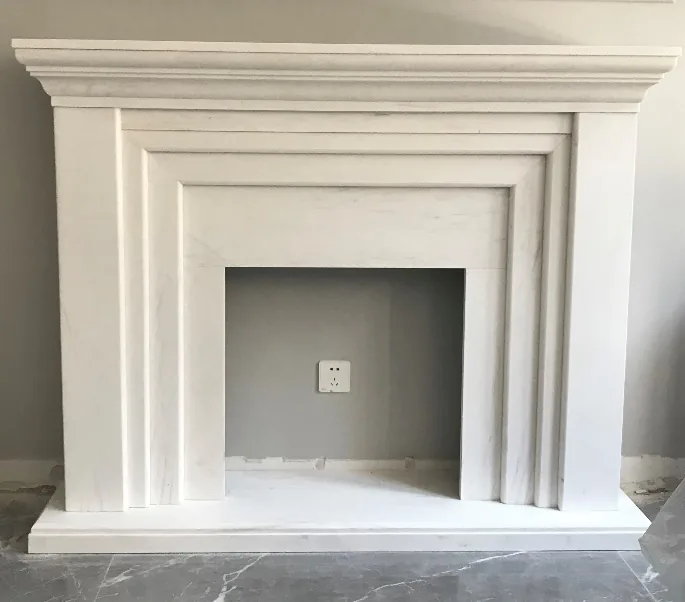
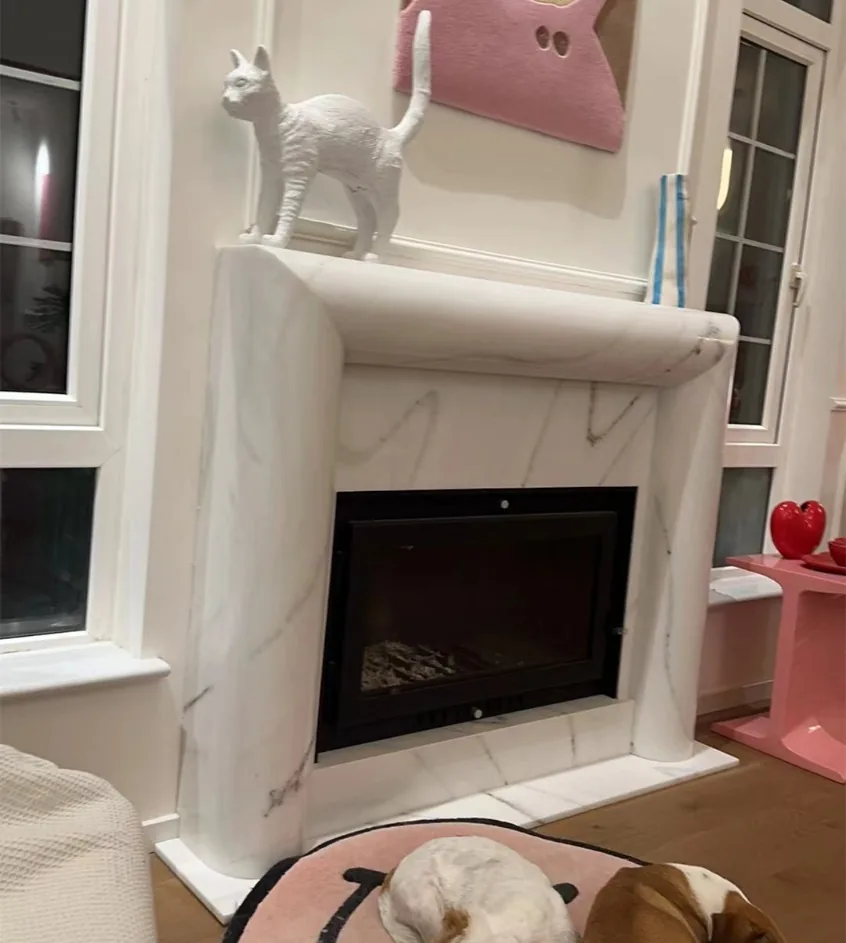
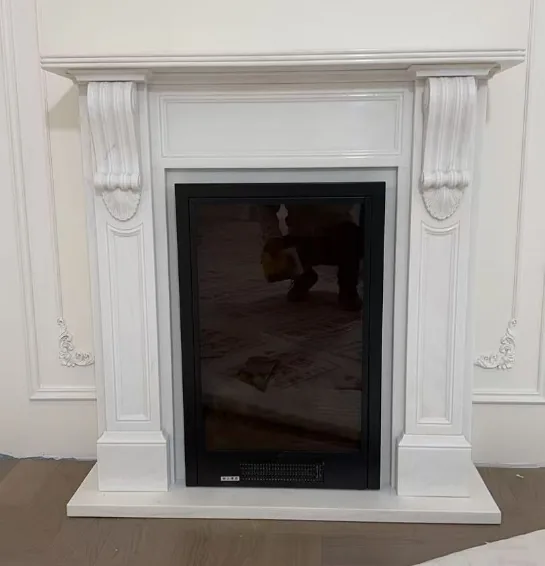
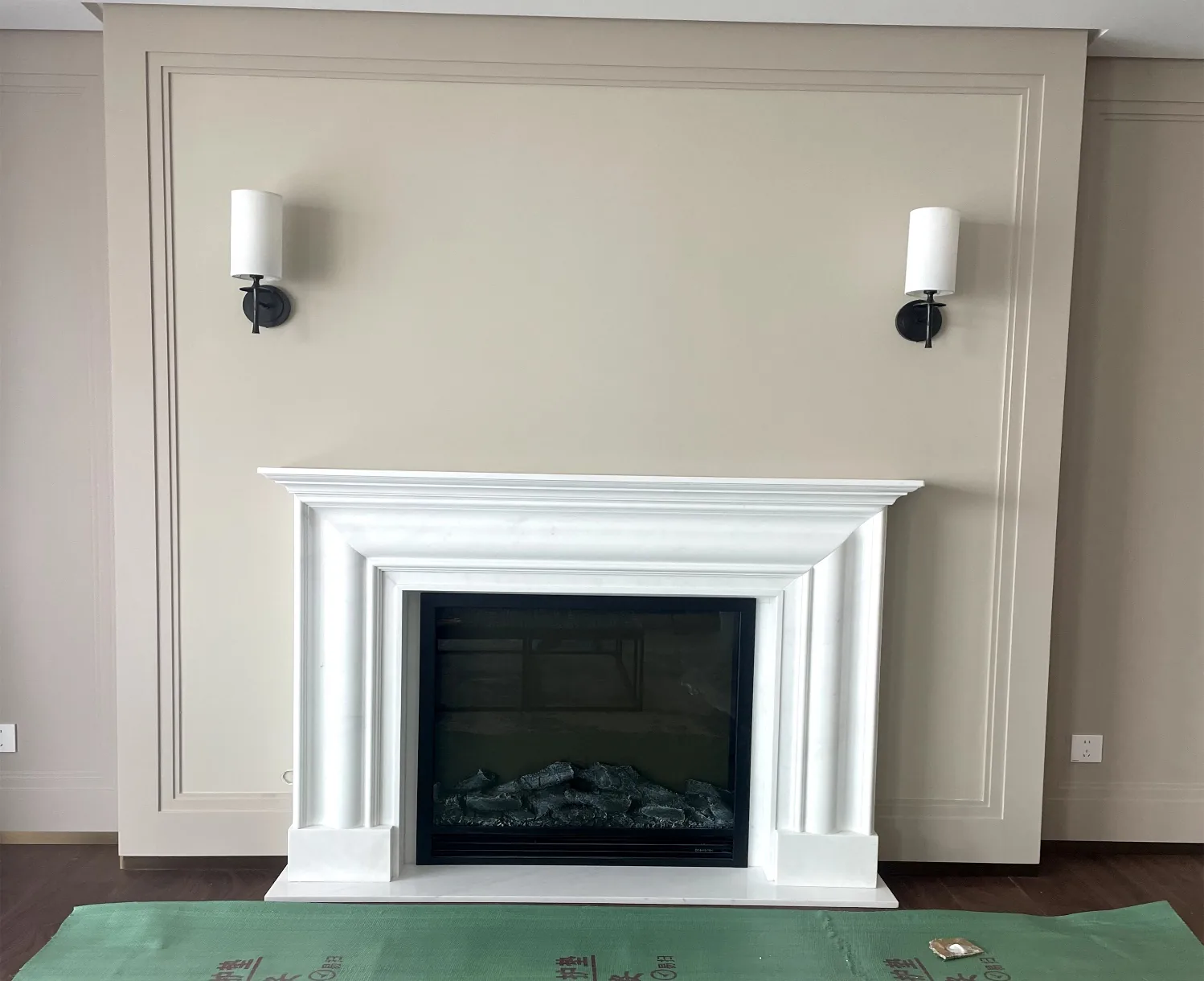
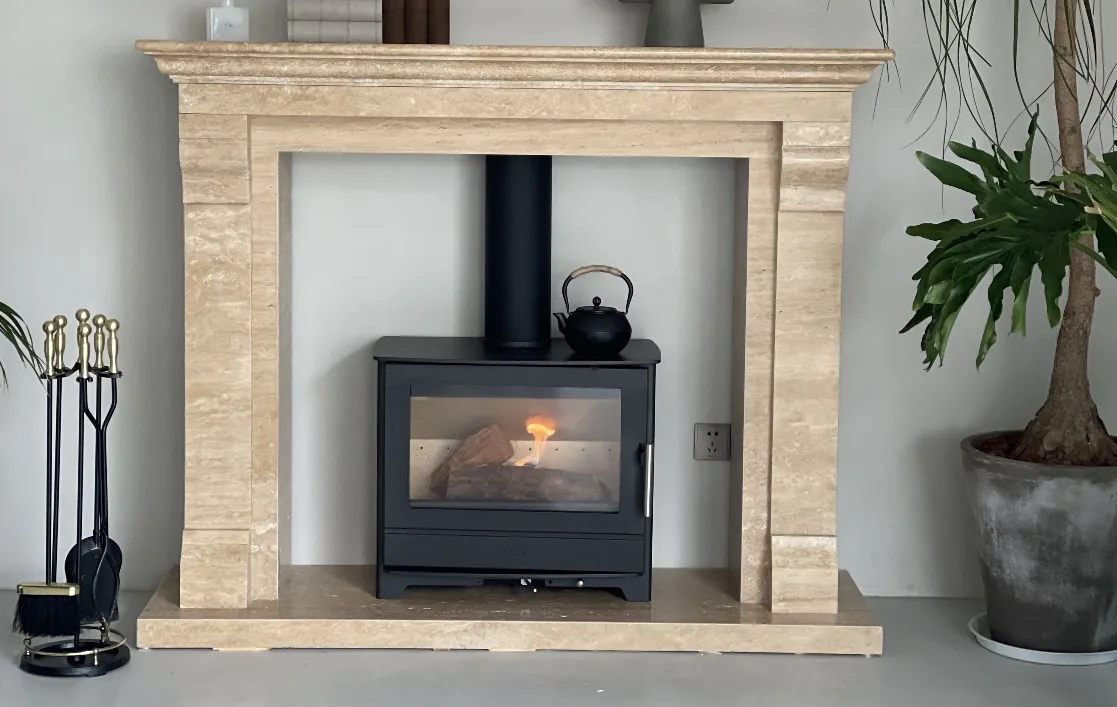
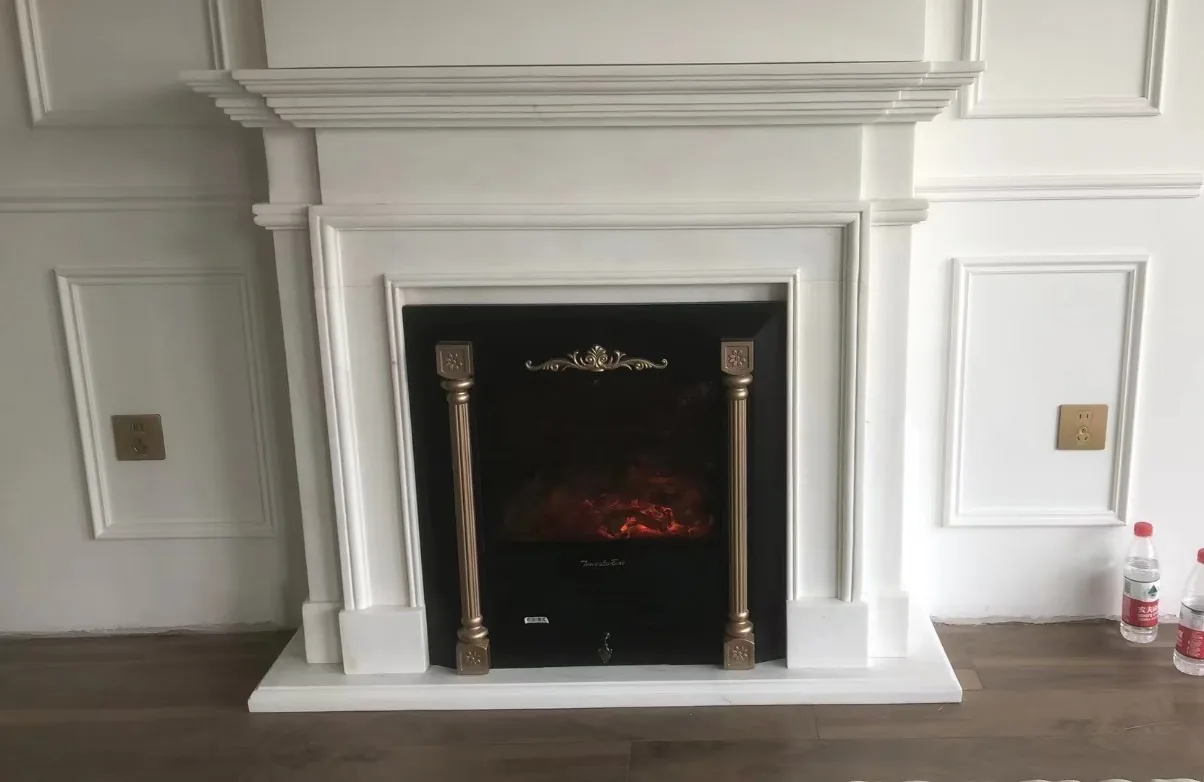
Travertine fireplaces in this collection include 19 visible designs: 9 English/Regency, 6 modern minimal, 3 Art Deco and 1 French/Louis. Straight and stepped mantels dominate, with honed or polished finishes. Minimum order is 1 piece; production takes about 20 days after deposit and approved drawings, followed by about 30 days for shipping.
What does this travertine fireplace collection contain?
This compact group includes straight, stepped and curved forms, with honed and polished surfaces divided almost evenly. It is useful for comparing how the same warm stone changes across room styles.
| Visible feature | Represented in this collection | Planning implication |
|---|---|---|
| Fireplace designs | 19 | The set includes living-room, showroom and site views. |
| Styles and shapes | 9 English/Regency, 6 modern minimal, 3 Art Deco, 1 French/Louis; 9 straight, 8 stepped, 2 curved | The material works with architectural and restrained profiles. |
| Carving and finish | 10 light, 9 none; 12 honed, 7 polished | Most surrounds leave the texture and finish to carry the detail. |
| Overmantel | 5 with an overmantel; 14 without | The extra upper section changes the surround’s apparent height. |
| Minimum order | 1 piece | Custom and batch production are available. |
The right finish needs more than a count. Review the actual stone and confirm how the chosen face will be cleaned and sealed.
Which travertine fireplace profiles are shown?
Straight and stepped options cover 17 of the 19 designs. The remaining pair uses curves, showing that travertine is not limited to a blocky outline.
Modern straight and Art Deco stepped surrounds
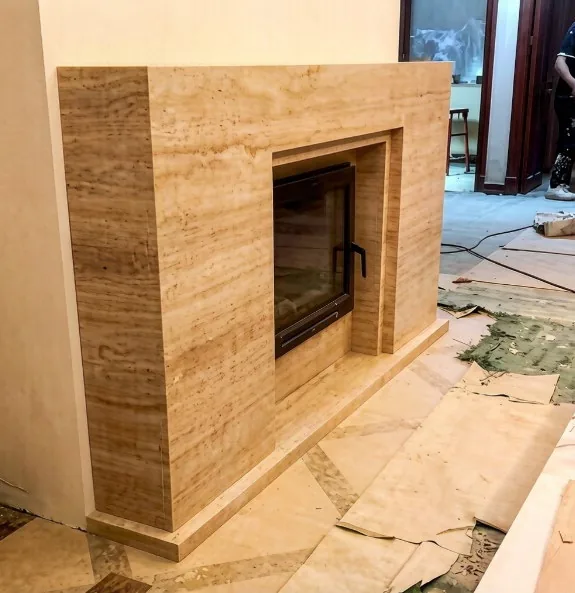
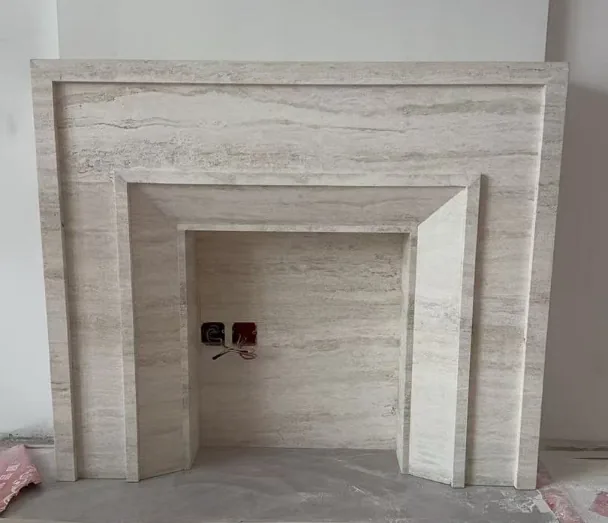
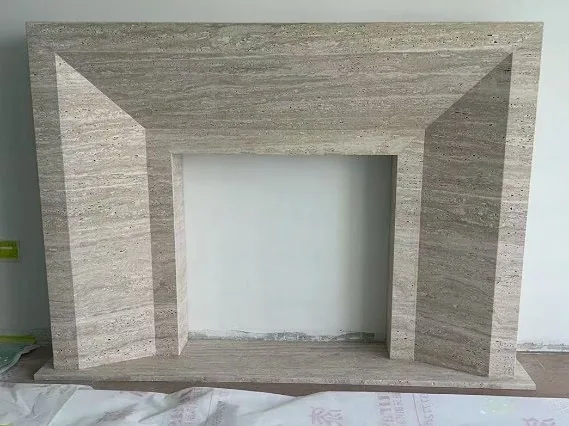
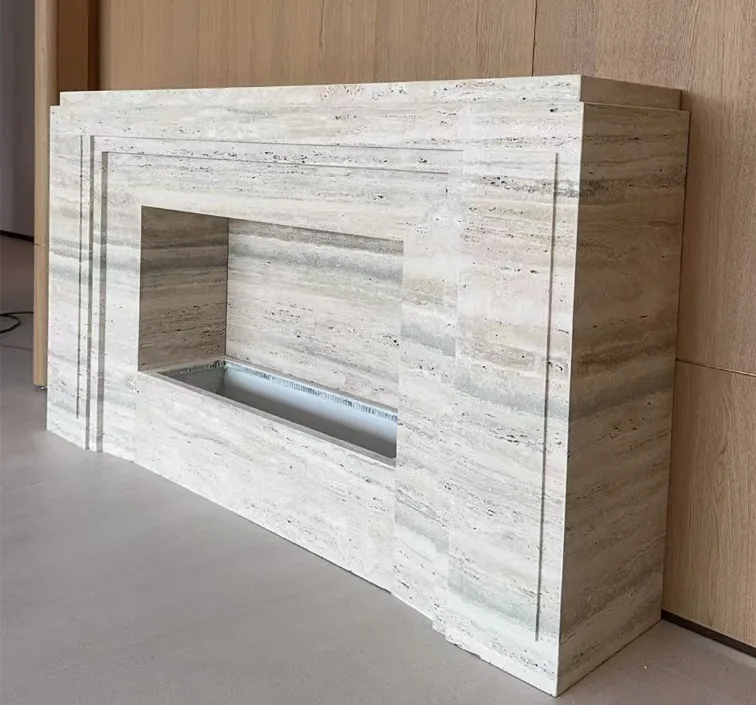
AZ-FP-013 is a straight, uncarved modern surround with a honed finish. AZ-FP-016 shifts to an uncarved Art Deco step profile, also honed.
English/Regency straight surrounds
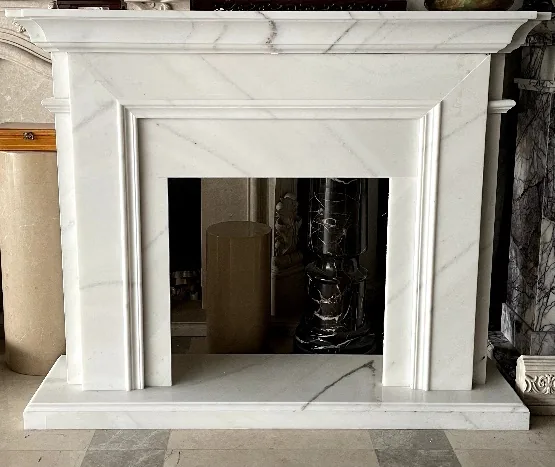
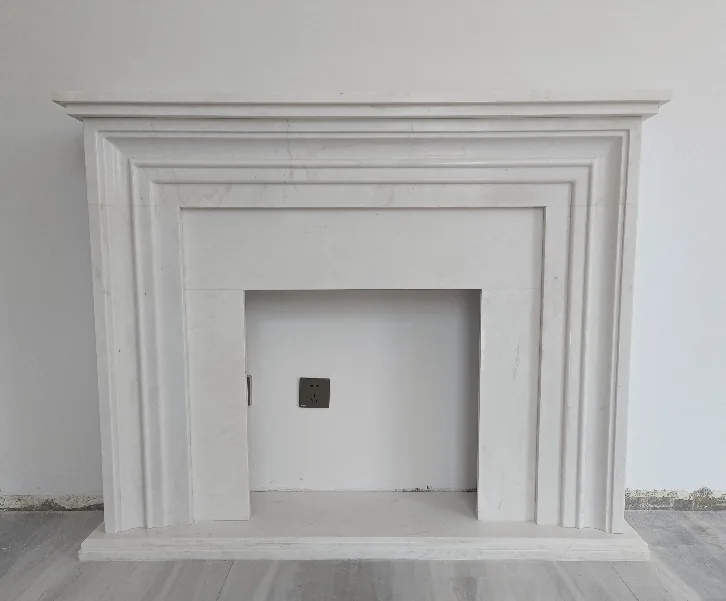
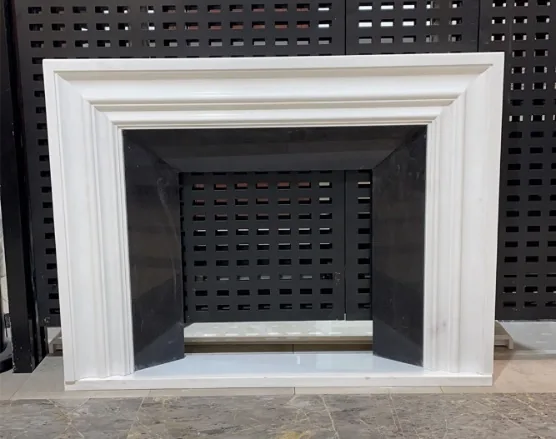
AZ-FP-018 pairs a straight mantel and light carving with a honed finish; the visible firebox is wood-burning. AZ-FP-027 keeps straight lines and light carving but is polished.
Stepped and curved alternatives
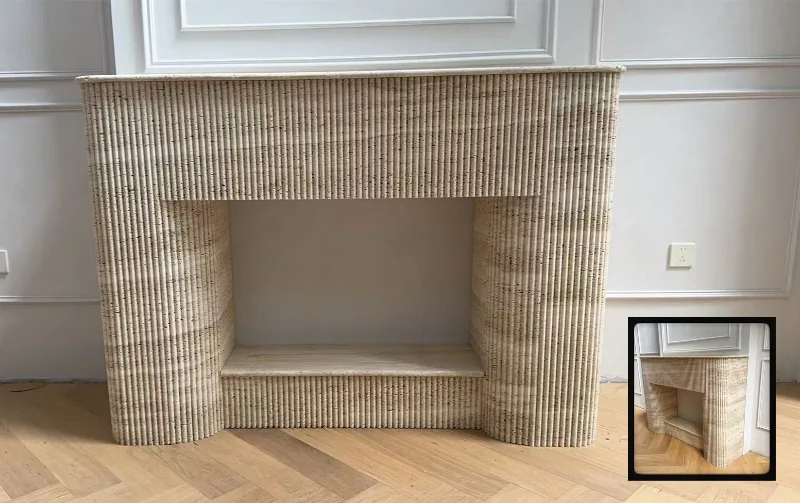
AZ-FP-025 is an English/Regency stepped surround with light carving and polished travertine, shown in several views. AZ-FP-029 uses a stepped shape, light carving and a honed finish.
Explore installed settings in the project gallery or the fireplace references. Room views help judge visual weight; firebox and wall checks remain project-specific.
Why use travertine for a fireplace surround?
Travertine brings a layered, warmer surface than polished white marble. Cream, beige, tan and silver-gray tones are common, though the exact face should be approved from the selected stock or slab.
Filled travertine gives a smoother plane for modern or English/Regency surrounds. Unfilled stone keeps visible voids but needs a practical cleaning routine. Honing emphasizes texture; polishing strengthens the linear pattern and reflected light.
Travertine is visually active without elaborate carving. Straight and stepped profiles still look complete with little ornament, while curved examples provide a richer option.
Which travertine version should you choose?
Choose the surface first: filled and honed for simpler wiping, filled and polished for more reflection, or open when voids matter. Then choose the profile. The 10 lightly carved designs bridge the plain and ornate ends.
Review the actual material where color and movement must coordinate with a floor, wall or nearby stone. Judge the slab or sample under the room’s lighting and check the pit treatment.
Finish and fill affect maintenance, so settle both before approving the drawing.
How is a travertine fireplace quoted?
A quote depends on profile, travertine, fill, finish, opening, wall width and delivery. Curved or carved work differs from straight designs, and a hearth or overmantel changes the scope.
Send fireplace and room photos, opening dimensions and available wall width. We reply within 24 hours. Production takes about 20 days from deposit and approved drawings; logistics takes about 30 days.
The minimum order is 1 piece. Custom, batch and stock-supported options can be discussed in the same quote.
How does travertine compare with marble and engineered stone?
Travertine favors texture, marble favors crisp carving, and engineered stone is manufactured rather than natural.
| Material | Visual character | Main planning point |
|---|---|---|
| Travertine | Layered warm tones and visible voids | Decide whether to fill the face and confirm the sealer and cleaner. |
| White marble | Pale field and crisp carved edges | Watch for stains and acid etching; confirm firebox clearances. |
| Engineered stone | Manufactured colors and patterns | It is not natural stone; verify fireplace suitability with its manufacturer. |
The comparison is not a ranking. A modern room may favor plain travertine; a formal room may benefit from marble’s sharper detail. Resolve firebox and installation requirements for either choice.
How should you care for a travertine fireplace?
Remove loose ash and dust, then wipe with a pH-neutral cleaner intended for natural stone. Avoid acidic cleaners and abrasive pads. On an open face, use a soft brush or vacuum attachment before wiping.
Confirm the sealer and finish maintenance. Sealing reduces staining risk but does not make travertine acid-proof or remove the need for prompt cleaning. Use protective bases under drinks and candles.
After fireplace servicing, check for loose trim, open joints or cracks. The installer should assess fixing or heat-related movement before cosmetic repair.
Frequently asked questions about travertine fireplaces
Should travertine fireplace surrounds be filled or unfilled?
Filled travertine is usually easier to wipe clean because the surface voids are closed, while unfilled travertine keeps more visible texture and requires more attention to dust and ash. The choice should match the room and the finish. Either version needs stone-compatible cleaning and a clear explanation of how it has been sealed. Ask to inspect the actual sample.
Does travertine look too rustic for a formal fireplace?
No. The profile and finish decide the formality more than the stone name does. A straight travertine surround with light carving can suit an English/Regency interior, while a stepped Art Deco shape gives the same material a more geometric look. A honed surface reads softer; polishing increases reflection and contrast. Confirm the sample in room light.
Can a travertine surround be made for a gas or electric firebox?
Yes, provided the final surround keeps the clearances and installation method required by the firebox manufacturer and local code. Send the firebox type with the opening dimensions and wall photos. The installer should confirm the fixing, support and heat exposure before the stone drawing is approved for production. Keep the drawing and instructions together.
How do I clean pits in a travertine fireplace?
Dust the surround often and lift loose ash with a soft brush or vacuum attachment before wiping the face. Use a pH-neutral cleaner made for natural stone and avoid pushing dirt into open pits. Confirm with the supplier whether the piece is filled, how the finish is sealed, and which cleaner is suitable for that exact surface.
Where can the travertine fireplace search continue?
Project inquiry
Request a stone furniture quote
Send dimensions, material direction and quantity for a comparable reply.
Useful details include product type, finished dimensions, quantity and destination.
Who prepared this travertine fireplace guide?
The Amazstone Editorial Team updated this page on 2026-10-28. Design counts and finish information come from the fireplace image descriptions. Confirm filling, sealing and installation against the actual stone and firebox.
Photo references
Explore the stone details
Open any image, add your project details, and continue to the inquiry form.