A stone bench usually has a 430–480 mm (17–19 in) seat height and 400–500 mm (16–20 in) depth; fix height around cushion. A 1,200 × 400 × 30 mm (47.2 × 15.7 × 1.18 in) solid marble seat weighs 38.9 kg (85.7 lb), so support, lifting access and floor protection need planning.
What determines whether a stone bench will be comfortable?
Seat height, cushion thickness, seat depth and the clearance below the front edge determine comfort. Stone is unforgiving, so a small misunderstanding in those dimensions is felt immediately rather than absorbed by upholstery.
| Specification | Useful basis |
|---|---|
| Uncushioned seat height | Commonly 430–480 mm (17–19 in), then adjusted for cushion compression and location |
| Seat depth | Generally 350–500 mm (14–20 in), depending on support and whether the back is used |
| Seat thickness | 30–50 mm (1.18–1.97 in) for many exposed domestic seats; every span needs its own support check |
| Edge | Eased, rounded or chamfered edge reduces a sharp line below the knee |
| Finish and terms | Match surface to exposure; confirm quantity, schedule and stock in a quotation |
Which stone bench position should I specify first?
Start with the position because an end-of-bed bench, dining bench and outdoor seat need different depth, edge and support decisions. A visual reference helps, but the walking route and table height should set the dimensions.
- Travertine dining tables provide a reference for bench top clearance and shared dining width.
- Black marble coffee tables show how a dark stone base changes visual weight in a room.
- Marble plinths and pedestals are relevant when a bench uses a single central base rather than end supports.
- Quartzite material guide explains why a named quartzite slab needs its own testing rather than assumptions from its family name.
What stone bench styles are available to compare?
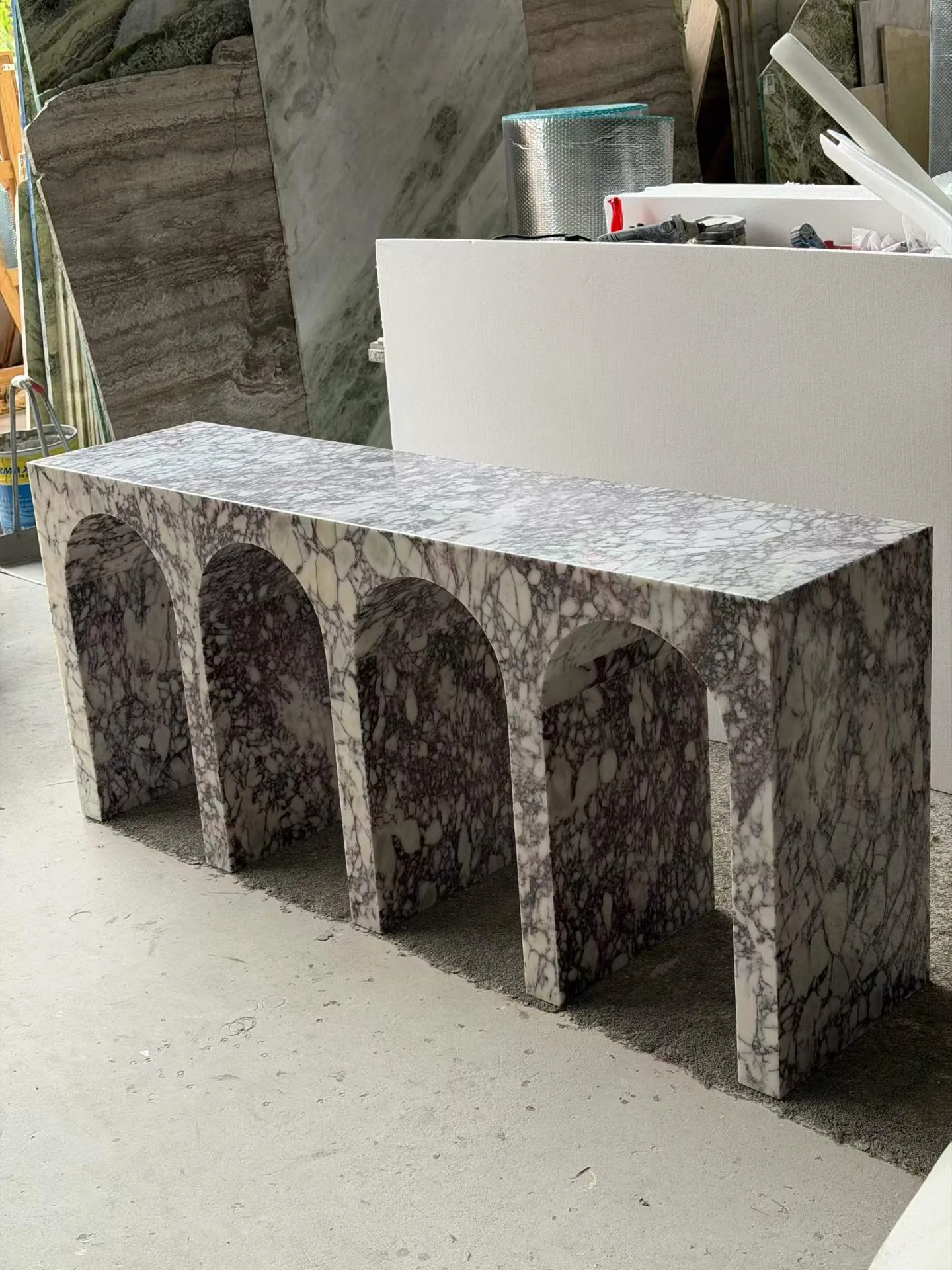
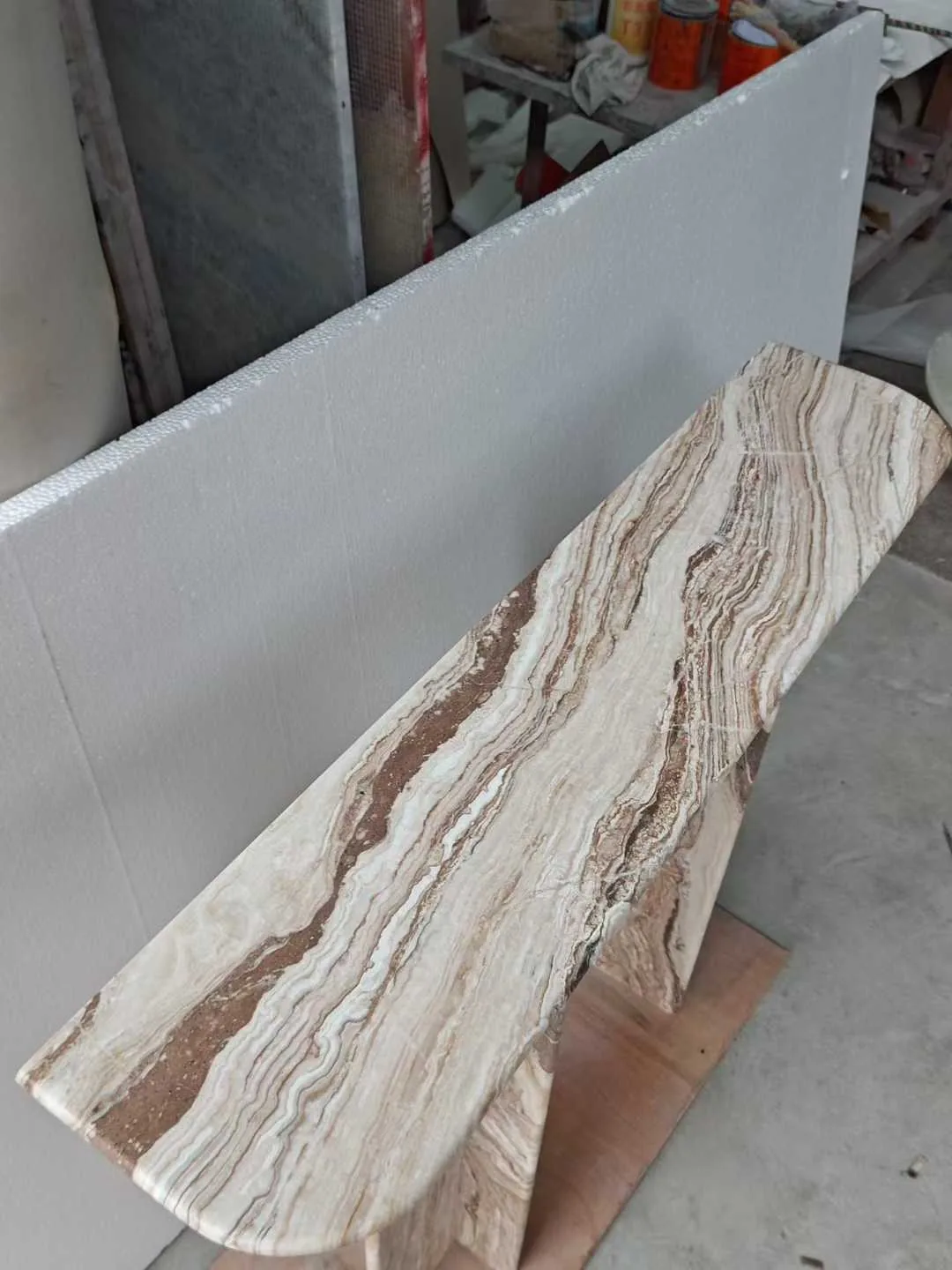
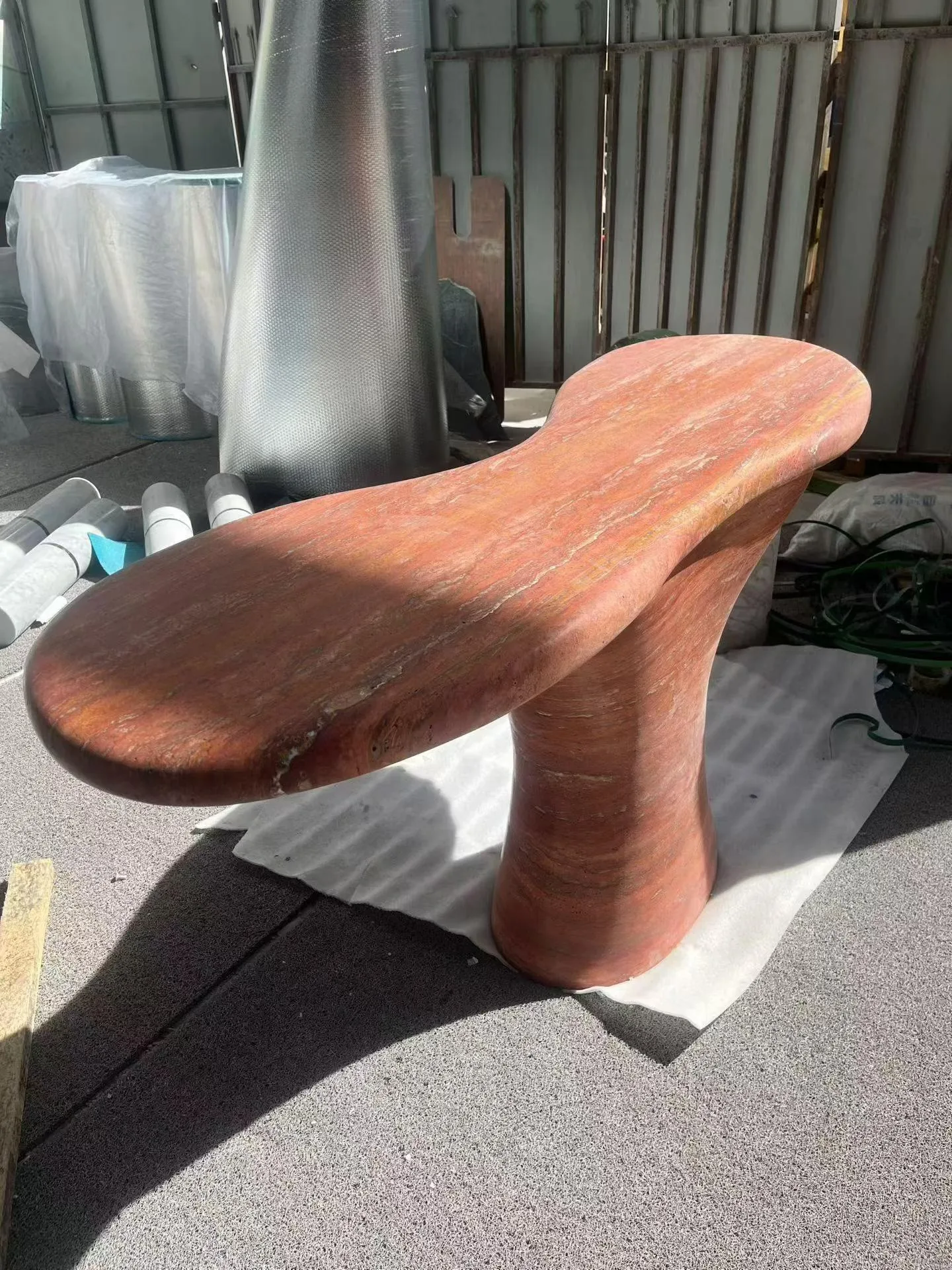
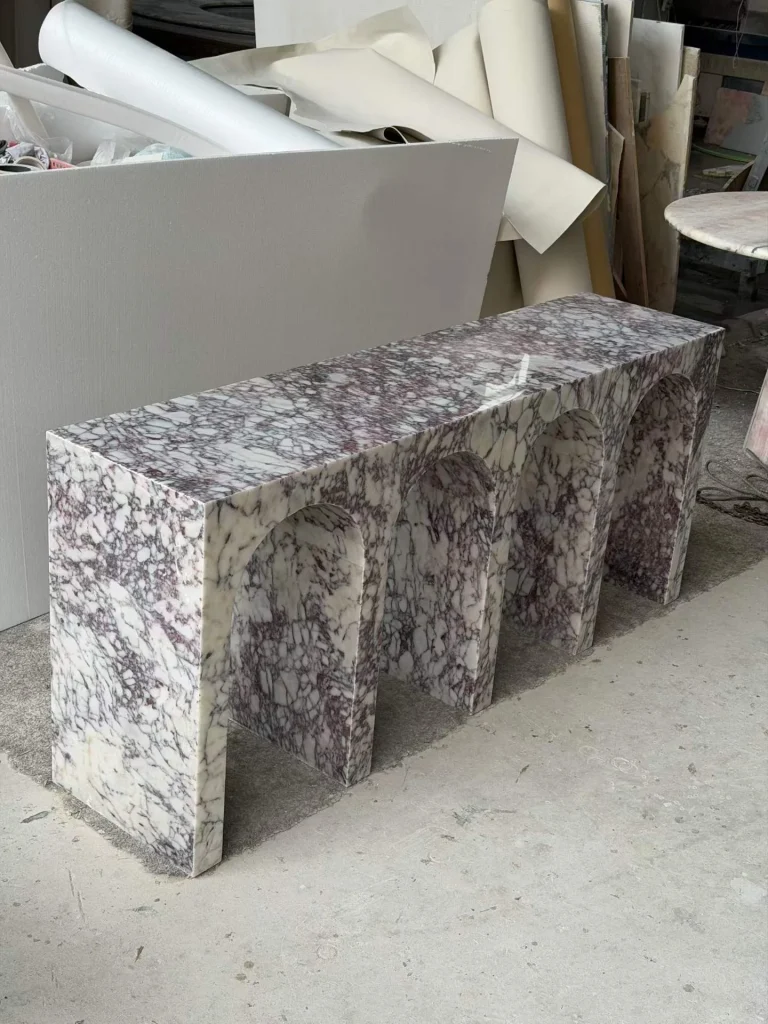
Check base type, thickness, finished seat height and intended cushion before treating a photographed bench as a specification. The benches shown below are collection examples; confirm the final details for your chosen design.
Stock and custom production are available with a minimum order of 1 piece; request this category's product list.
Request product listStone stone benches in our collection
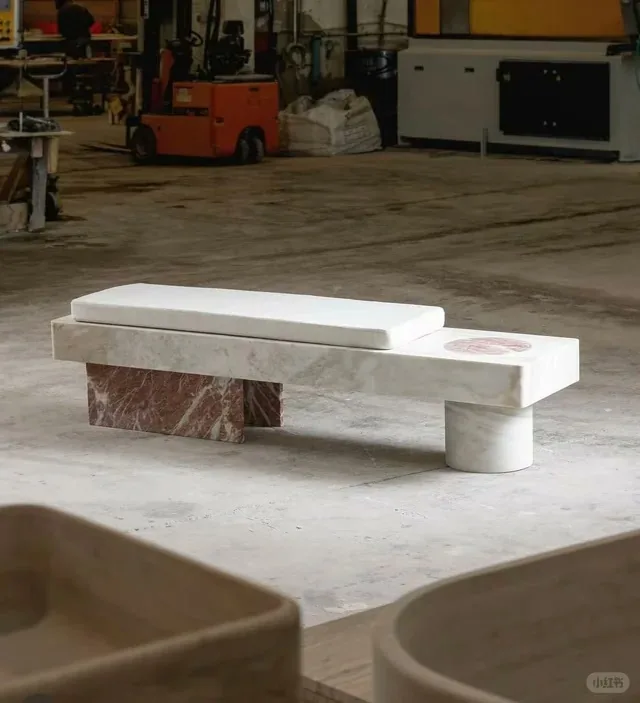
Which stone suits an indoor or outdoor bench?
Marble suits controlled indoor settings, filled travertine suits a moderately textured indoor seat, and quartzite often offers a denser candidate for exposed use, subject to slab testing. Outdoor suitability belongs to the individual stone, finish and drainage condition, not to the family name alone.
| Material | Indoor bench fit | Outdoor condition to resolve |
|---|---|---|
| Marble | Broad colour choice; protect from acids and metal-ring stains | Test absorption and freeze-thaw behaviour before exposure |
| Travertine | Filled honed surfaces reduce pore catching | Drainage and freeze-thaw resistance must be confirmed |
| Quartzite | Use the actual slab’s tested finish and mineral structure | Surface slip and weathering remain project-specific |
| Onyx | Better for a covered feature bench than daily wet use | Not a default outdoor seat without slab-specific testing |
Dark stone shows dust; light stone shows soil and leaf tannin.
What bench dimensions leave a clear path and a stable seat?
A 430–480 mm (17–19 in) seat height with 350–500 mm (14–20 in) depth is a useful starting point. Check length against the room rather than stretching the bench until it touches both walls.
| Use | Planning size before cushion | Critical clearance |
|---|---|---|
| End of a double bed | About the mattress width; 350–450 mm (14–18 in) deep | Keep a walking path beyond the bench |
| Dining bench | Allow roughly 600 mm (24 in) of seating width per person | Clear table apron, knees and chair-end access |
| Entry bench | 900–1,500 mm long × 350–450 mm deep (35–59 × 14–18 in) | Door swing, shoe space and wall protection |
| Outdoor bench | Depth and length set by circulation and shade | Drainage slope, standing water and sun exposure |
These are planning conventions, not structural approvals.
How should a heavy stone bench be supported?
Use a support plan that carries the seat continuously along the main bearing lines and resists end-to-end tipping. Two narrow pedestals under a long slab concentrate stress; a full plinth adds weight but spreads contact with the floor.
| Configuration | What the drawing must show |
|---|---|
| Two end supports | Bearing width, fixing method and maximum unsupported span |
| Central plinth | Footprint, anti-tip stability and toe clearance |
| Metal frame | Isolation pads, concealed fixings and corrosion protection |
| Outdoor base | Raised bearing points, drainage path and non-staining fixings |
Ask for finished seat weight before arranging delivery.
How do you maintain a stone bench through daily use?
Use coasters under drinks and wipe spills promptly; the seat sees more direct skin, clothing and floor grit than many stone tables. Clean with pH-neutral stone soap and inspect the edge and base fixings periodically.
- Lift the bench when repositioning it; dragging can chip the base and scratch flooring.
- Use outdoor covers only after the stone has dried, and avoid trapping damp soil against the base.
- Recheck the finish at the seat edge, where abrasion is most visible.
See the marble care guide for etching and resealing, or the travertine care guide where appropriate.
What should a custom bench quotation confirm?
The quotation should confirm the location, seat height, cushion allowance, depth, full base layout and whether the stone has been approved for exposure. Price and scheduling should use those same variables.
| Item | Required answer |
|---|---|
| Order quantity | 1 piece |
| Production timing | About 20 days production + about 30 days shipping; production starts after deposit receipt and drawing confirmation |
| Budget | Stone-bench quote on request through Contact |
| Availability | Yes, stock is available. Sizes and quantities are not published. |
Send a plan showing door swing, table or bed position, walking path and outdoor drainage.
What is easy to overlook when specifying a stone bench?
The most common omissions are cushion height, the base footprint and how the bench will be carried into place. Resolving them early prevents a comfortable drawing from becoming an uncomfortable delivery.
What height should a stone bench be?
A stone bench without a cushion commonly falls between 430 and 480 mm (17–19 in) at the seat, but the useful height depends on the room and the people using it. A bench at the end of a bed should sit below the mattress edge; a dining bench should be checked against the table apron and selected cushion. Prototype with blocks before fabrication.
Can a marble bench stay outdoors year-round?
Not every marble is suitable for year-round outdoor use. Rain, freeze-thaw cycles, salts and standing water can attack a particular slab even when a broad stone family has performed outdoors elsewhere. Require an absorption and freeze-thaw assessment for the supplied stone, raise the base above ponding water, and do not assume an indoor finish or sealer will remain effective outside.
How much should a stone bench overhang its supports?
Keep the seat overhang modest and have the support layout reviewed for the exact thickness and span; there is no safe universal overhang that applies to every marble slab. Large cantilevers increase stress at the fixing and make the bench easier to tip. Show the full base footprint in the drawing, including any recess that allows toes to clear the seat.
Where can I find the next relevant stone reference?
Move to a material page when you need to check colour variation, or to a size and construction guide when the bench position is fixed. These destinations use the existing published URL map.
Project inquiry
Request a stone furniture quote
Send dimensions, material direction and quantity for a comparable reply.
Useful details include product type, finished dimensions, quantity and destination.
Where do these stone bench dimensions come from?
The dimensions combine furniture-planning conventions, calculated solid-stone weight and public material references. They are not a structural guarantee: project drawings and slab-specific testing are still needed.
- A 1,200 × 400 × 30 mm (47.2 × 15.7 × 1.18 in) solid seat at 2.7 t/m³ (168.6 lb/ft³) calculates to 38.9 kg (85.7 lb), before supports. Stone weight method
- The 430–480 mm (17–19 in) seat-height range is a design starting point, not a universal standard. Bench reference
- Natural Stone Institute care guidance supports prompt cleaning and products suited to the stone finish. Stone care
- Marble reference density is commonly 2.5–2.8 t/m³ (156.1–174.8 lb/ft³); finished weight and outdoor performance vary by slab. Marble reference
Photo references
Explore the stone details
Open any image, add your project details, and continue to the inquiry form.