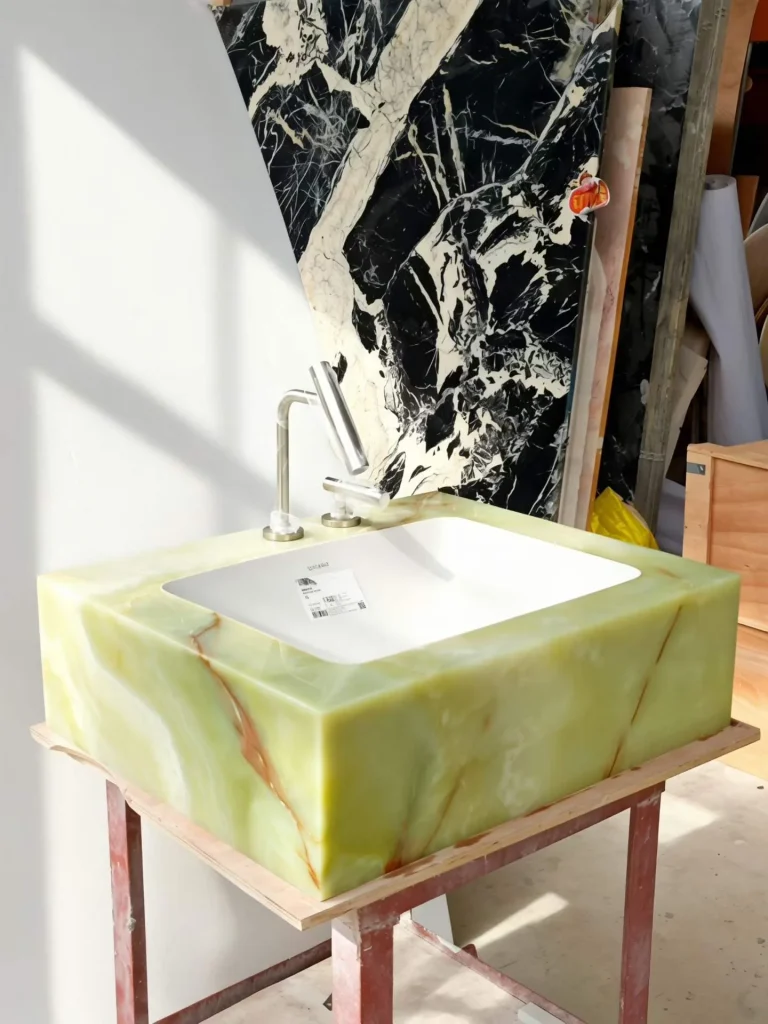
A 420–480 mm (17–19 in) stone vessel basin usually adds 100–150 mm (4–6 in) above the counter, so set vanity height from the finished rim, not the cabinet alone. Marble and travertine suit sealed bathroom tops; quartzite is generally more scratch resistant, while onyx needs crack, translucency and drain checks.
What details make a stone vessel sink fit the vanity?
Footprint, finished rim height, drain and faucet reach matter more than listed width. A vessel bowl is visible from every side, so its base and edge also belong in the specification.
| Decision | Specification to confirm |
|---|---|
| Bowl size | Outer width about 400–500 mm (16–20 in); check inside depth and slope. |
| Finished height | Counter plus bowl; a 100–150 mm (4–6 in) bowl raises the rim by that amount. |
| Stone and finish | Marble, travertine, onyx, quartzite or limestone; honed, polished or carved. |
| Drain and faucet | Before approval, ask for an installation drawing showing the drain hole, overflow, counter opening, faucet reach and mounting method for the selected bowl, then confirm the chosen faucet and plumbing fit against it. |
| Commercial terms | 1 piece minimum. About 20 days production plus about 30 days shipping, starting after deposit receipt and drawing confirmation. Pricing depends on stone grade, basin size and quantity; send dimensions and a stone photo for a quote. Stock is available; sizes and quantities are not published. |
Use the stone-weight calculator only for solid components; request a scale weight for a hollow finished bowl.
Which vessel shape gives the bathroom the intended outline?
Round bowls have no preferred front, oval bowls extend along the counter and rectangles relate to a straight edge.
Round stone vessel bowls
A round bowl gives an even rim. Check its diameter against the backsplash and tap position.
Oval stone vessel bowls
An oval suits a narrow vanity. Confirm the drain sits at the low point and leaves faucet room.
Rectangular and carved bowls
Squared bowls create stronger geometry; carved rims are more sculptural. Both need a stable base and template.
Stock and custom production are available with a minimum order of 1 piece; request this category's product list.
Request product listMore stone stone sinks in selected finishes
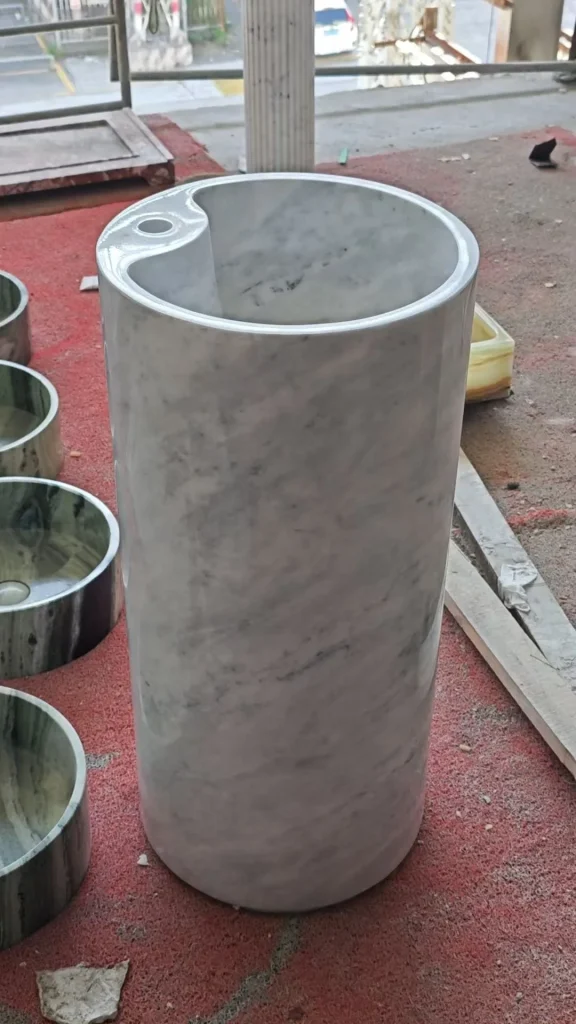
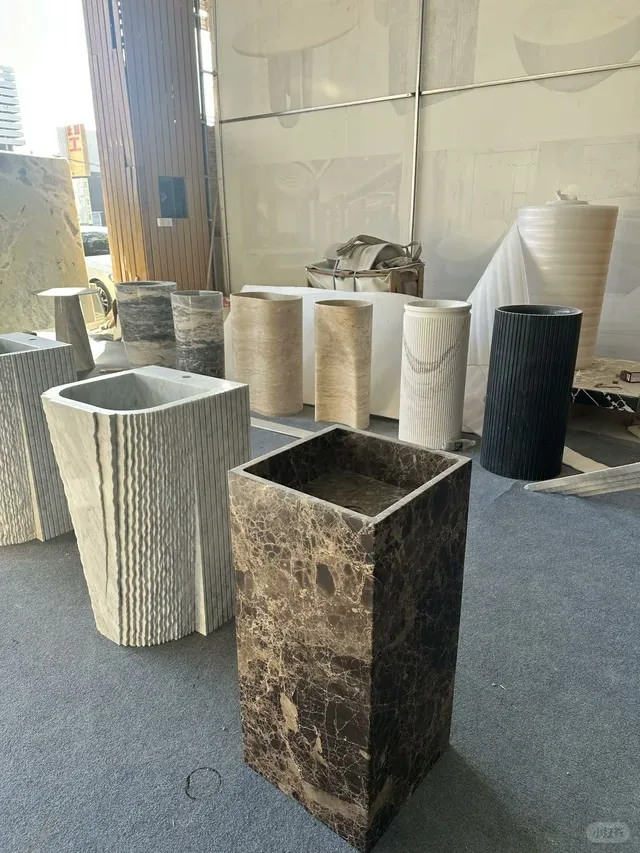
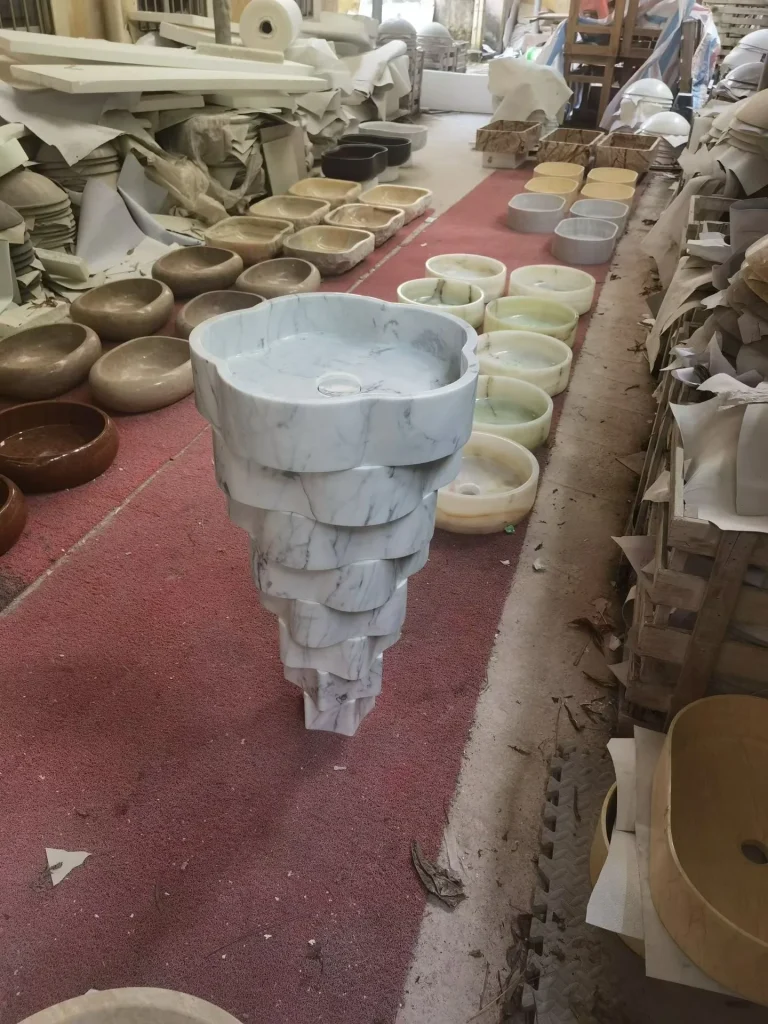
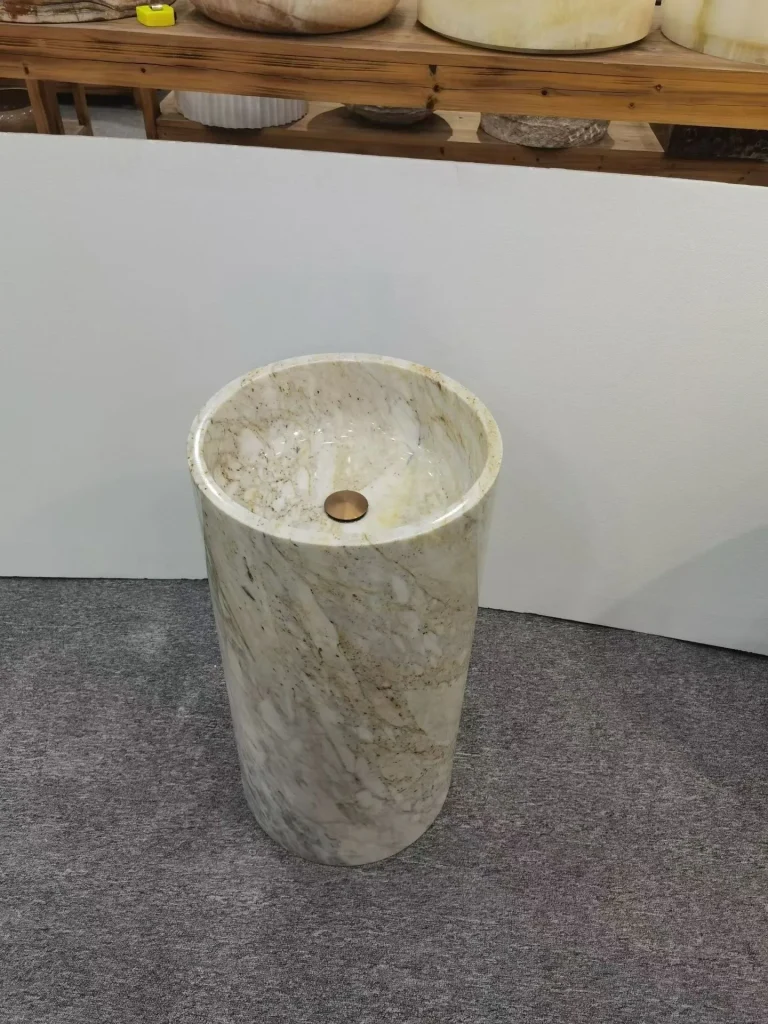
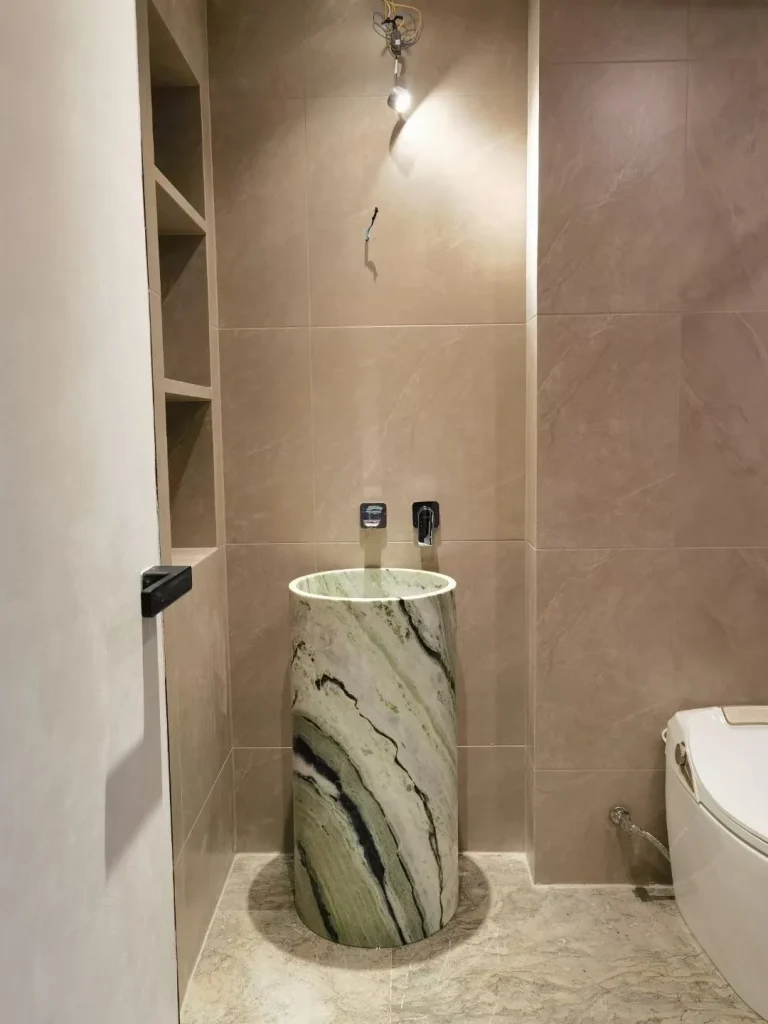
Where does a stone vessel sink work best?
Stone vessel sinks suit powder rooms, guest baths and primary vanities where material and form can be seen.
| Placement | Fit | Condition |
|---|---|---|
| Powder room | Strong fit. | Check reach and splash. |
| Primary vanity | Good with care. | Seal; wipe residue. |
| Children’s bathroom | Possible. | Check reach and rim edges. |
| Tight backsplash | Plan carefully. | Leave space for spout and handle. |
Which stone and rim finish should the vessel use?
Marble and onyx emphasize vein movement; travertine shows pits and quartzite generally resists scratching better.
| Material direction | Look to compare | Wet-area condition |
|---|---|---|
| Marble vessel | Flowing or broken veins. | Seal; avoid acids. |
| Travertine vessel | Pits and earth tones. | Choose filled or unfilled. |
| Onyx vessel | Bands; possible translucency. | Check cracks and backing. |
| Quartzite vessel | Crystalline movement. | Approve the finish. |
Test translucent onyx with water and lighting together.
What changes the cost of a stone vessel sink?
Stone, carving waste, wall thickness, rim shape and drain fabrication drive cost.
Request scale weight, drain type, overflow, mounting parts and packing in one quotation. Compare the pedestal sink format when floor-standing support is required.
How do stone vessel sink materials compare in a bathroom?
Marble, travertine, onyx and limestone need acid-aware care; quartzite contains quartz and generally resists scratching better. Natural stone remains vulnerable to chips and poor installation.
| Stone | Visual character | Care condition | Density band |
|---|---|---|---|
| Marble | Veined forms. | Seal; blot acids. | 2.5–2.8 t/m³ (156–175 lb/ft³) |
| Travertine | Pits and bands. | Fill and seal. | 2.2–2.7 t/m³ (137–169 lb/ft³) |
| Onyx | Bands; possible translucency. | Check cracks and backing. | 2.4–2.7 t/m³ (150–169 lb/ft³) |
| Quartzite | Crystalline movement. | Approve finish and slab. | 2.6–2.9 t/m³ (162–181 lb/ft³) |
How do you keep a stone vessel sink clean?
Rinse toothpaste, soap and hard water before they dry; use pH-neutral stone cleaner and a soft cloth.
Dry the rim and outer face after cleaning. The Natural Stone Institute’s care guidance covers natural-stone bathroom fixtures.
Stone vessel-sink questions
How is a stone vessel sink supported on a vanity?
A stone vessel bowl sits on top of the counter and is normally secured through the drain opening, so the counter needs a clean opening, a stable rim and a compatible drain assembly. Confirm the bowl footprint, gasket and fixing method on the installation drawing before making the cutout.
What faucet height does a stone vessel sink need?
The spout must clear the bowl rim and direct water into the basin interior rather than against its back edge. Plan the finished rim height, spout projection and handle position together; a bowl that adds 100–150 mm (4–6 in) can require a taller or better-reach faucet than a low-profile countertop basin.
Can a stone vessel sink use an overflow drain?
Only if the bowl is made with an overflow channel and the drain matches it. Many vessel bowls have no overflow, so the visible drain and rough-in must be confirmed before purchase. Do not drill an unapproved hole into finished natural stone; it can weaken the bowl or pass through a repaired area.
Which sink and vanity pages should you compare next?
Use the sink hub for both formats, vanity pages for support and material pages for stone behavior.
Project inquiry
Request a stone furniture quote
Send dimensions, material direction and quantity for a comparable reply.
Useful details include product type, finished dimensions, quantity and destination.
Sources and review history
- Marble is metamorphosed limestone; carbonate chemistry supports acid-aware care.
- Density comparisons use the 2.1–2.9 t/m³ (131–181 lb/ft³) bands for the listed stone families; bowl weight must be measured separately.
- The Natural Stone Institute’s care guidance supports pH-neutral cleaning; ASTM C503 covers marble dimension stone.