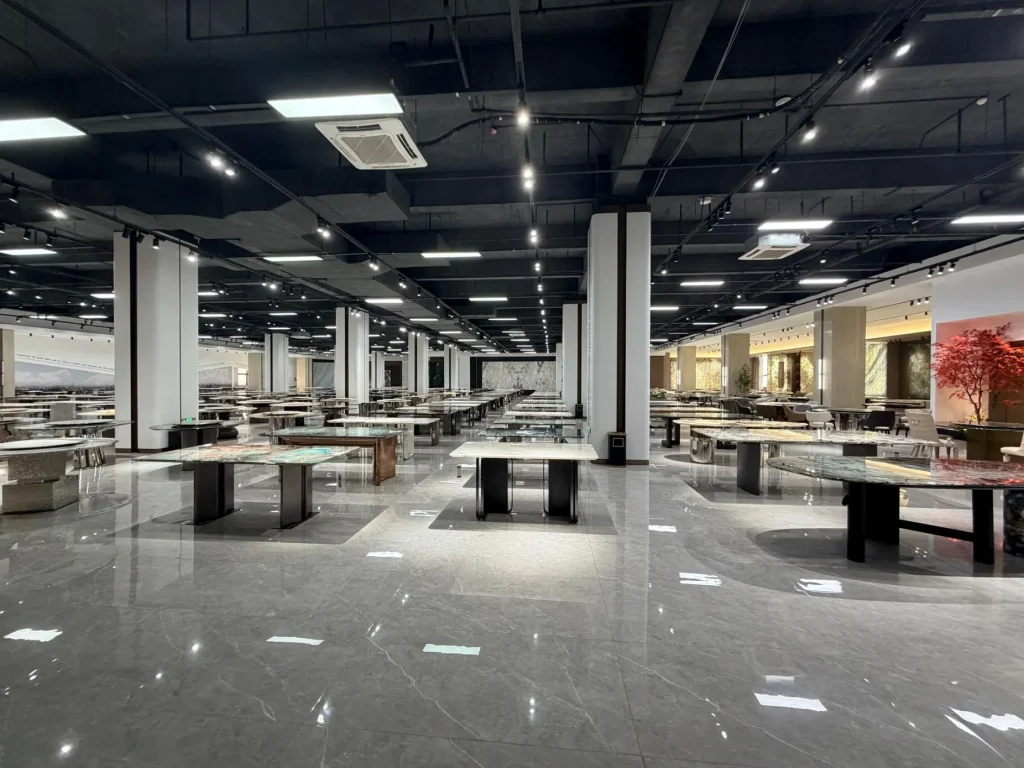
A 1,800 × 900 mm (71 × 35 in) table is a useful six-seat starting point when each diner has roughly 600 mm (24 in) of edge. A 20 mm (0.79 in) marble top at 2.7 t/m³ (168.6 lb/ft³) weighs about 87.5 kg (193 lb), before the base and fixing.
What dining-table sizes can I plan for?
Amazstone’s dining-table designs do not include a standard length, width and height. Set the size on a measured drawing. The planning values below come from furniture conventions; commercial terms require an approved quotation.
| Detail | Planning answer | What to confirm |
|---|---|---|
| Available product dimensions | Not provided for dining-table designs | Use a measured drawing, not an assumed size |
| Common finished height | 720–760 mm (28–30 in) | Check seat height and knee clearance |
| Six-diner reference | 1,800 mm (71 in) long rectangle | Verify 600 mm (24 in) per diner and chair widths |
| Eight-diner reference | 2,400 mm (94 in) long rectangle | Check room, serving access and slab span |
| Material families | Marble, travertine, onyx and quartzite may be assessed | Approve the slab, finish and test data |
| Minimum order | 1 piece | Approved commercial terms |
| Production timing | About 20 days production + about 30 days shipping; production starts after deposit receipt and drawing confirmation | Deposit receipt and drawing approval |
| Price basis | Dining-table quote on request through Contact | Dimensions, stone grade and quantity |
| Current stock | Yes, stock is available. | Sizes and quantities are not published |
Which dining-table direction should come first?
Begin with the room plan rather than a stone sample. The table needs a route for people and chairs, safe service space and a delivery path wide enough for the top. Then choose a collection that addresses shape, material or a replacement-top requirement.
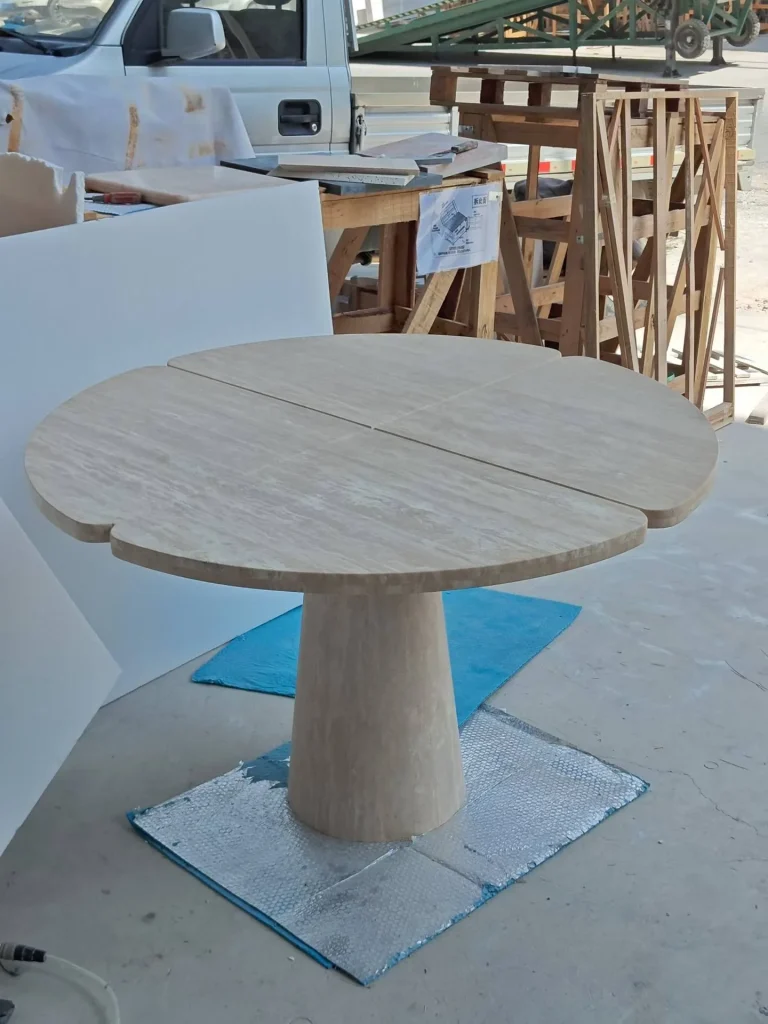
- Travertine dining tables for a filled, linear surface.
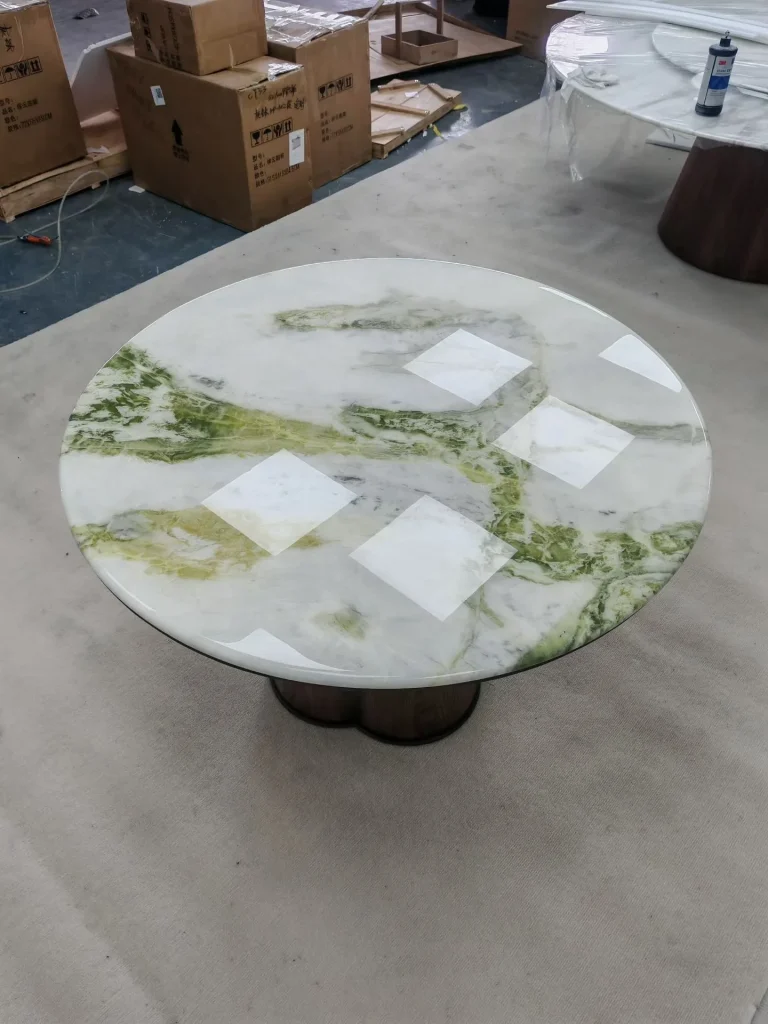
- Round marble dining tables for conversation and a route around the edge.
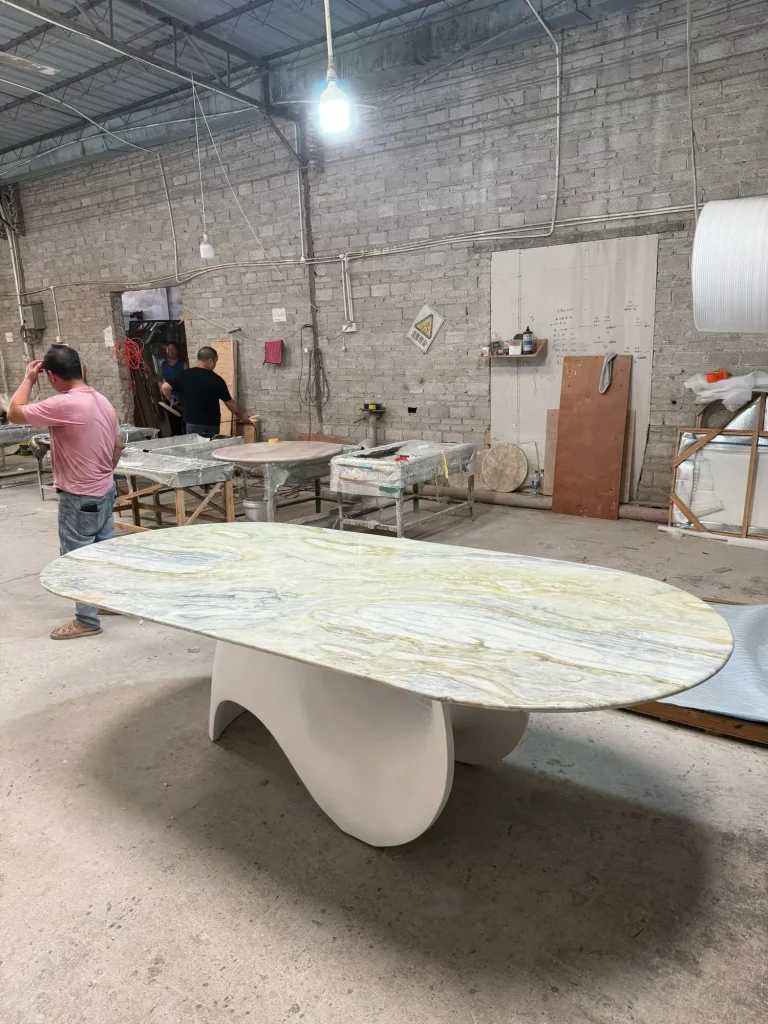
- Oval marble dining tables when rectangular corners are undesirable.
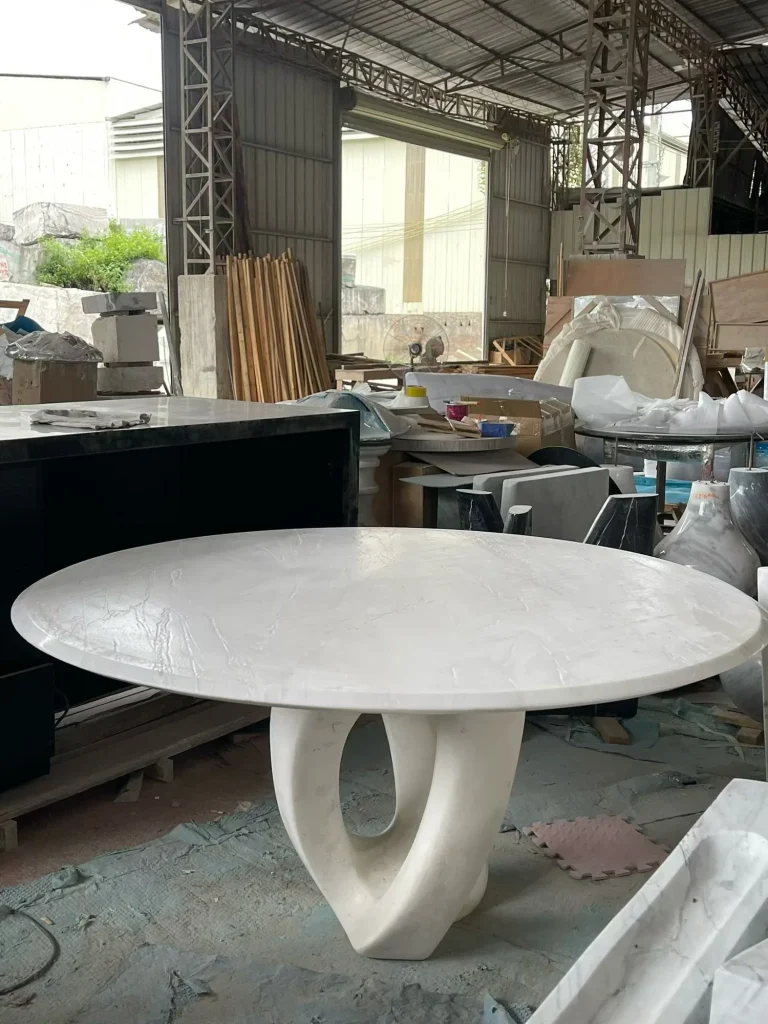
- White marble dining tables for a pale, quieter field.
- Marble dining table tops when the base already exists.
Compare the collection price only after matching slab dimensions, thickness, edge, base and installation scope.
Which dining-table model should I request for my room?
Amazstone supplies dining tables from stock and makes custom designs from one piece. Share the finished size, seating plan and stone direction when you ask for the current dining-table list; a quote and lead-time confirmation are available on request, with replies within 24 hours.
Stock and custom production are available with a minimum order of 1 piece; request this category's product list.
Request product listStone dining tables in our collection
Which stone works best for a dining room?
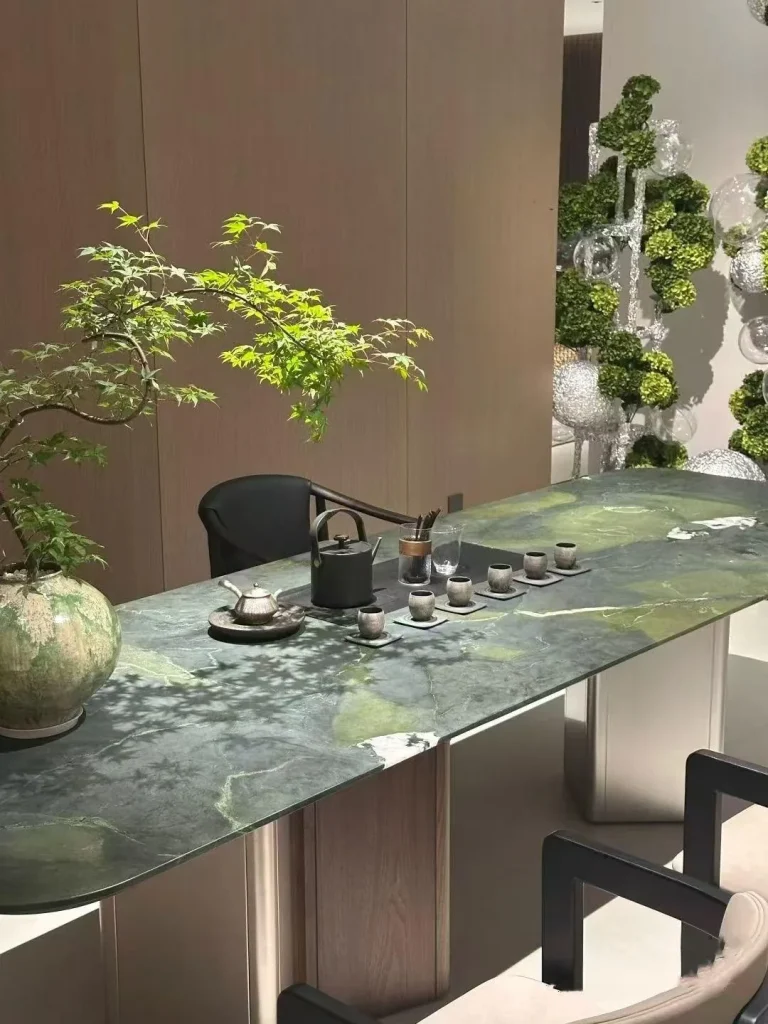
Sealed honed marble is a reasonable indoor choice when owners accept acid care; filled travertine is another neutral option. Quartzite is the stronger scratch and acid-resistance reference, while onyx should be reserved for a controlled setting and an approved backing detail.
| Stone | Density range | Hardness reference | Dining-room issue | Suitable condition |
|---|---|---|---|---|
| Marble | 2.5–2.8 t/m³ (156.1–174.8 lb/ft³) | Calcite, Mohs 3 | Wine, citrus and vinegar can etch | Sealed top; prompt spill care |
| Travertine | 2.2–2.7 t/m³ (137.3–168.6 lb/ft³) | Calcite-based | Unfilled voids collect food and soil | Filled and sealed surface |
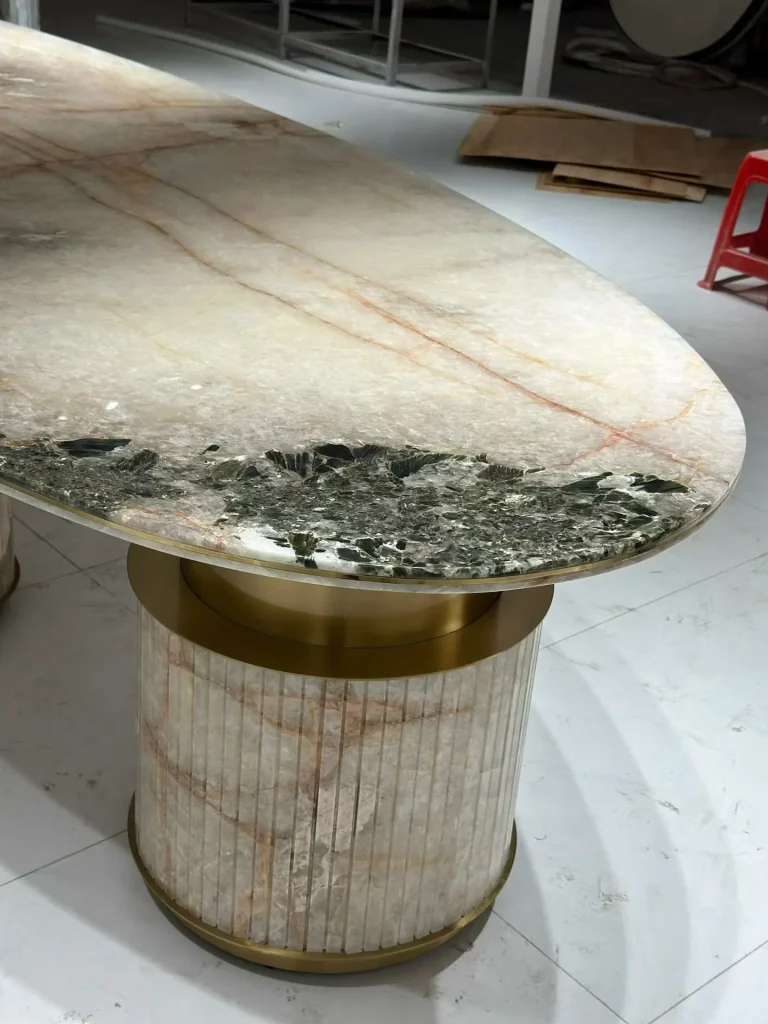
| Onyx | 2.4–2.7 t/m³ (149.8–168.6 lb/ft³) | Slab-dependent | Pattern and structure vary by block | Low-traffic room; slab approval |
| Quartzite | 2.6–2.9 t/m³ (162.3–181.0 lb/ft³) | Quartz, Mohs 7 | Heavy and hard to fabricate | Engineered supports and tooling |
The family ranges come from public stone references and do not replace a slab test. See the marble reference, travertine reference and Natural Stone Institute care guidance.
How large should a dining table be?
Use about 600 mm (24 in) of table edge per seated diner, then add the room clearance needed for chairs to pull out. The common rectangle lengths below are starting points, not guarantees of a comfortable eight-person room.
| Nominal seats | Starting length | Useful depth | Condition |
|---|---|---|---|
| Four | 1,200 mm (47 in) | 800–900 mm (31–35 in) | Two diners per long side or one per end |
| Six | 1,800 mm (71 in) | 900 mm (35 in) | Three diners per long side |
| Eight | 2,400 mm (94 in) | 1,000 mm (39 in) | Four per side; room and slab span checked |
At 20 mm (0.79 in) thickness, marble tops for those three footprints weigh about 38.9 kg (85.8 lb), 87.5 kg (192.9 lb) and 129.6 kg (285.7 lb) respectively at 2.7 t/m³ (168.6 lb/ft³). The base, crate and lifting equipment add more. Chair clearance and service paths can override a nominal seat count; the dining-table size guide covers the room plan.
Where should a stone dining top be supported?
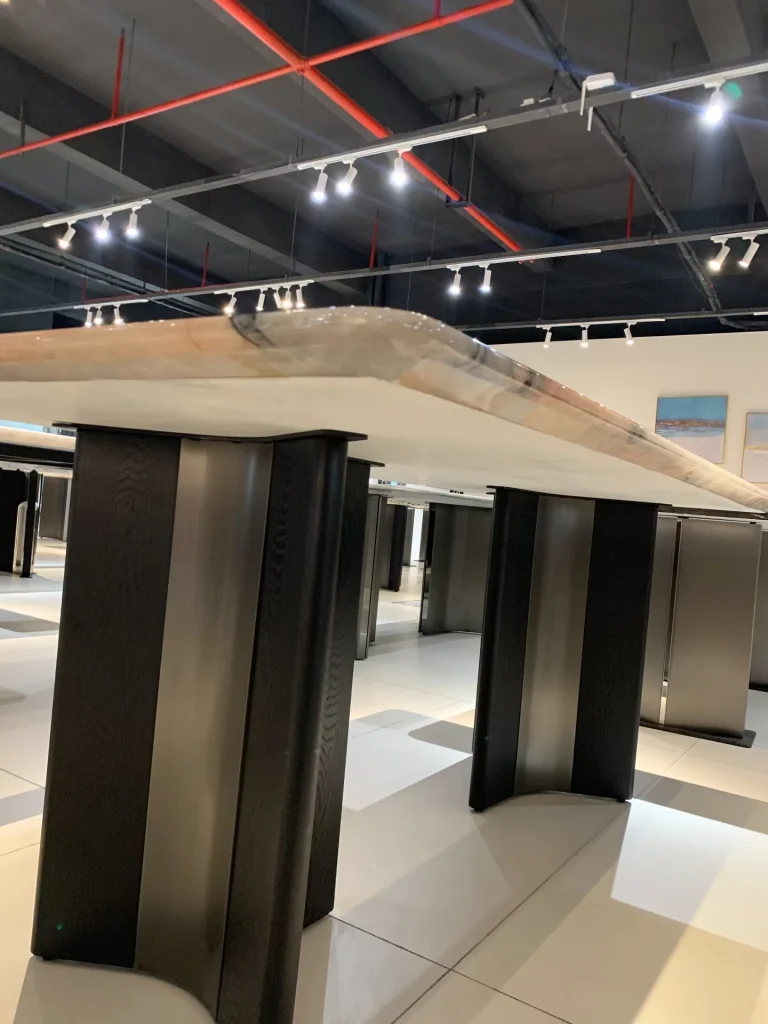
Bearing should follow the base layout, with special attention to pedestal tops, narrow aprons and unsupported corners. A long overhang invites point loading and accidental leverage, especially when someone leans on the table edge.
For an 1,800 × 900 × 20 mm (70.9 × 35.4 × 0.79 in) marble top, one extra millimetre of thickness changes the reference mass by about 4.4 kg (9.7 lb) at 2.7 t/m³ (168.6 lb/ft³). Ask for the structural slab, any build-up, fixing plates and joint location in one drawing. The stone-weight calculator helps compare options before fabrication.
How do you protect a stone dining table between meals?
Wipe wine, citrus, vinegar and oily dressings promptly, and use mats under hot serving dishes rather than assuming stone is heat-proof. Avoid abrasive pads and acidic cleaners. Check the sealer on a less visible area, then follow the product instructions for the actual finish.
Chairs should have felt or suitable floor protection, and the table should not be dragged by the top. Etching on marble or travertine is a chemical change; the marble cleaning and etching guide explains the limits of cleaning.
What must be settled before a custom order?
Approve a dimensioned top and base drawing, the stone block or slab layout, the edge build, fixing method, access route and target installation date. A six-seat label is insufficient: chair widths, head seats, knee space and the server path determine the usable plan.
The custom stone furniture process sets out drawing approval. Commercial values belong in the quotation.
Which dining-table questions remain after the size plan?
These answers address marble suitability, the practical drawbacks and the load implied by a common six-seat footprint.
Is marble a good choice for a dining table?
Marble can suit a dining room when the slab is sound, sealed and supported across the base. Daily meals require prompt removal of wine, citrus and vinegar because calcite-based marble can etch. A honed finish hides gloss variation better than polish, while natural variation requires approval of the actual slab.
What are the downsides of marble dining tables?
The main drawbacks are weight, acid sensitivity and variation between slabs. A 1,800 × 900 × 20 mm marble top at 2.7 t/m³ weighs about 87.5 kg (193 lb), before the base. Delivery access, floor loading and a replaceable or repairable finish need review before purchase.
What size dining table seats six at 600 mm per person?
A 1,800 mm (71 in) long rectangle gives six diners roughly 600 mm (24 in) along the two long sides, subject to chair width and leg position. A 2,000 mm (79 in) top adds serving space. Confirm the room clearance and the actual seat count rather than relying on a label.
How much does an 1,800 x 900 mm stone top weigh?
At 2.7 t/m³, an 1,800 × 900 × 20 mm top weighs about 87.5 kg (193 lb). Increasing thickness to 30 mm raises the reference weight to about 131.2 kg (289 lb). At 2.5 t/m³ the 20 mm top is about 81.0 kg (178.6 lb).
Where can the dining-table plan continue?
Project inquiry
Request a stone furniture quote
Send dimensions, material direction and quantity for a comparable reply.
Useful details include product type, finished dimensions, quantity and destination.
Where do the dining-table figures come from?
The editorial team updated this page on 2026-10-27. Dimensions and weights are conditional planning calculations; the dining-table designs do not have a published size.