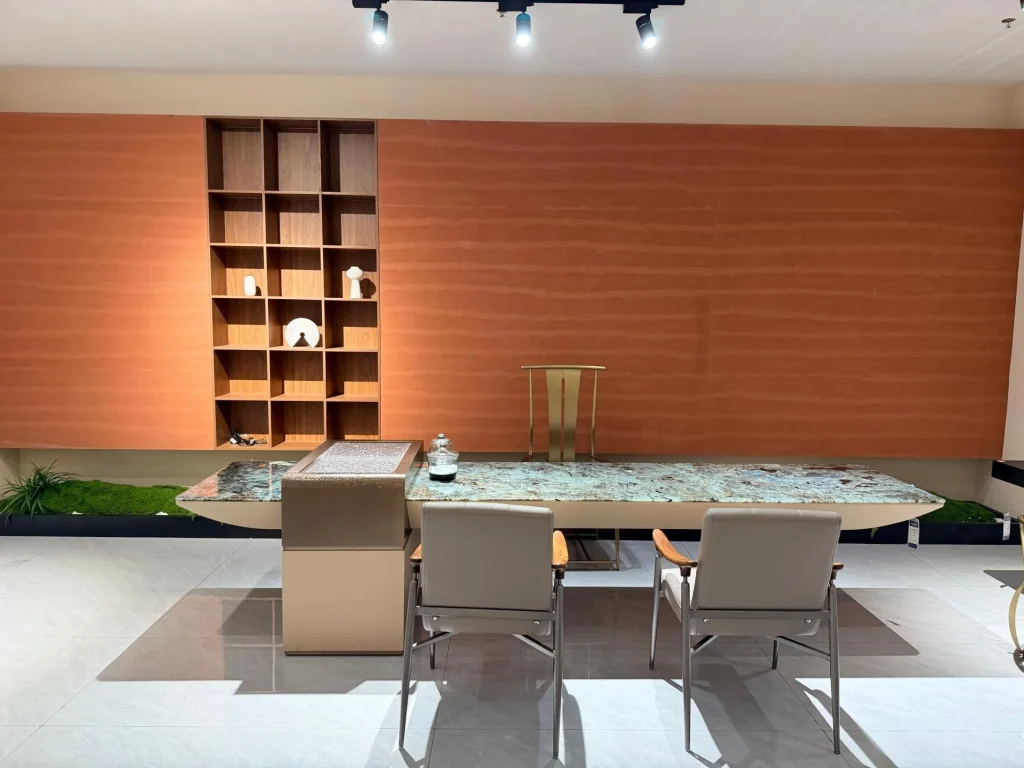
Yes, marble can stain because its surface has pores and fine pathways that may absorb liquids, particularly on an unsealed or honed 12–20 mm tabletop. It is also porous enough that acidic spills can etch the polished face even when a sealer has reduced water absorption.
Which everyday liquids cause staining or etching on marble?
Staining and etching are separate failures, so the first response depends on what entered the stone. This quick reference separates colour changes from surface damage; it does not replace a test on the actual tabletop.
| Exposure | What can happen to marble | Visible sign | Practical first response |
|---|---|---|---|
| Water left standing | Dissolved minerals may concentrate near the surface | Pale ring or darker edge | Blot dry; do not let water pool |
| Cooking oil or butter | Oil enters pore space and darkens the stone | Local dark patch with a soft edge | Blot, then use a stone-specific poultice if residue remains |
| Coffee, tea or red wine | Pigment plus acidity can produce both colour and dulling | Brown, red or grey mark | Blot immediately; identify stain and etch separately |
| Lemon juice or vinegar | Calcite reacts with acid | Dull, chalky or whitish etch | Rinse, dry, then polish the damaged layer |
| Acidic or abrasive cleaner | Repeated chemical attack or scratching | Cloudy finish, fine scratches | Stop using it; clean with a pH-neutral stone product |
| Sand or metal grit | Hard particles abrade a polished face | Scratches or grey scuffs | Lift debris before wiping across the top |
Marble’s typical bulk density of 2.5–2.8 t/m³ (about 156–175 lb/ft³) helps estimate lifting weight, but density alone does not describe how quickly a particular slab will absorb a spill. Pore size, fissures, finish and the presence of resin or mesh can change that response.
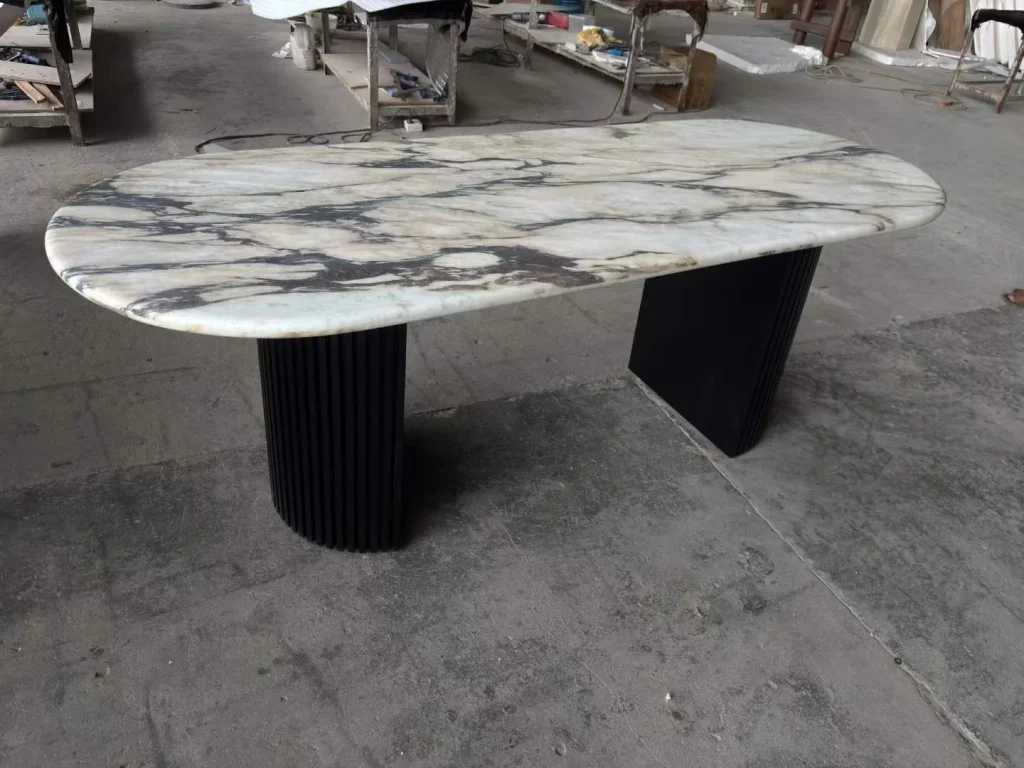
Why can a polished marble top still be porous?
A polished marble surface can look continuous while microscopic pores and grain boundaries remain open beneath the gloss. Marble is a metamorphic carbonate stone made mainly of calcite or dolomite, and calcite has a reference hardness of 3 on the Mohs scale. That relatively low hardness explains why grit and acidic chemistry matter more to a marble table than they do to a quartz-rich surface.
Finishing changes the visible surface, not the basic mineral. Honing creates a matte, more open-looking face; polishing reduces surface roughness, which can make spills easier to wipe before they enter. Neither finish closes every pore, and a filled fissure can behave differently from the surrounding stone. For a tabletop, inspect both the face and the edge because the exposed edge may absorb liquid differently.
The distinction between porosity and permeability is useful. A stone can contain pore space without every liquid moving freely through it. That is why two white marbles with similar appearance may respond differently to oil or coffee, and why a supplier’s generic “marble is porous” statement is not enough to approve a specific table.
Does sealing make marble stain-proof?
No sealer makes a calcium-carbonate marble tabletop permanently stain-proof or acid-proof. A penetrating sealer may slow liquid absorption and give a household more time to blot a spill, but it does not prevent lemon juice, vinegar or some cleaning products from etching the surface. The Natural Stone Institute’s care guidance recommends prompt cleaning with suitable products rather than treating sealer as a barrier against every chemical.
Sealer performance also depends on the product, stone, porosity and application. A film-forming coating can change sheen, scratch visibly or trap moisture if it fails; a penetrating product should be tested on an inconspicuous area and allowed to cure as directed. Reapplication is based on observed absorption, not a universal calendar interval. Do not assume that “more coats” creates a stronger finish.
For a dining or coffee table, the practical standard is simple: wipe spills promptly, use coasters under acidic drinks, and choose a pH-neutral cleaner. If the finish is honed, expect some marking to be more visible and discuss whether the intended look tolerates later repolishing.
What makes one marble tabletop more stain-sensitive than another?
The finish, fissure pattern, resin filling and maintenance history can matter as much as the commercial stone name. A high-polish surface may shed some spills more readily than a honed one, but polishing can leave fine fissures that collect pigment. A resin-filled slab may look uniform while also behaving differently at a repaired area.
Thickness is not a direct measure of porosity. A 20 mm (0.79 in) top is lighter than a 30 mm (1.18 in) top of the same dimensions, but both can absorb a spill at the face. Thickness matters mainly for span, edge detail and handling weight. For example, a top measuring 1,200 × 600 × 20 mm (47 × 24 × 0.79 in) at 2.7 t/m³ weighs about 38.9 kg (85.7 lb).
Colour can reveal a mark but does not determine chemical resistance. Dark stones may hide coffee pigment and then show pale etching; pale stones may show dark oil marks more readily. The useful specification is a sample of the proposed slab and finish, tested with the cleaners expected on site.
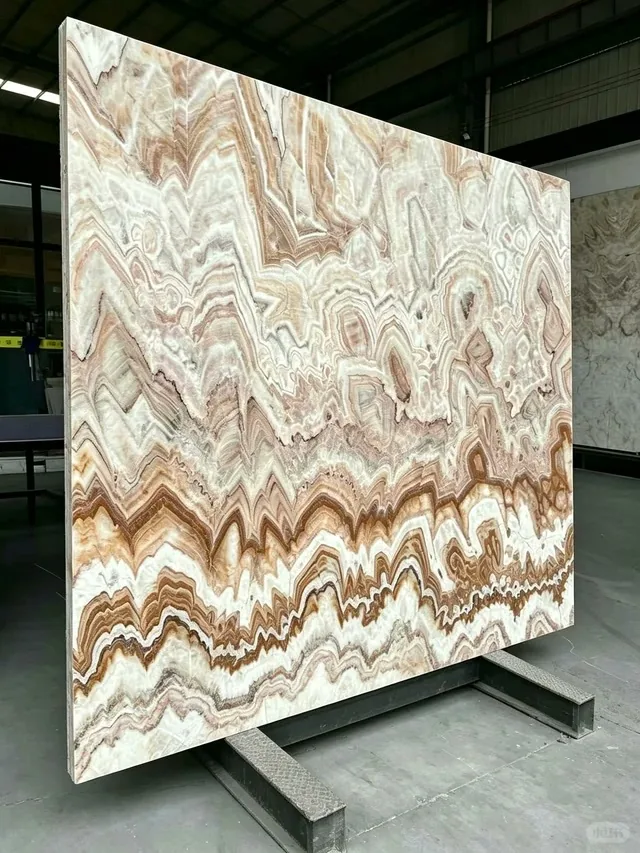
What should you check before accepting a marble table?
Check the proposed thickness, finish, sealer and a spill test against the exact production batch. Use the table below to prepare written questions before accepting the table.
| What to confirm | Why it matters | What to request before approval |
|---|---|---|
| Finished top thickness and substrate | Determines span, edge build-up and handling weight | Ask for the finished thickness, support span and substrate or reinforcement details for the exact table drawing before approval. |
| Sealer brand, type and test result | Two “sealed” tables can behave differently | Ask for the sealer product, manufacturer instructions and written confirmation that it suits the actual stone and finish; request test evidence when sealer performance matters to the project. |
| Finish and repair areas | Honed, polished and resin-filled areas may respond differently | Photograph the face and edges under consistent light |
| Sample exposure | A small sample can show immediate staining and etching | Test with the actual site cleaner, then assess after drying |
How should you treat a spill before it becomes a permanent mark?
Start by lifting the liquid rather than wiping it across the tabletop. A clean, dry cloth placed over the spill absorbs more pigment and limits the area that needs treatment.
- Identify whether the spill is acidic, oily, pigmented or abrasive. Clear water, coffee, oil and gritty cleaner do not call for the same response.
- Blot from the outside inward with a clean absorbent cloth. Replace the cloth before it becomes saturated.
- Rinse with a small amount of pH-neutral stone cleaner if needed, then dry the area. Avoid vinegar, lemon and generic bathroom or tile cleaners.
- Inspect after the surface has dried. A dark patch points to absorbed material; a pale, dull patch points to etching.
- Treat a stain with a stone-specific poultice and an etch with professional refinishing. Test any method on a hidden area first.
Do not sand or aggressively scrub a polished table based on a generic online remedy. The goal is to remove the contaminant without enlarging the damaged zone. If the mark sits near a seam, edge or filled repair, let a fabricator assess it before adding more moisture.
Which table formats reduce the practical risk of marble staining?
A compact top with an easy-to-reach surface can be blotted faster than a deep dining expanse. The current catalogue includes square marble coffee tables at 1,000 × 600 × 300 mm (39.4 × 23.6 × 11.8 in), while marble dining tables need a wider clear top for shared meals. Both formats benefit from a specified finish and a written cleaning routine.
If a household wants a darker, lower-contrast face, compare the material guide for marble furniture with individual stone pages before choosing. The finish comparison in honed vs polished marble explains why the same slab can look and behave differently. For mark removal, use the detailed marble cleaning and etching guide rather than mixing household acids.
Frequently Asked Questions
Who wrote this marble care guide?
Amazstone Editorial Team · Updated 28 October 2026