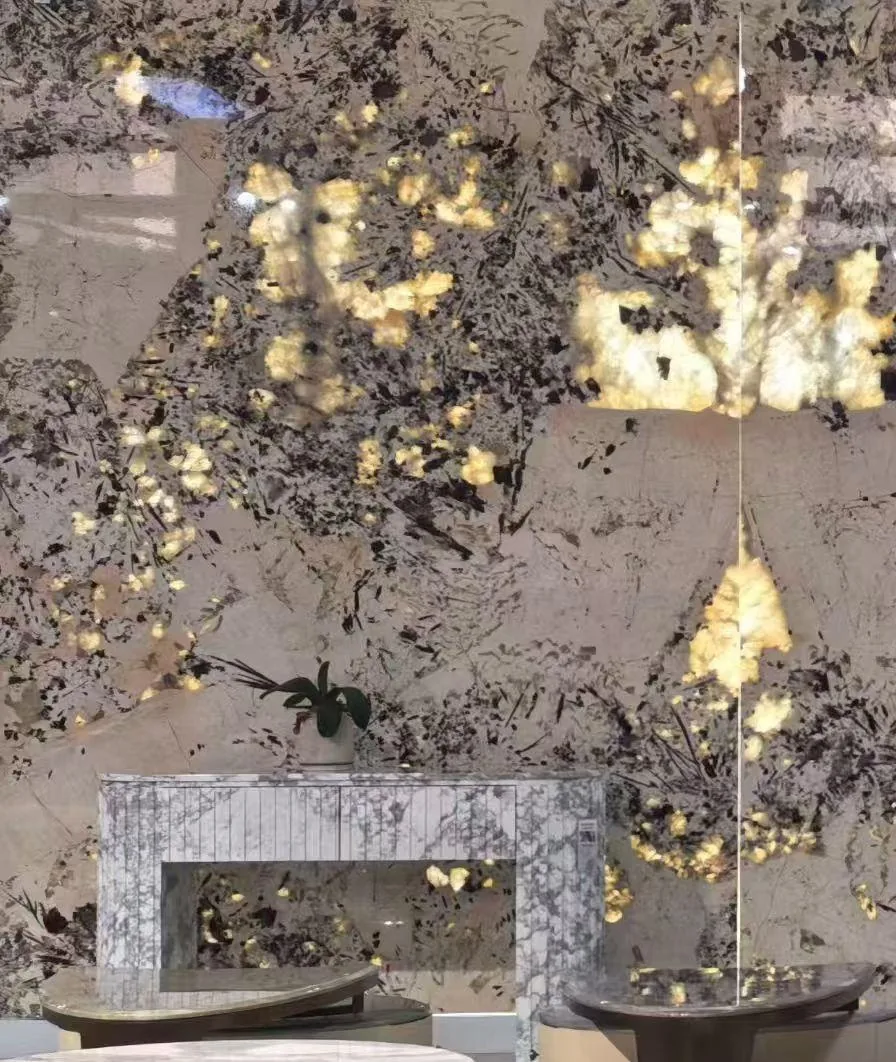
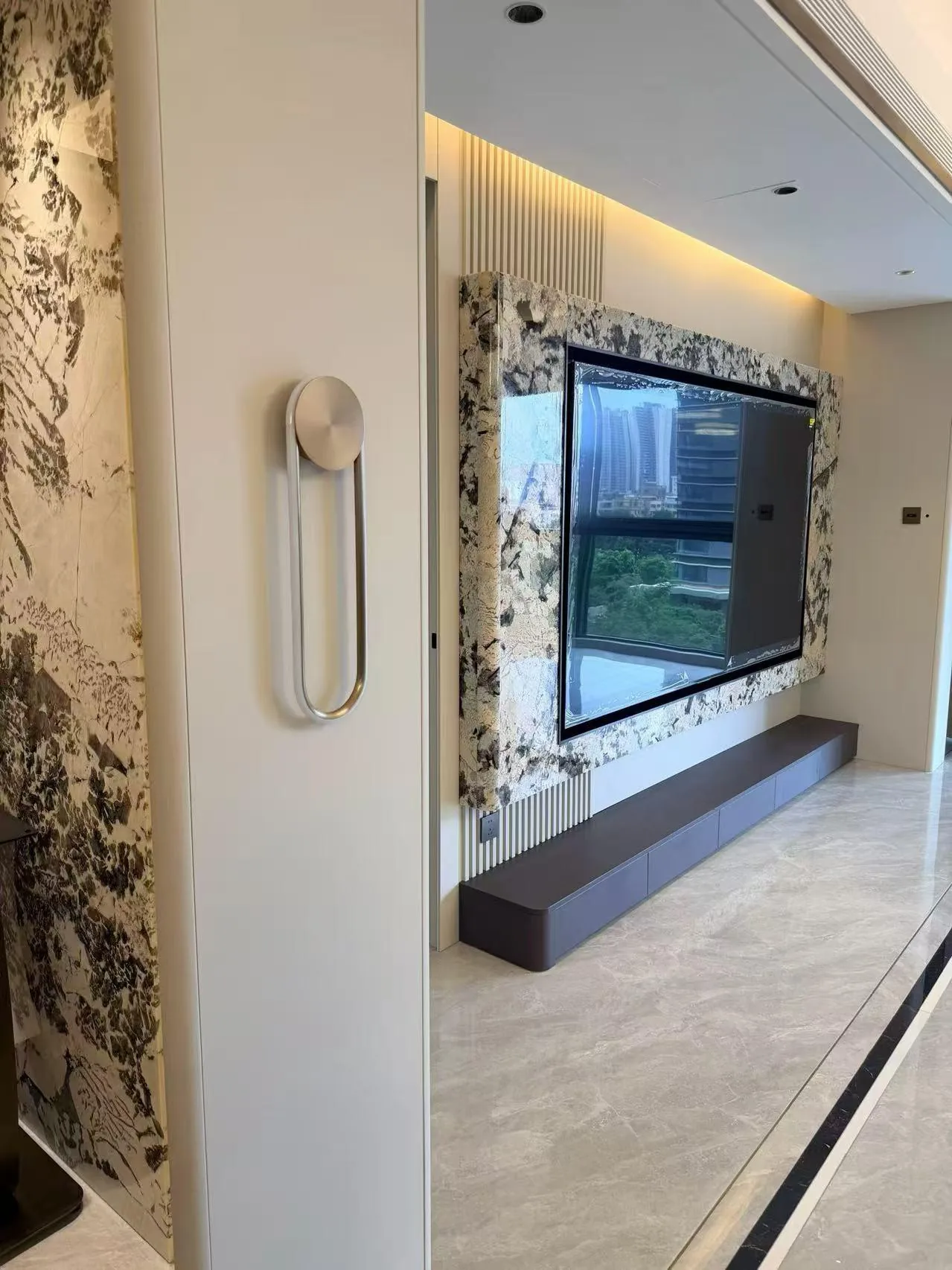
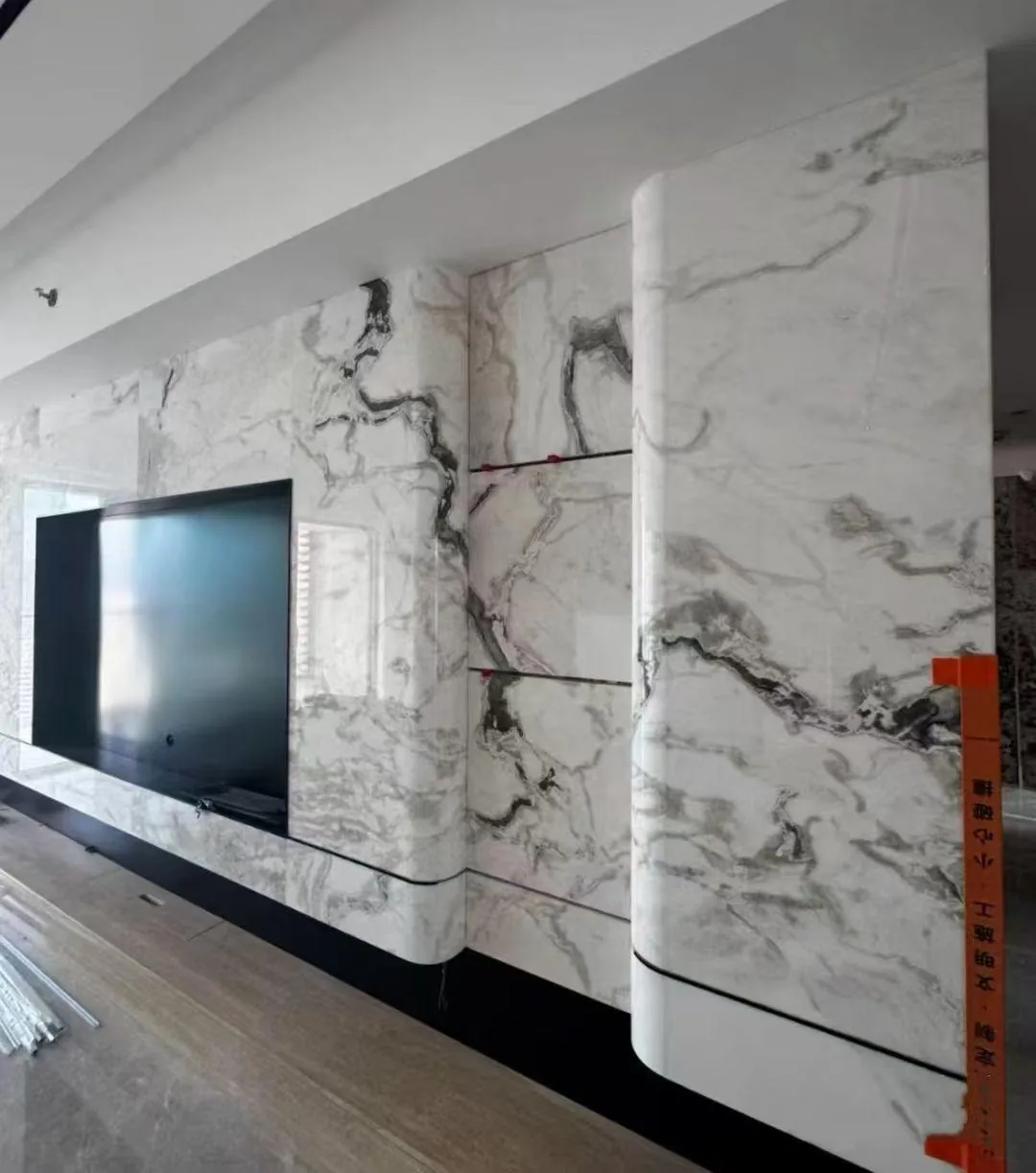
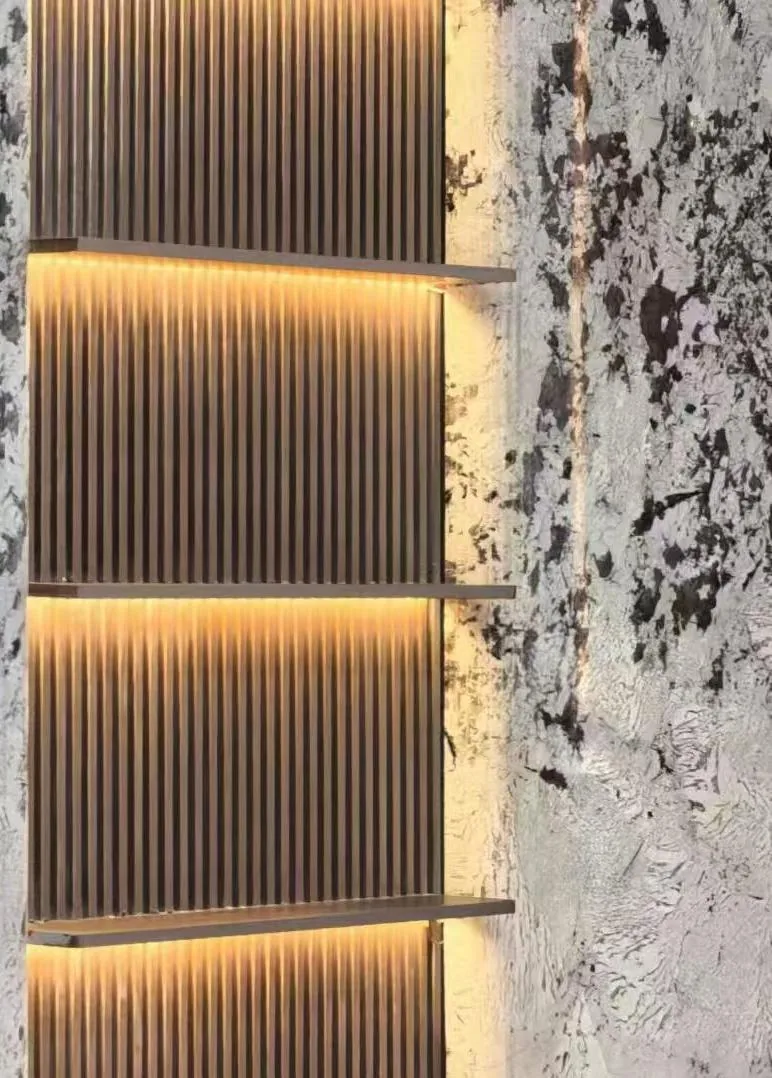
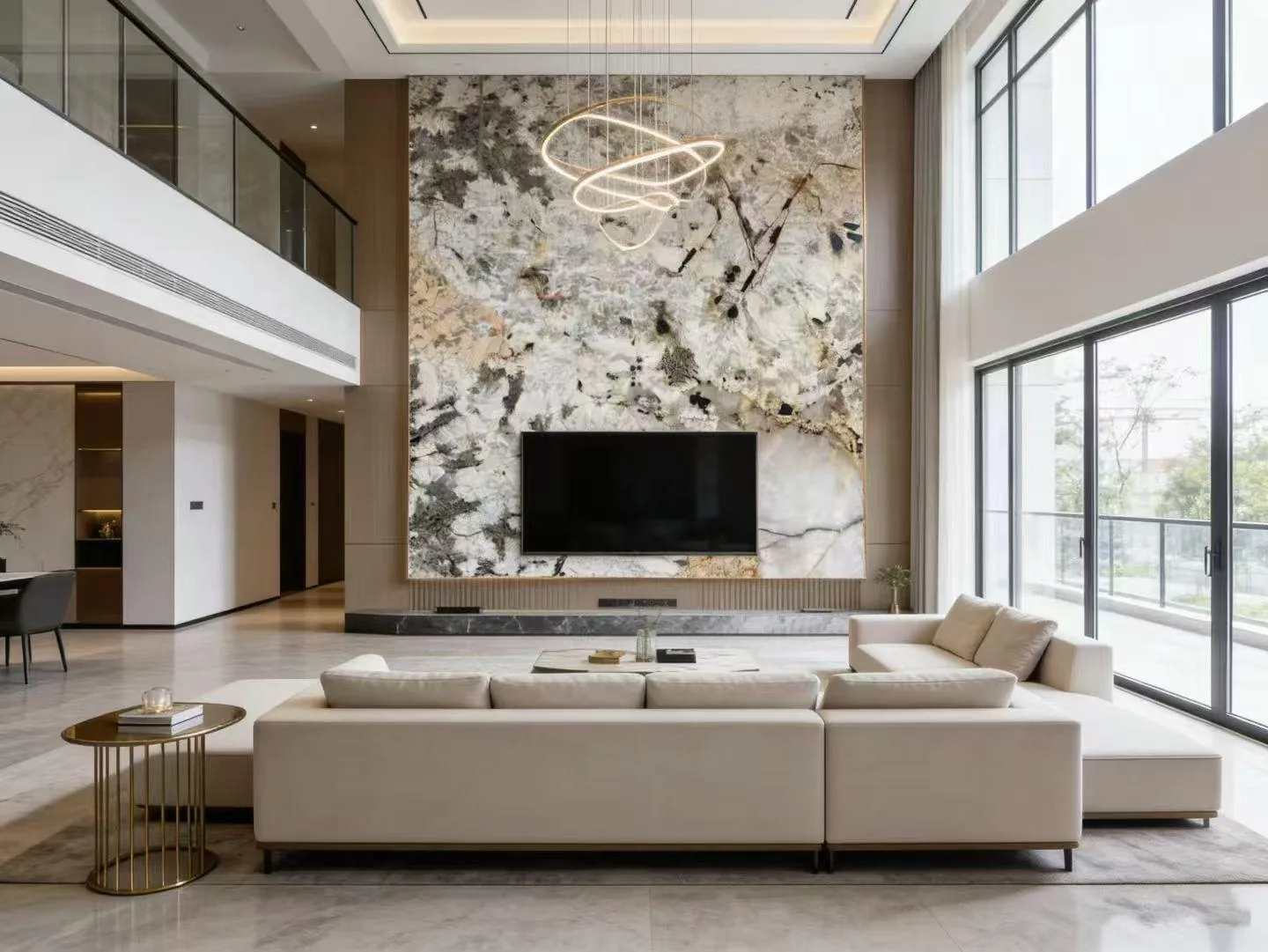
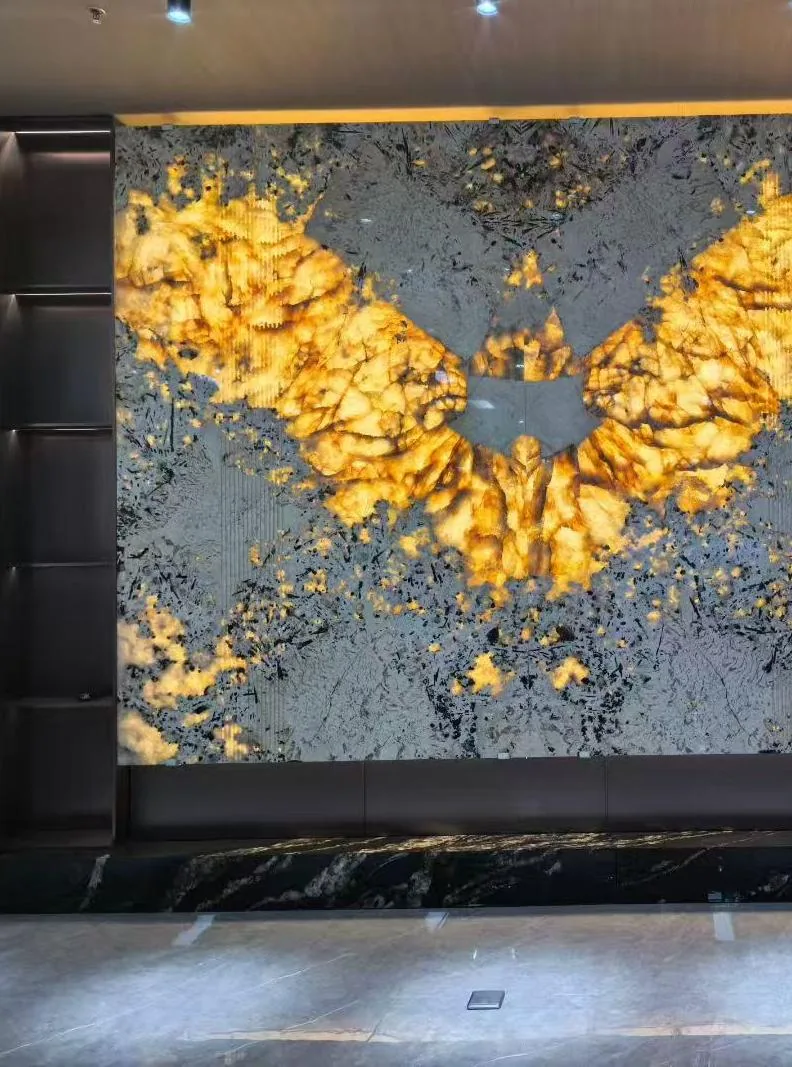
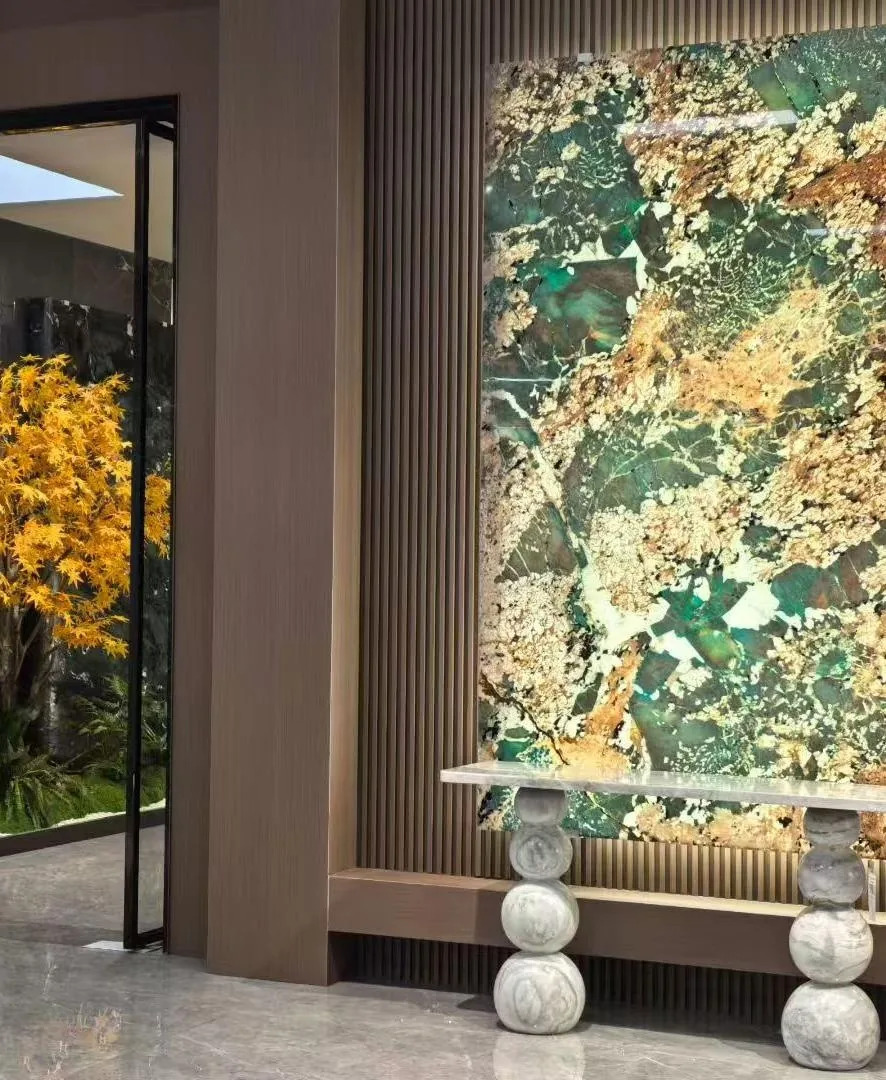
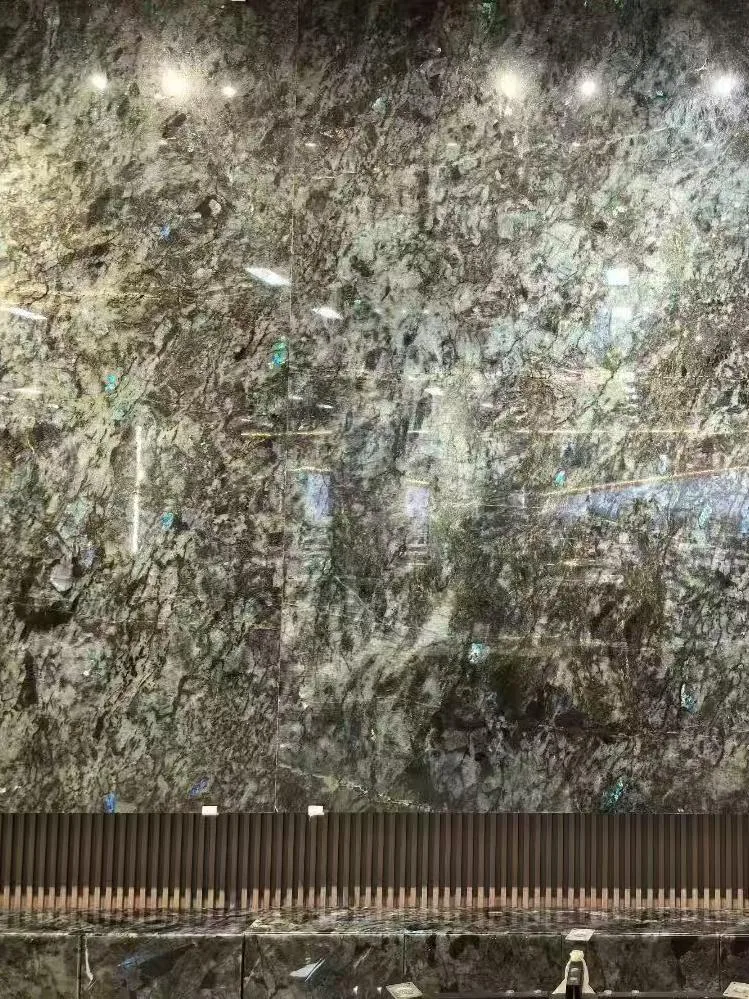
This collection shows 8 stone wall features used in living rooms, showrooms and hospitality interiors. The references compare gray, cream-beige, white and green stone in finished settings. Open any image and choose “I want this” to use it as a starting point for a custom stone feature.
Amazstone is a stone group based in Foshan, China, with stone work beginning in 2012 and a global stone supply network. These images show wall treatments rather than isolated slabs. They are useful for discussing color, scale, surface treatment and how stone meets the surrounding room, while the final construction details must be resolved for the actual wall.
What does the stone wall project gallery show?
The gallery shows eight wall-feature references in showrooms, living rooms and hospitality interiors. Gray, cream-beige, white and green stone appear across the set. The images help compare how a stone field changes a room, but they do not establish the wall construction required for another building.
| Project detail | What it tells you |
|---|---|
| References shown | Stone wall features in finished interiors |
| Visible settings | Showrooms, living rooms and hospitality interiors |
| Visible colors | Gray, cream-beige, white and green |
| Wall and floor planning | Substrate, fixing, joint layout and transitions require project review |
| Minimum order | 1 piece |
| Production | About 20 days after deposit and approved drawings |
| Logistics | About 30 days |
| Price | Quoted for the selected material, layout and quantity |
Use the photos to decide what you want the wall to feel like before choosing a fixing detail. The installer, structural requirements and local rules determine how that appearance can be built.
Which stone wall features can I compare here?
The references cover full wall fields with different color depths and visual movement. Some images place the stone behind furniture, while others show it as the dominant surface in a hospitality or showroom setting.
Compare the amount of pattern, the direction of movement and the relationship between stone and adjacent plain surfaces. A quiet wall field and a strongly marked wall create different visual weight, even before the fixing system is considered.
No single image should be treated as a ready-to-build wall specification. Ask the installer to review the room drawing, substrate and service openings together with the selected stone.
Is a stone wall feature suitable for my interior?
A stone wall is suitable when its visual role and construction requirements have both been considered. Appearance alone is not enough because walls differ in support, moisture exposure, access and adjacent materials.
- Define the feature’s visual boundary. Decide where the stone begins and ends, how it meets corners and how openings will be treated before selecting a slab.
- Confirm the fixing and substrate with the installer. The stone supplier can prepare the material, while the installer or structural professional confirms whether additional support is needed.
- Review joints and transitions early. Lighting, wall switches, sockets and adjacent finishes should appear on the drawing so the stone layout can be coordinated.
For floor work, also ask the installer to review loading, subfloor preparation, slip performance and wet-area requirements. Stone wall references can inform a material direction, but they do not confirm floor suitability.
Which stone color works for a wall feature?
Gray gives a restrained field with visual variation. Cream-beige softens the wall and can sit with warmer interiors. White makes joints, edges and shadows more visible, while green creates a stronger statement around furniture and lighting.
Choose the color together with the room’s other surfaces. A stone sample should be reviewed under the room’s lighting and next to the floor, cabinetry and paint. Slab direction also matters because the same color can read differently when adjacent panels are laid out.
How do I quote a stone wall or floor project?
The quotation depends on the material, finished area, joint plan, edge conditions, quantity and delivery arrangement, so price is provided after review. Send a room photo, wall elevation or drawing with the preferred reference image.
Include the wall or floor area, quantity, destination and any known fixing or substrate information. Amazstone can make a custom stone feature or supply in batch. Production is about 20 days after deposit and approved drawings, with logistics of about 30 days. The team normally replies within 24 hours.
How do natural stone and engineered stone differ for wall and floor work?
Natural stone comes from quarried blocks and varies from slab to slab. Engineered stone is manufactured and must be identified as engineered stone, not natural stone. The distinction affects how a buyer reviews consistency, joins and the care plan.
| Decision point | Natural stone | Engineered stone |
| — | — | — |
| Appearance | Variation is planned around the selected slabs | Surface pattern is produced rather than quarried |
| Project review | Inspect the selected slab and layout direction | Review the offered pattern, batch and approved sample |
| Care planning | Follow guidance for that natural stone and finish | Follow the manufacturer’s care instructions |
| Disclosure | Name the natural stone | State clearly that the material is engineered |
Both categories need installation details suited to the wall or floor. The shape of a reference image cannot substitute for a construction review.
How should stone wall and floor surfaces be maintained?
Wipe spills promptly with a soft cloth and a pH-neutral cleaner suitable for the selected material. Avoid acidic cleaners on acid-sensitive natural stone and test any new product in a small, inconspicuous area.
Keep grit off floors where possible and use protective mats at entrances. Inspect joints and sealant around wet areas during routine maintenance and have damaged or displaced pieces assessed by the installer. The Natural Stone Institute care guidance provides general background for natural stone.
Frequently asked questions about stone wall and floor projects
How do I request a custom stone wall feature from these references?
Open the image you prefer, choose “I want this,” and send the reference with the wall area, quantity and delivery city. Include a room photo, drawing or elevation if available. Amazstone can review the preferred stone and finish and normally reply within 24 hours.
Can a wall reference be adapted for a floor or another room?
It can be a starting point, but wall and floor requirements differ. Confirm substrate, fixing, joins, loading and slip expectations with the installer or local authority before production. Review the stone direction and surrounding surfaces together, then agree on the final layout on drawings.
What should I check before ordering stone wall panels?
Check the substrate, fixing method, joint layout and how the stone will meet corners, openings and adjacent finishes. The installer should confirm the construction requirements. Also review the selected slab, finish and visible variation so the approved drawing reflects the material direction.
Where should I continue planning the wall or floor surface?
Who prepared this wall and floor project guide?
Prepared by the Amazstone Editorial Team. Amazstone is a stone group based in Foshan, China. It began stone work in 2012 and now serves projects through a global stone supply network. Last updated: 2026-10-28.
- This page presents eight stone wall references from the Projects gallery.
- The Natural Stone Institute provides general guidance for cleaning and protecting natural stone.
- The engineered stone reference distinguishes manufactured engineered stone from natural stone.
Photo references
Explore the stone details
Open any image, add your project details, and continue to the inquiry form.