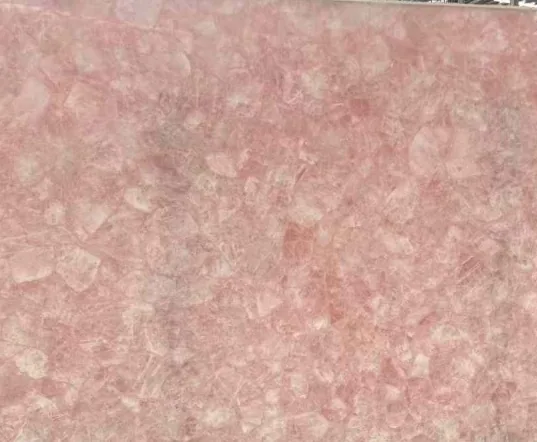
Burgundy Marble can suit side, console and dining tables when the selected slab is sealed and fully supported. Its family density is 2.5–2.8 t/m³ (156–175 lb/ft³); because marble is carbonate-based, acidic drinks and cleaners must be wiped away promptly.
What can be established about this Burgundy marble document?
The name Burgundy Marble describes a red-violet stone group, but we cannot verify a single quarry, finish, slab size or stock position for every slab sold under that name. Ask the supplier to confirm those details in writing for the actual slab, then treat the color direction as a starting point, not a picture or a stone-name swatch.
| Property | Reference for this page | Condition or limitation |
|---|---|---|
| Working family | Commercial marble | Quarry requires written confirmation for the selected slab |
| Working appearance | Burgundy red with red-violet movement | Pattern, repairs and color vary by slab |
| Bulk-density reference | 2.5–2.8 t/m³ (156–175 lb/ft³) | Use a measured slab value for final lifting calculations |
| Mineral hardness | Calcite reference: about 3 on the Mohs scale | The exact commercial stone may include other minerals |
| Chemical behavior | Acids react with carbonate minerals | Etching can alter sheen even when a stain is removed |
For a 1,200 × 600 mm (47 × 24 in) top, the density range predicts about 36–40 kg (79–89 lb) at 20 mm (0.79 in) and 54–60 kg (119–133 lb) at 30 mm (1.18 in). These are calculated estimates from the family range, not measured weights.
How should the slab photo be used?
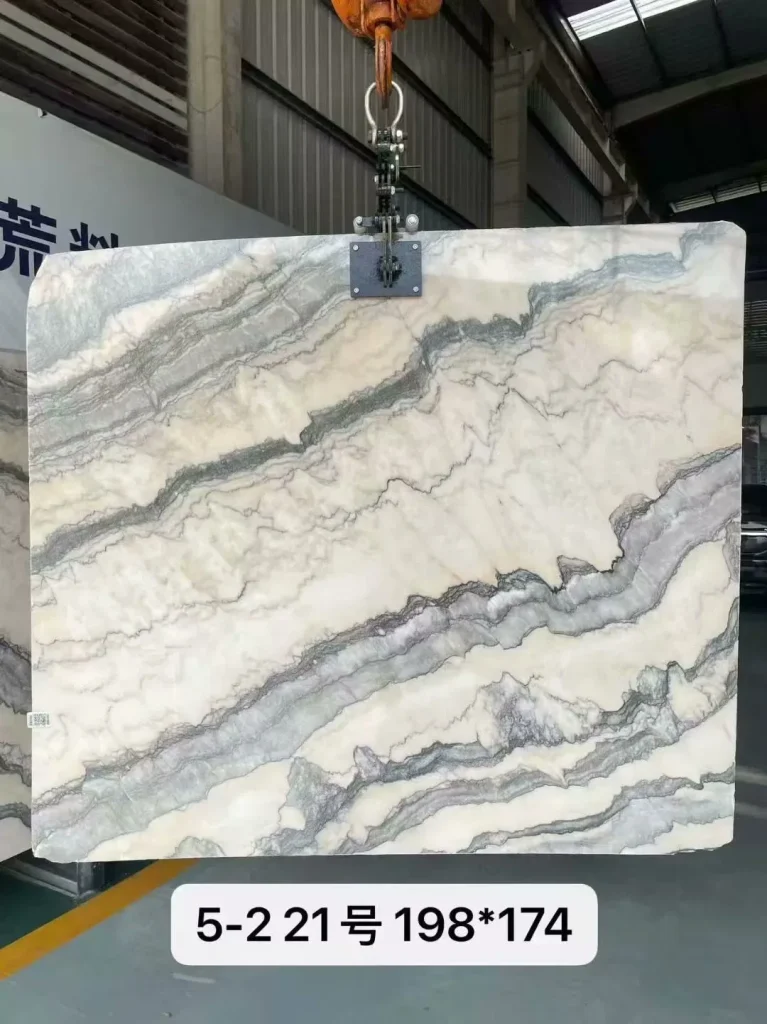
Use the slab photo to judge the red-violet field, veining direction, repaired areas and contrast between polished and unpolished portions. It does not prove current stock or that every slab shares a brecciated pattern.
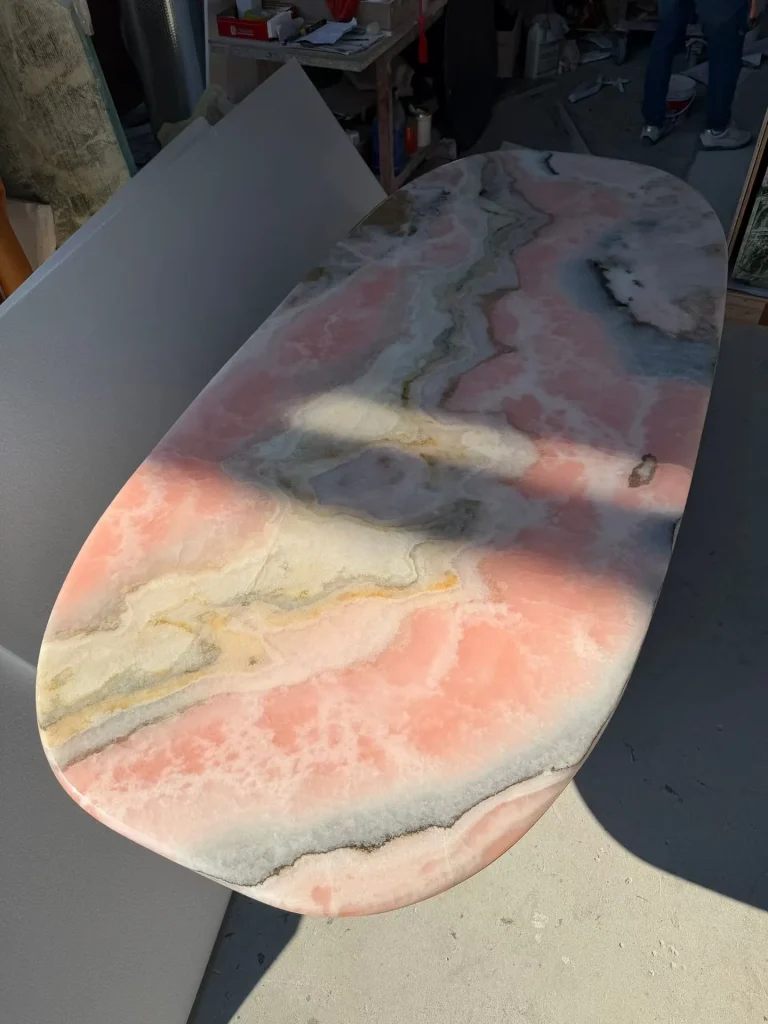
Ask for the slab identifier and both faces under neutral light. On a dark surface, highlights can conceal fine cracks or patch repairs. Review the underexposed areas, mark the proposed cut, and keep fragile repairs away from a front edge.
Why do two Burgundy slabs read differently in a room?
The burgundy field changes with mineral content, lighting and finish. A polished slab reflects more of the room and can make the red-violet pattern look deeper; a honed slab reduces reflection but may reveal handling marks and oil films differently.
| Finish | Visible result | Daily consequence |
|---|---|---|
| Polished | Deeper color and clearer reflections | Dust and fingerprints are easier to notice |
| Honed | Softer light and less glare | Oil or water marks may need prompt wiping |
| Brushed or leathered | Textured surface and lower reflection | Confirm cleanability and spill response before choosing it |
Finish does not change the acid sensitivity of carbonate stone. It changes how clearly an etch or residue shows.
Which furniture forms make the most sense?
Coffee tables, console tables and side tables suit a small Burgundy slab where its red-violet field becomes the focal point. A marble dining table can work when the slab is large enough for the proposed seating plan and the base supports the full top and overhang.
Use 20 mm (0.79 in) material only with a fabrication and support plan suited to the size; use 30 mm (1.18 in) or a built-up edge when the design needs greater visual mass or a more substantial edge. Thickness alone does not approve a long cantilever. Review the marble top thickness guide with the base drawing.
What interior colors keep Burgundy from dominating?
Cream, sand and soft clay keep the field warm without adding another strong hue. Dark walnut or blackened metal increases contrast; olive and deep blue can work when their saturation stays below the stone’s.
| Palette | Effect beside Burgundy | Check before specifying |
|---|---|---|
| Cream plaster and flax linen | Lets the red-violet read as the main accent | Compare warm and cool whites near the slab |
| Walnut or dark oak | Grounds a small side or console top | Make sure the base does not hide the edge |
| Olive, moss and deep blue | Creates a richer color relationship | Keep upholstery saturation below the stone |
| Brushed nickel or pale bronze | Adds a quieter metal accent than bright brass | View samples under the room’s lighting |
What is missing from a Burgundy marble price?
Quote amounts vary with the selected Burgundy slab grade, finished size and quantity. Share a slab photo and the finished dimensions on the Contact page for pricing. Two red slabs may have different repair rates and cut yield, so compare the same stone identifier and cutting plan.
What are the main weaknesses of a Burgundy marble table?
Acid etching is the defining care issue: wine, citrus, vinegar and acidic cleaners can dull the surface where calcium carbonate reacts. Grit scratches, unsupported overhangs and poorly matched fillers are other practical failures. Use coasters, wipe promptly and clean with a pH-neutral stone product.
Marble’s carbonate composition and acid reaction are documented by Wikipedia's marble reference; the Natural Stone Institute gives general care guidance. Sealing slows absorption, but it does not convert marble into an acid-proof or heat-proof surface.
Which red and dark alternatives should be sampled?
Sample Rosso Levanto marble when a brighter red-violet stone is wanted, Red Travertine when linear voids suit the design, or Azul Macaubas Quartzite when a blue field and a quartzite-led specification are preferable.
| Alternative | Main visual difference | Material trade-off |
|---|---|---|
| Rosso Levanto marble | Usually a more vivid red-violet field | Still a carbonate stone with acid sensitivity |
| Red Travertine | Linear voids and a directional texture | Filling, porosity and pore contrast need review |
| Azul Macaubas Quartzite | Blue field instead of red-violet | Confirm the actual slab’s subtype and repairs |
How should the slab be specified for fabrication?
Give the fabricator the slab number, intended table type, finished dimensions, visible face, edge profile and base drawing. Mark any repaired area and decide whether the seam may cross the table’s visual center. Confirm lifting points because a 30 mm top becomes difficult to handle on site.
Browse stone coffee tables and marble and stone side tables for compatible forms. Use the stone furniture weight calculator to screen a design, then replace the default density with the supplier’s measured figure.
FAQ
Sources, internal links and review note
- Marble — carbonate composition, color impurities and acid reaction.
- Mohs scale — calcite hardness reference.
- Natural Stone Institute — stone-cleaning guidance.
- Amazstone catalog, 2026: no dedicated Burgundy entry with quarry, finish or stock details.