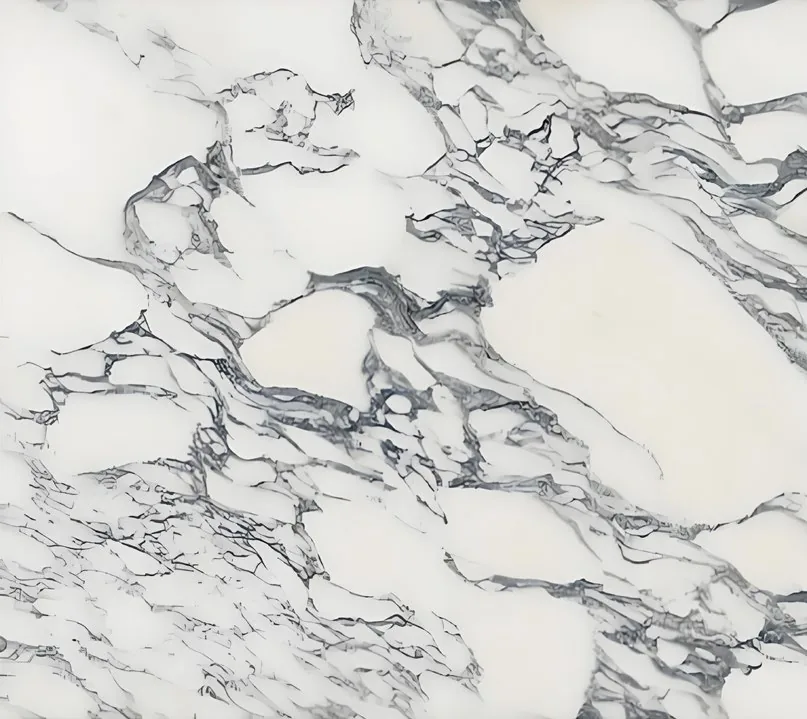
Azul Macaubas Quartzite suits coffee, side and dining tables when a structurally sound slab is fully supported. Its family density reference is 2.6–2.9 t/m³ (162–181 lb/ft³), but our current catalog lists the commercial name without a confirmed stone subtype. Confirm the subtype in writing with the supplier before specifying the slab and backing.
What should I know about Azul Macaubas Quartzite?
The name “Azul Macaubas” also appears as a Chinese commercial alias. The quarry, finish, slab size, stock, backing and mineral composition are not confirmed. We use quartzite as the working classification, but its geological subtype remains uncertain. Ask the supplier for written mineral identification of the actual lot instead of treating a trade name as proof of quartz content.
| Specification | What to know | What it means for your table |
|---|---|---|
| Material identity | Azul Macaubas / Chinese commercial alias | The names do not establish quarry or mineralogy |
| Working classification | Quartzite | A guide classification only; ask the supplier to confirm the geological subtype in writing |
| Bulk-density reference | 2.6–2.9 t/m³ (162–181 lb/ft³) | Family reference for estimating weight, not a measured slab value |
| Relative price band | 3 of 5 in the available range | A relative comparison, not a currency amount, slab price or furniture price |
| Hardness and acid behavior | Quartz is about 7 on Mohs; quartzite is generally more resistant than calcite marble | Fillers, seams, inclusions and finishes still need slab testing |
| Commercial terms | Quote on request | The relative tier does not determine the quotation |
Quartzite’s interlocking quartz-rich fabric comes from heat and pressure, or from dense quartz cementation in orthoquartzite (Quartzite). That does not excuse a thin unsupported overhang.
How should a slab photo change your selection?
A slab photo shows appearance, but not stock, finish or structural grade. Use it to mark blue-grey movement, fine banding, mineral clusters and repairs. Then ask to see the same slab identifier in daylight. Before cutting, mark the top area and keep the proposed seam away from the busiest focal point. The image does not confirm warehouse stock.
Why can two Azul Macaubas slabs look so different?
The blue ground, band direction, mineral concentration and repairs can change across one block. A side-table crop may show a calm field; a dining top can expose mineral pockets and book-matched symmetry.
| Selection issue | Check on the actual slab | Furniture consequence |
|---|---|---|
| Band direction | Trace the proposed long axis and seam | The pattern can lead across a table or clash at a join |
| Mineral clusters | Mark fragile or visually dominant areas | Cutting may move the focal point or weaken an edge |
| Filler or repair | Ask for location, material and finish compatibility | Repairs can alter sheen and stain behavior |
| Book-match potential | Inspect both halves before cutting | Mirrored joins need a layout that preserves enough usable area |
“Macaubas Fantasy,” “Azul Bahia” and “Azul Green” are separate commercial names. Do not substitute one by color alone. See the quartzite material family guide for the wider Macaubas group and compare the Rosso Levanto marble page only when a red-violet field is the design priority.
Which stone furniture shapes suit this blue quartzite?
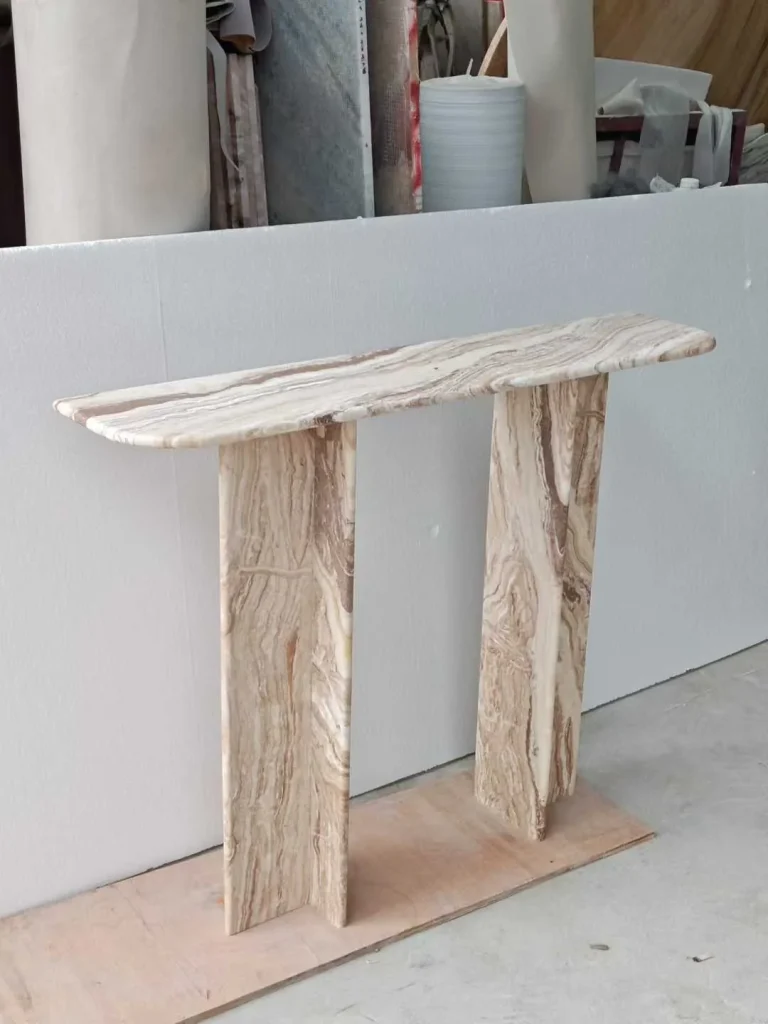
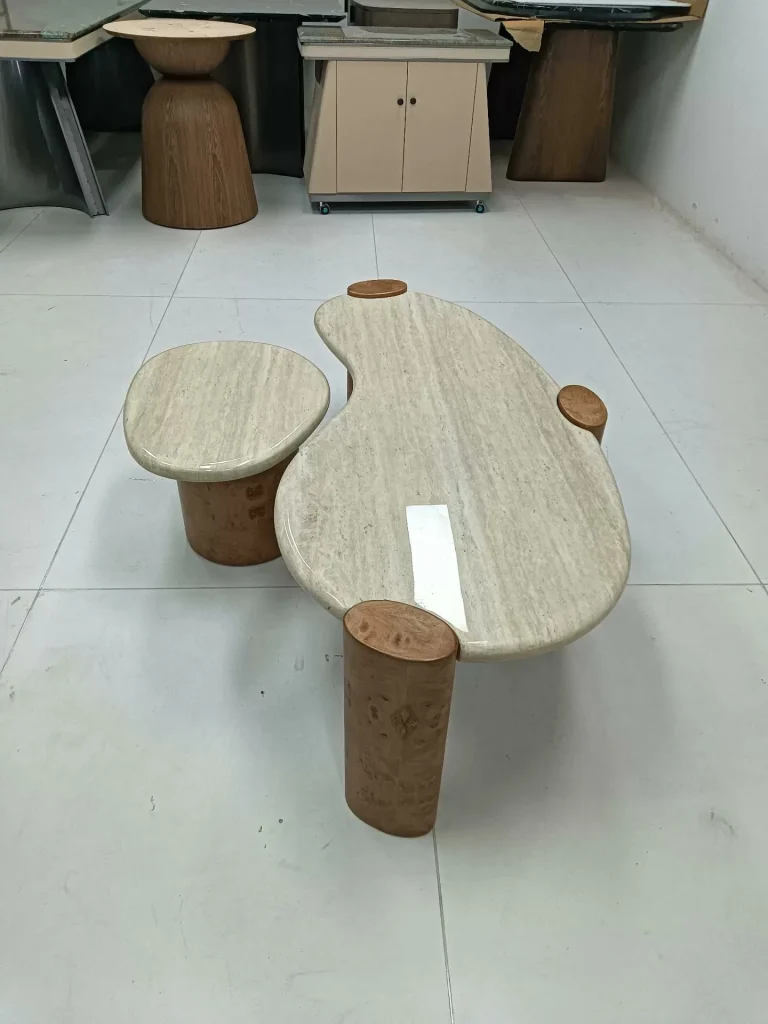
Large stone coffee tables and dining tables reward broad pattern when seams are planned first. Keep the long direction continuous and avoid a seam where hands rest. A marble and stone side table can use a tighter crop, but still needs a flat substrate and protected edge.
What colors work with a blue Azul Macaubas top?
Warm neutrals make the blue read deliberately; cool greys can flatten its contrast. Compare texture and hue under the room’s actual lighting.
| Adjacent material | Effect | Practical check |
|---|---|---|
| Pale oak or ash | Warm contrast keeps blue from looking cold | Place a sealed timber offcut beside the slab |
| Walnut | A dark frame makes the blue field graphic | Check reflections in evening light |
| Cream linen and brass | Soft textile contrast with a warm metal accent | Confirm the metal sample suits table handling |
| Blackened steel | Sharper, higher-contrast composition | Avoid overpowering a small top |
What is still missing from the price picture?
Quote amounts vary with the selected Azul Macaubas slab grade, finished size and quantity. Share a slab photo and the finished dimensions on the Contact page for pricing. The 3-of-5 price band is relative and is not a customer quote. Compare quotes on the same stone identifier and cutting plan; the tabletop thickness guide explains how thickness and edge build-up affect support.
What can damage an Azul Macaubas tabletop?
Localized impact, unsupported overhangs, acidic cleaners and resin repairs are the practical risks. Use coasters and a pH-neutral stone cleaner, and test sealer on an inconspicuous area. Do not lift the table by its overhang. Identify any filler before applying solvent. See Natural Stone Institute care guidance.
Which alternatives deserve a side-by-side sample?
Compare appearance, test data and fabrication risk. The Natural Stone Materials Library is the parent reference; the marble family guide suits an acid-sensitive carbonate surface.
| Alternative | Difference to verify | Why it may win |
|---|---|---|
| Azul Bahia | Geological subtype is not confirmed; ask the supplier for written identification | The slab’s pattern may suit a focal table better |
| Burgundy Marble | Red-violet commercial marble rather than the blue quartzite grouping | Warmer color direction, with higher acid sensitivity |
| Beige Travertine | Porous, banded limestone instead of quartz-rich stone | Softer visual field and different tactile texture |
How should you brief a furniture maker?
Send the slab number, both faces, dimensions, base drawing, edge profile and load path. State the visible face, allowed seams and whether book matching is required. Browse marble and stone dining tables or use the stone furniture weight calculator for an estimate, then replace its density with measured slab data.
FAQ
Sources and further reading
- Quartzite — formation and quartz context.
- Mohs scale — mineral hardness reference.
- Natural Stone Institute — care precautions.
- Amazstone catalog, 2026, p. 13; material comparison data.