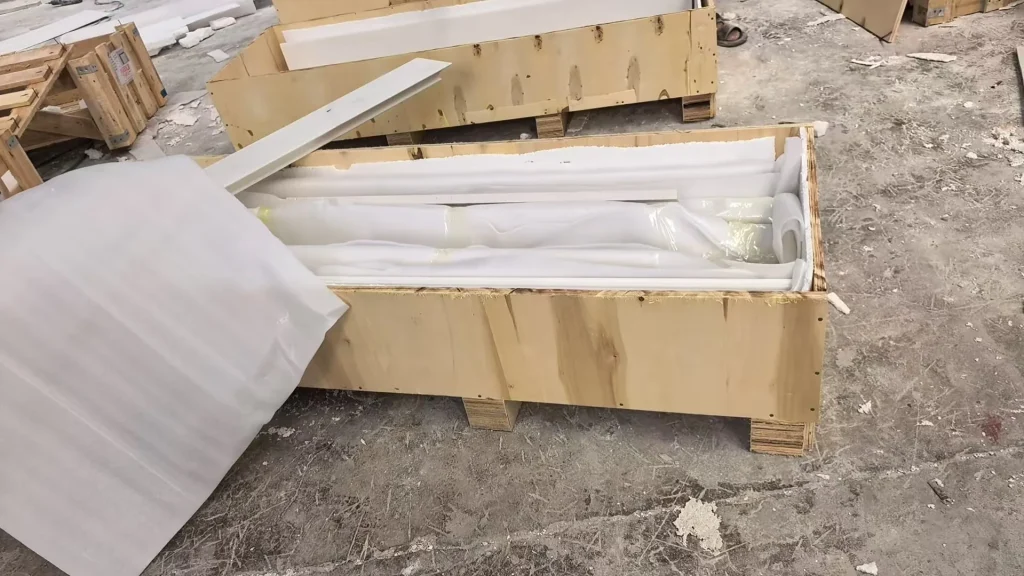
A workable design-trade program must state eligibility, price basis, payment terms, sample handling and project protection before a retailer repeats an order. Without those five terms, even a 10-table retail assortment cannot be priced or scheduled consistently. This page defines what should be agreed; it does not invent an unpublished discount tier.
Which commercial terms belong in a stone-furniture trade agreement?
A trade agreement should turn a one-off inquiry into repeatable product, sample and commercial terms.
| Program element | What a designer or retailer needs | What to keep for the order |
|---|---|---|
| Product basis | Supplied table types, stones, finishes and custom limits | Current catalogue and approved variants |
| Program economics | Threshold, discount, payment terms and annual commitment | Dated programme schedule linked to the quotation |
| Sample policy | What is supplied, approval basis and disposition | Sample label, finish details and approval note |
| Project protection | How a named project or specification is handled | Written confirmation for that project |
Ask the trade supplier in writing for the discount schedule, payment terms, annual minimum and dedicated support scope before comparing programmes; attach that schedule to the quotation or agreement.
How should a designer or retailer move from first inquiry to repeat order?
Approve sample and commercial scope before the first production order; repeat it for later orders.
| Stage | Action | Control that prevents drift |
|---|---|---|
| Scope review | Match table type, stone, finish and quantity | Current product and material reference |
| Sample approval | Approve face, edge and finish under agreed light | Label tied to the exact specification |
| Commercial quote | Apply only the current written programme terms | Versioned quotation and validity date |
| Drawing release | Confirm dimensions, base and packing | Signed drawing before cutting |
| Production and inspection | Check batch, quantity and visible condition | Inspection report linked to the PO |
Use the custom furniture process for production, finish samples for approval and export packing for delivery.
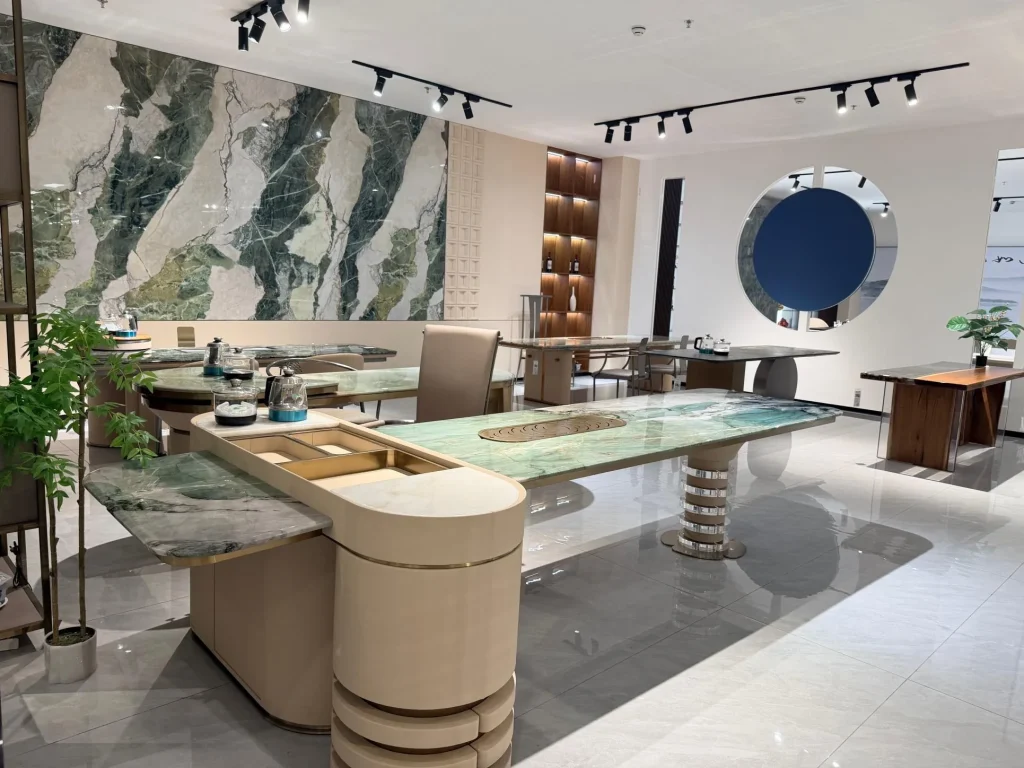
What should a trade account be able to specify?
A trade offer needs enough definition to reorder without a photograph. Square marble coffee tables in the published range measure 1,000 × 600 × 300 mm; this does not establish that every stone is in stock.
| Specification layer | Trade question to answer | What to keep for reordering |
|---|---|---|
| Product family | Coffee, dining, side, console or case good | Stable page and product-code reference |
| Shape and dimensions | Size, height, top thickness and base | Dimensioned drawing |
| Stone and finish | Commercial name, face direction and finish | Slab approval and sample label |
Approve face, batch tolerance and repair disclosure. Marble for furniture explains why commercial names and physical properties are separate decisions.
How does shipping change a trade programme?
A trade programme should identify importer and delivery tier before pricing. Ex-works and delivered quotes are not directly comparable.
Note packed dimensions, gross weight and receiving access. Packaging & Shipping covers packed measurements and dimensional weight.
Give the retailer the approved cleaner and finish specification. Calcite-based marble can etch in acid; the Natural Stone Institute care guidance is a baseline for the exact slab.
Can a trade buyer see completed project examples?
Completed project examples are shared only when they are specific and approved for publication.
| What you can review | Why it helps a trade buyer | Permission needed |
|---|---|---|
| Inspection report | A traceable quality check | Share only the relevant fields |
| Completed project photograph | Use in retail or designer proposal | Image and project permission |
| Replacement or repair history | Maintenance reality | Buyer or owner permission before publication |
Frequently Asked Questions
What should a designer or retailer send to open a trade account?
Provide business identity, contact owner, product interests, expected use and approval workflow.
| Field | Information to supply |
|---|---|
| Business | Company name, registration details and billing contact |
| Account contact | Designer, buyer or retailer owner for approvals |
| Demand | First-order quantity, expected repeats and timing |
| Delivery | Importer, destination and receiving constraints |
| Project control | Sample approval and public-reference permission |
Project inquiry
Request a stone furniture quote
Send dimensions, material direction and quantity for a comparable reply.
Useful details include product type, finished dimensions, quantity and destination.
Review hotel programmes and China sourcing controls before a multi-project order.
Amazstone Editorial Team · Updated 28 October 2026