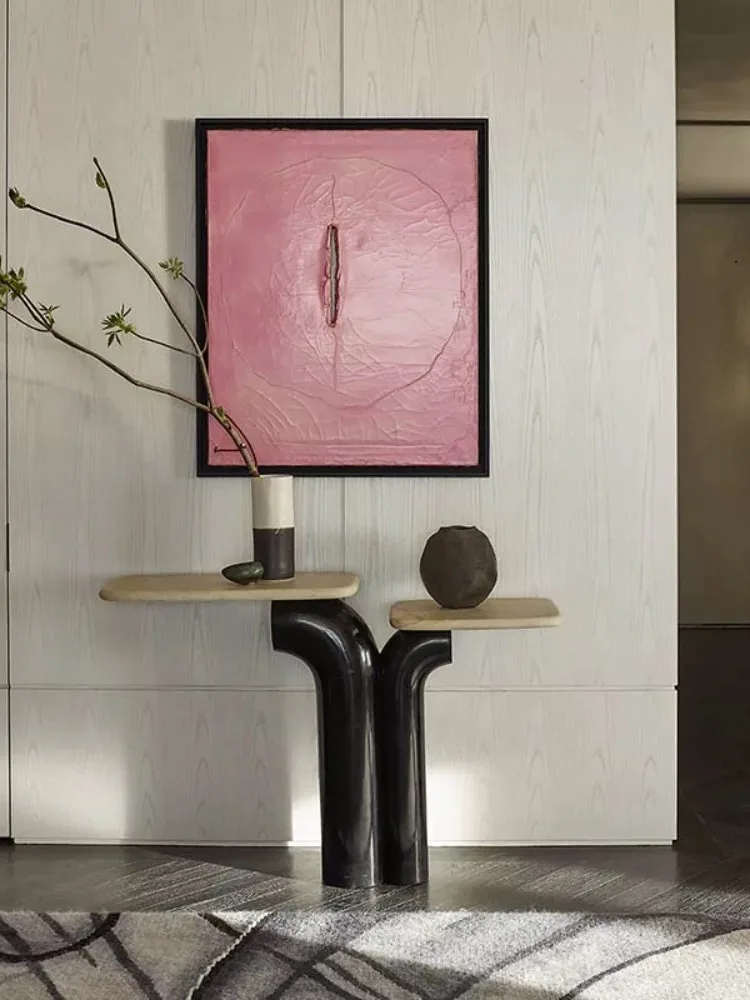
A sideboard is best planned at 1,500–1,800 mm (59.1–70.9 in) wide, 400–500 mm (15.7–19.7 in) deep and about 800 mm (31.5 in) high; a 1,600 × 450 × 20 mm travertine top at 2.5 t/m³ (156.1 lb/ft³) weighs 36 kg (79.4 lb) before the cabinet.
What are the key dimensions and material choices for a stone sideboard?
Start with the storage plan, then size the stone top around it: a sideboard needs useful door or drawer access, a stable bearing frame and a top that suits the room’s traffic.
| Planning field | Useful starting point | Condition to check |
|---|---|---|
| Width | 1,500–1,800 mm (59.1–70.9 in) | Wall length and circulation |
| Depth | 400–500 mm (15.7–19.7 in) | Door swing and drawer travel |
| Finished height | About 800 mm (31.5 in) | Room use and artwork height |
| Top thickness | 20–30 mm (0.8–1.2 in) | Span and support rails |
| Travertine names | Travertino bianco, Travertino silver, Beige Travertino, Golden Travertino | Name and actual slab |
| Faces | Filled or unfilled; honed, polished or textured | Cleaning routine and visual texture |
Which sideboard configuration suits the room?
Choose the cabinet form before the stone: a low sideboard supports tableware and art, a tall storage unit needs more wall planning, and a floating unit requires wall or concealed-frame details.
| Configuration | Typical footprint | Best use | Key constraint |
|---|---|---|---|
| Low sideboard | 1,600 × 450 mm (63.0 × 17.7 in) | Dining room or media wall | Door swing and cable access |
| Wide buffet | 1,800 × 500 mm (70.9 × 19.7 in) | Entertaining and storage | Top mass and route access |
| Tall storage cabinet | 900–1,200 mm (35.4–47.2 in) wide | Narrow wall or pantry | Wall fixing and upper-door clearance |
| Floating sideboard | 1,400–1,600 mm (55.1–63.0 in) wide | Open floor beneath | Structural fixing |
Can I order a sideboard in stock or a custom size?
Amazstone can supply stock sideboards and custom sizes from one piece. Share the intended footprint, storage layout, stone and finish to request the current sideboard list and a quote. The team replies within 24 hours; production takes about 20 days after deposit and drawing approval, followed by about 30 days for shipping.
Stock and custom production are available with a minimum order of 1 piece; request this category's product list.
Request product listStone stone sideboards in our collection
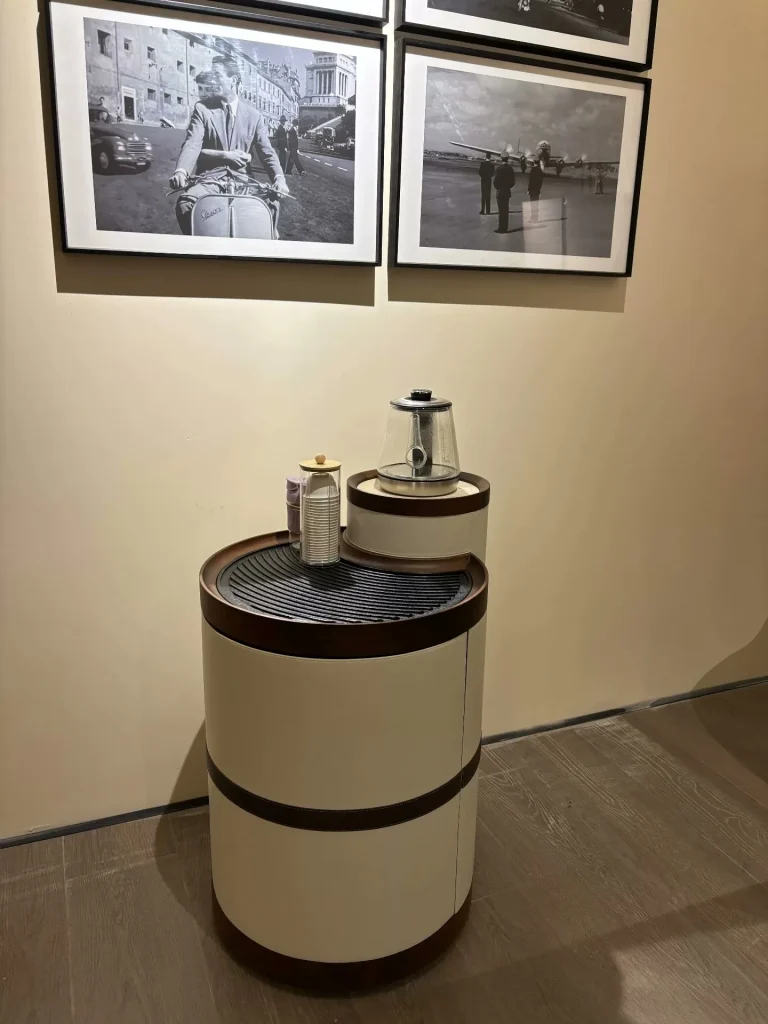
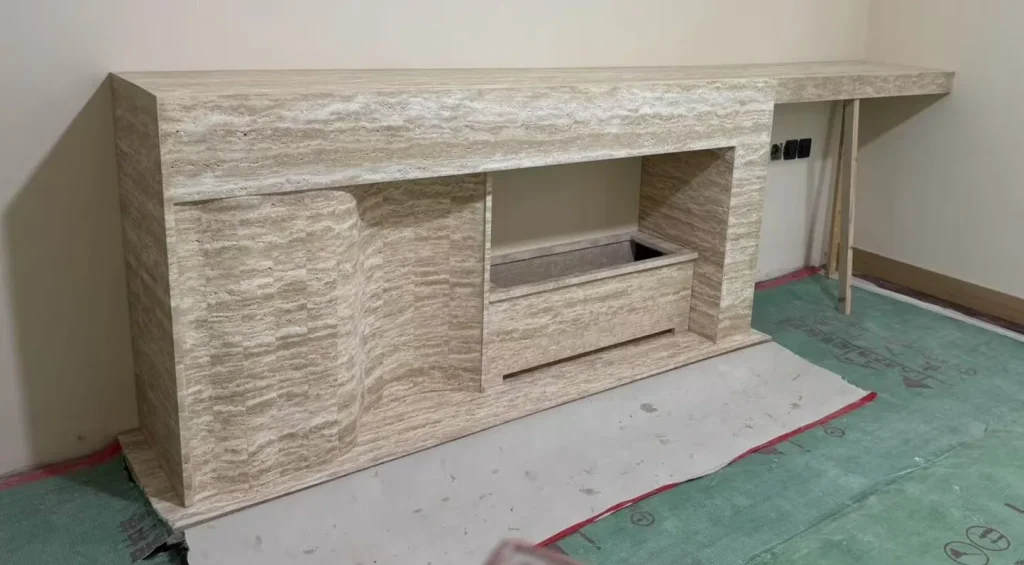
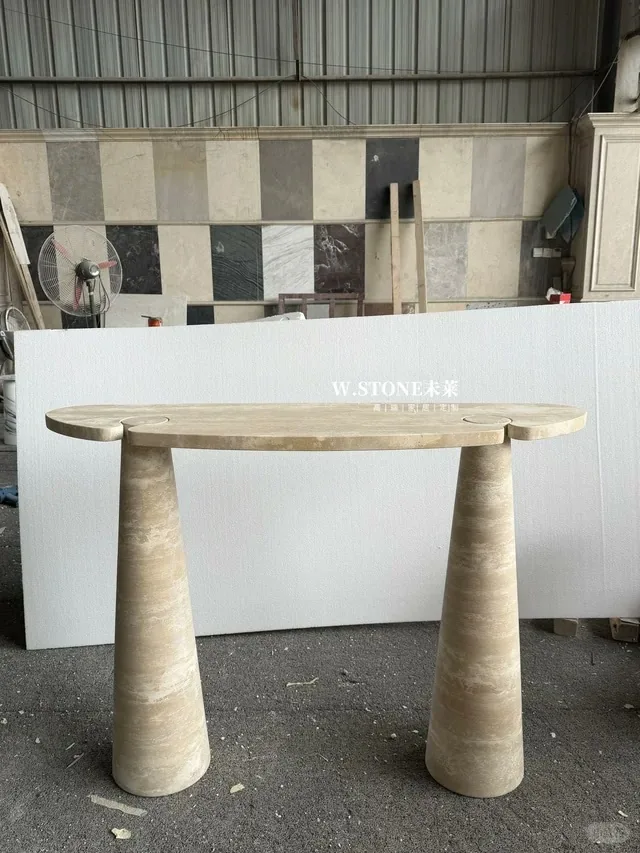
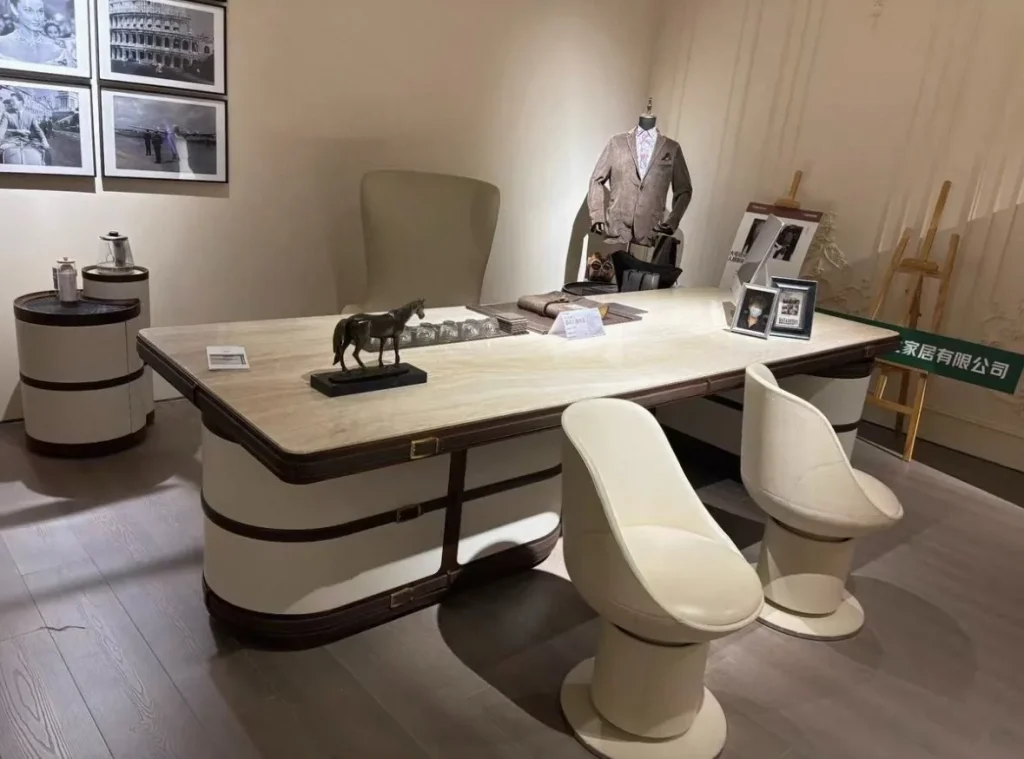
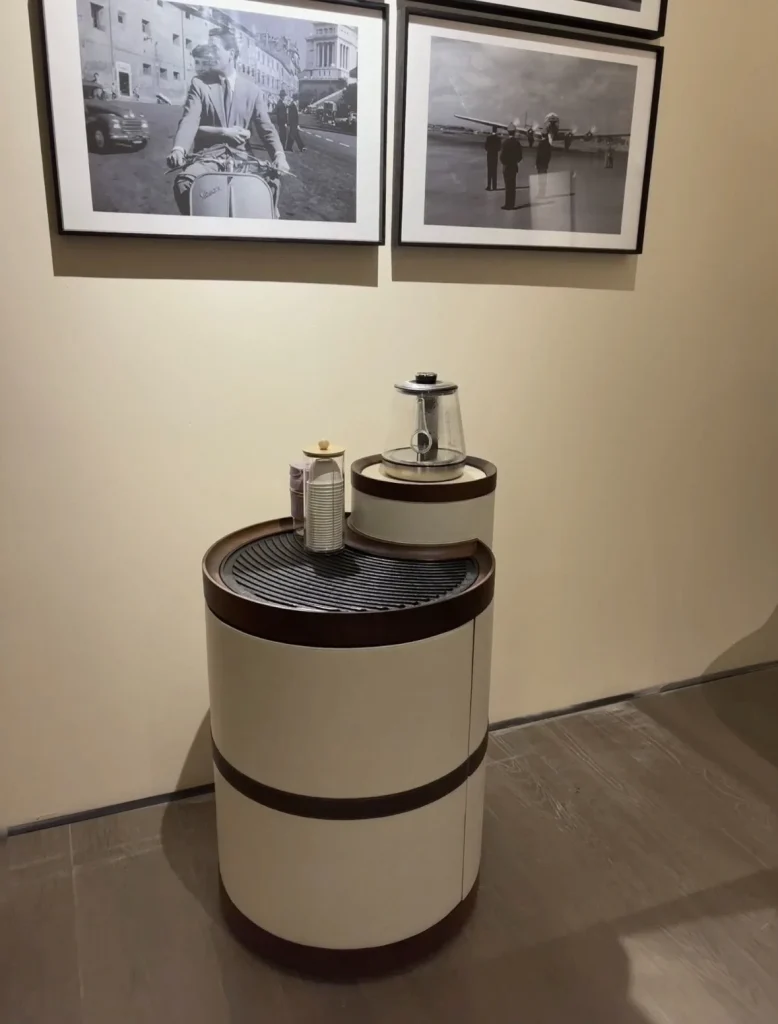
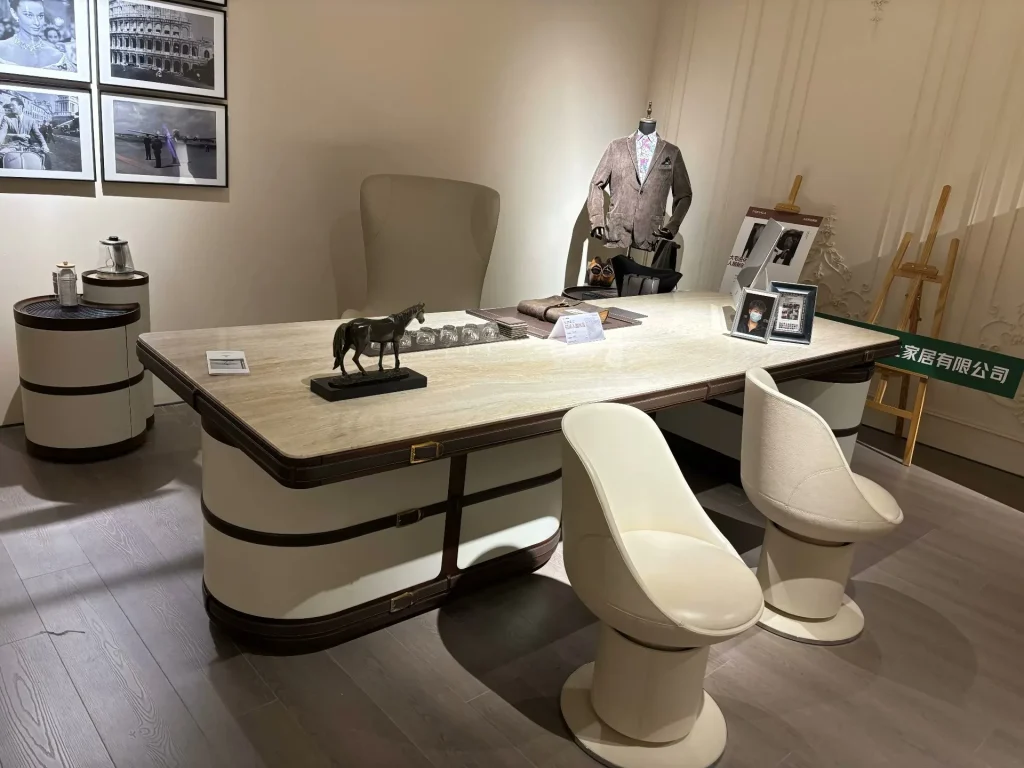
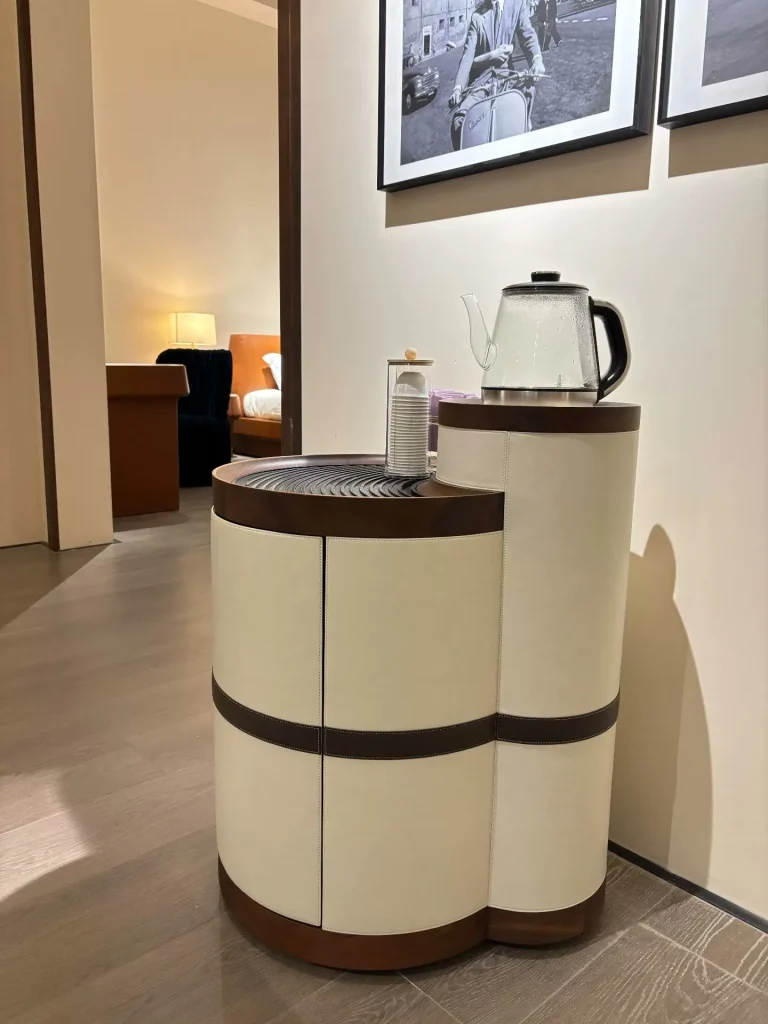
Which stone should be used for a sideboard top?
Choose filled and honed travertine when a quieter, easier-to-clean surface is the priority; choose marble when its specific vein pattern is the controlling design decision and accept the same carbonate-stone care requirements.
| Option | Visual result | Use it when | Main check |
|---|---|---|---|
| Beige Travertino | Warm, calm ground | The room needs a quiet top | Fill color and slab variation |
| Travertino silver | Cooler grey direction | The palette uses grey or stone | Actual batch and finish |
| Travertino rosso | Red or warmer movement | The cabinet is intentionally a focal surface | Fade, fill and vein continuity |
| Marble | Distinct veining | The stone pattern drives the design | Etch visibility under room light |
Travertine is a banded limestone formed by mineral-rich springs and may contain natural voids. Filling changes the surface, while an unfilled face leaves those openings visible. Use the travertine material guide and filled or unfilled comparison before selecting the face.
What size and weight should a stone sideboard top have?
A 1,600 × 450 mm (63.0 × 17.7 in) top is a useful baseline for a low sideboard; weight grows with both thickness and width, so the cabinet frame must be designed for the chosen stone rather than chosen after fabrication.
| Top size | Calculated stone mass at 2.5 t/m³ (156.1 lb/ft³) | Planning use |
|---|---|---|
| 1,400 × 450 × 20 mm (55.1 × 17.7 × 0.8 in) | 31.5 kg (69.4 lb) | Compact wall |
| 1,600 × 450 × 20 mm (63.0 × 17.7 × 0.8 in) | 36.0 kg (79.4 lb) | Dining or living room |
| 1,800 × 500 × 20 mm (70.9 × 19.7 × 0.8 in) | 45.0 kg (99.2 lb) | Wide buffet |
These figures exclude the cabinet, shelves, hardware, backing and packing. Check the top overhang, support-rail spacing and complete assembled mass with the cabinet designer.
How should a stone sideboard be constructed?
Build the cabinet as the load-bearing element and treat the stone as a supported top: a continuous bearing frame, isolated fixings and a drawing that shows every opening are more important than the surface name.
| Element | What to specify | Why it matters |
|---|---|---|
| Top | Solid slab or backed stone with edge detail | Mass, stiffness and edge appearance |
| Cabinet | Plinth, legs or concealed frame | Stability and floor contact |
| Fronts | Doors, drawers or open shelves | Access and stone overhang |
| Services | Ventilation, cable and cutout locations | Clearance and structural continuity |
How do you care for a marble or travertine sideboard?
Clean a sideboard top with a soft cloth and pH-neutral stone cleaner, blot acidic spills immediately, and protect the finish from hot dishes and gritty objects.
- Use a felt pad or tray under lamps and decorative objects that could trap grit.
- Do not use vinegar, lemon cleaner or acidic bathroom products on a carbonate stone face.
- Test a sealer on an offcut and document the product and application date; use the travertine care guide for maintenance.
Can a stone sideboard be customized for a trade project?
Yes, width, doors, drawers, open shelves, stone name, top finish and edge can be resolved together, but the quotation must identify which cabinet elements are included.
| Commercial detail | What to know |
|---|---|
| Minimum order | 1 piece |
| Production schedule | About 20 days production + about 30 days shipping; production starts after deposit receipt and drawing confirmation |
| Price | Sideboard quote on request through Contact |
Send the elevation, plan, cabinet section, stone sample, finish, quantity and destination with the inquiry. The custom stone furniture process explains the drawing and approval sequence.
Frequently asked questions
Is filled travertine suitable for a sideboard top?
Filled travertine is a practical sideboard top when the pits have been filled, the surface is honed or polished, and the finish is sealed and maintained. It still contains carbonate minerals, so wine, citrus and vinegar need prompt removal. Unfilled travertine exposes open pores and usually suits a more textured finish and a stricter cleaning routine.
How deep should a stone sideboard be?
A sideboard is commonly planned at 400–500 mm (15.7–19.7 in) deep, with more depth added only when the room has enough circulation and the cabinet can provide extra support. Check door swing, drawer travel and the route into the room before increasing depth. The stone top should not create an unsupported overhang.
Should a travertine sideboard be sealed?
Yes, a travertine sideboard top should be sealed with a product intended for the selected finish. Sealing slows liquid absorption and helps cleaning; it does not make travertine acid-proof. Reapply according to the product instructions and document the product used. Test any sealer on an offcut from the actual material first.
Can a stone sideboard have open shelves and doors?
Yes, a sideboard can combine open shelves, doors and drawers when the cabinet structure is designed for the resulting loads. The drawing should show adjustable shelves, door clearance, ventilation and the bearing points under the stone top. Open storage reduces hidden clutter but exposes the cabinet interior to dust and room light.
Which related pages help with the final sideboard decision?
Compare the adjacent room furniture, then resolve the stone, care and custom-build questions before approving the cabinet.
Project inquiry
Request a stone furniture quote
Send dimensions, material direction and quantity for a comparable reply.
Useful details include product type, finished dimensions, quantity and destination.
Who wrote this sideboard guide?
The sizing examples use the stated dimensions and density. Stone names describe the collection, but they do not confirm current slab availability.
- The same top at 2.5 t/m³ (156.1 lb/ft³) is 36.0 kg (79.4 lb) at 1,600 × 450 × 20 mm (63.0 × 17.7 × 0.79 in) and 45.0 kg (99.2 lb) at 1,800 × 500 × 20 mm (70.9 × 19.7 × 0.79 in); both exclude the cabinet. Travertine reference
- Travertine is a banded limestone formed by mineral springs and can contain natural voids; filling and finishing determine how open those features appear. Limestone reference
- Amazstone’s travertine collection includes Travertino bianco, Travertino silver, Beige Travertino and Golden Travertino; the names do not confirm current stock. USGS stone glossary
Last updated: 2026-10-28. Commercial values remain open until approved.