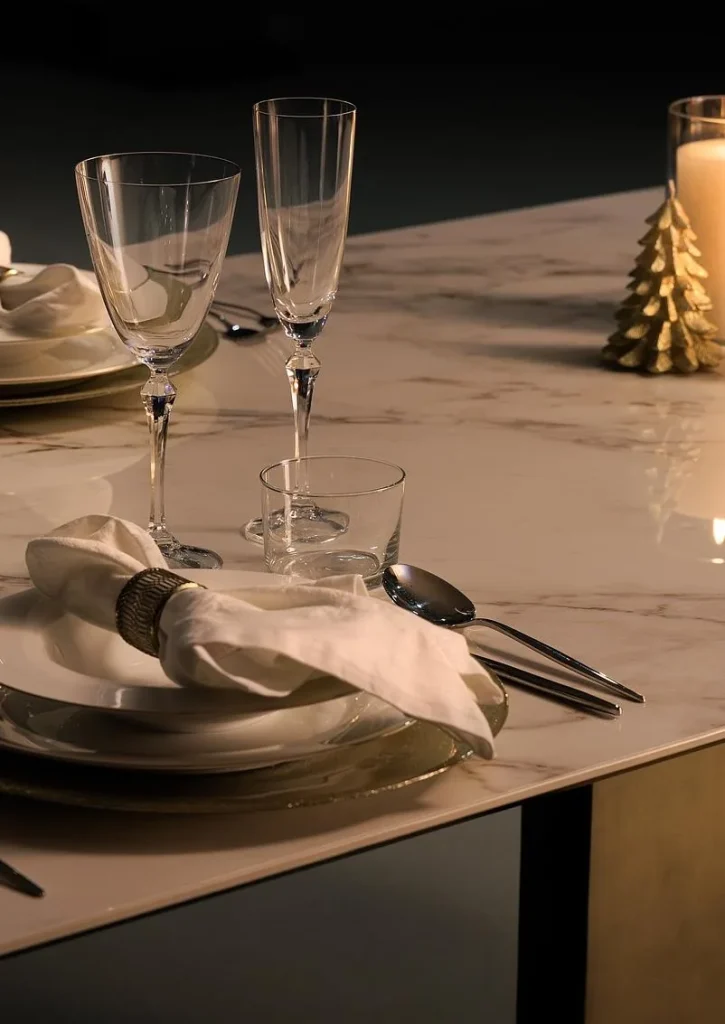
Choose marble for normal table use; choose alabaster only for protected, light-duty translucency or carving. Calcite marble is Mohs 3; gypsum alabaster is about 2 and more water-sensitive. A 1,200 × 600 × 20 mm (47.2 × 23.6 × 0.79 in) marble top at 2.7 t/m³ (168.6 lb/ft³) weighs 38.9 kg (85.7 lb).
What is the furniture comparison between marble and alabaster?
The decisive difference is mineral type. “Alabaster” may mean gypsum or banded calcite, so a comparison that treats all white translucent stone as one material will produce the wrong care and structural advice.
| Property | Marble | Alabaster | Source or condition |
|---|---|---|---|
| Definition | A metamorphic rock formed from limestone | A fine-grained gypsum or calcite material | Marble; alabaster |
| Main chemistry | Usually calcium carbonate | Calcium sulfate for gypsum; calcium carbonate for calcite alabaster | Confirm the mineral, not only the trade name |
| Hardness reference | Calcite scores 3 on the Mohs scale | Gypsum is about 2; calcite alabaster follows calcite | Mohs scale |
| Acid behavior | Carbonate can etch with acid | Calcite type can etch; gypsum type is chiefly water-sensitive | Mineral chemistry and finish |
| Water behavior | Can absorb water and stain; sealer does not make it waterproof | Gypsum alabaster is slightly soluble and vulnerable to prolonged wetting | Test actual stone; avoid wet cleaning |
| Visual pattern | Veins, clouds, breccia or mottling | Banding, translucency and carved color effects are common | Slab appearance varies |
| Translucency | Generally opaque at furniture thickness | Some alabaster is translucent in thin sections | Backlight a sample of the actual piece |
| Reference density | 2.5–2.8 t/m³ (156.1–174.8 lb/ft³) | Depends on mineral type, fissures and backing | Weigh or obtain a slab-specific value |
| 1,200 × 600 × 20 mm (47.2 × 23.6 × 0.79 in) top | About 36–40 kg (79–89 lb) | Alabaster weight depends on mineral type, fissures and backing | Nominal dimensions; the base is additional |
| Typical furniture role | Coffee, side, dining and console tops | Protected decorative or light-duty furniture | Editorial application guidance |
| Finish options | Honed, polished or brushed according to fabricator | Must follow the mineral, porosity and water exposure | Approve the actual finish sample |
| Repair outlook | Etching and scratches may be repolished or refinished | Repair depends on translucency, fissures and gypsum versus calcite | Specialist assessment before work |
| Price comparison | Grade-, size- and finish-specific | Scarcity, translucency and slab condition can dominate | Marble and alabaster slab or finished-piece quotes on request through Contact |
| Outdoor use | Sheltered only; acid and freeze risks remain | Not suitable for exposed weather, especially gypsum alabaster | See outdoor exposure checks |
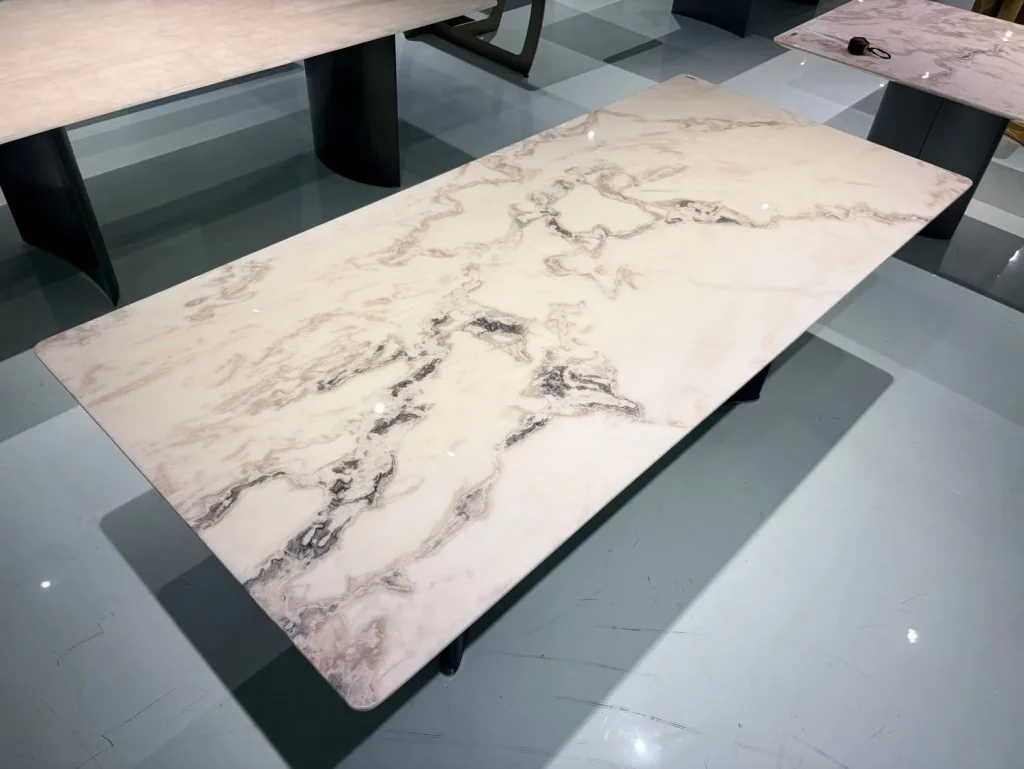
Which marble and alabaster differences matter most?
Mineral type, water exposure and structural continuity matter more than the color of a sample. Alabaster can be beautiful in a protected setting, yet the wrong assumption about its chemistry can make routine table use destructive.
Is alabaster stronger than marble?
There is no universal answer because “alabaster” covers gypsum and calcite materials. Gypsum alabaster is softer and more water-sensitive, while calcite alabaster can share the hardness reference of calcite marble. Fissures, reinforcement and edge design can change practical strength more than the published mineral hardness.
A thin translucent panel is not equivalent to a solid load-bearing slab. If alabaster is proposed for furniture, ask for a structural drawing that shows the span, support, load path, backing and edge reinforcement. Approve the actual slab and avoid extrapolating from a small carved object.
Is alabaster real stone?
Yes. Alabaster is a mineral material, not a resin imitation. Gypsum alabaster is hydrated calcium sulfate, while calcite alabaster is a carbonate material. This matters because their care is different: water is the principal concern for gypsum, while acidic liquids can etch calcite.
A seller using “alabaster” without the mineral type leaves the buyer unable to plan maintenance or repair. Ask for the declared mineral, commercial name and a close photograph or sample of the edge. If those documents conflict, stop before fabrication.
Does translucency make alabaster better for furniture?
Translucency is a visual property, not a strength rating. It can make a backlit panel or a thin table edge show banding that an opaque marble would hide. It can also reveal cracks, fillers and uneven thickness, so the lighting mock-up is part of the design review.
For a table, the face will also be exposed to spills, abrasion and direct light. Confirm whether the selected alabaster tolerates those conditions and how the backlight cavity is sealed and ventilated. A translucent sample that looks even in a showroom may not look even after cutting.
How does water affect alabaster compared with marble?
Gypsum alabaster is slightly soluble in water and can deteriorate with prolonged wetting. Repeated wet cleaning, wet planters and spills that sit around an edge are more dangerous than a single wiped drop. Marble is not waterproof either, but its principal chemical vulnerability is acid etching.
Use dry methods and a tightly wrung cloth when the material supplier approves them. Keep planters in a separate tray and wipe drinks immediately. A sealer can help a specific marble or calcite surface, but it cannot make gypsum alabaster suitable for a wet environment.
Which material fits a dining table?
Marble is the practical choice for a dining top when the owner accepts acid care. The 1,200 × 600 × 20 mm (47.2 × 23.6 × 0.79 in) example at 2.7 t/m³ (168.6 lb/ft³) weighs 38.9 kg (85.7 lb), so the base, delivery route and floor still need review. A lower-density or thinner slab may reduce weight but can change strength.
Alabaster belongs in a protected, light-duty setting. A dining table combines repeated cleaning, hot dishes, glasses, cutlery and occasional impacts. Unless the exact alabaster assembly has a credible structural and care specification, marble or a non-carbonate stone is easier to justify.
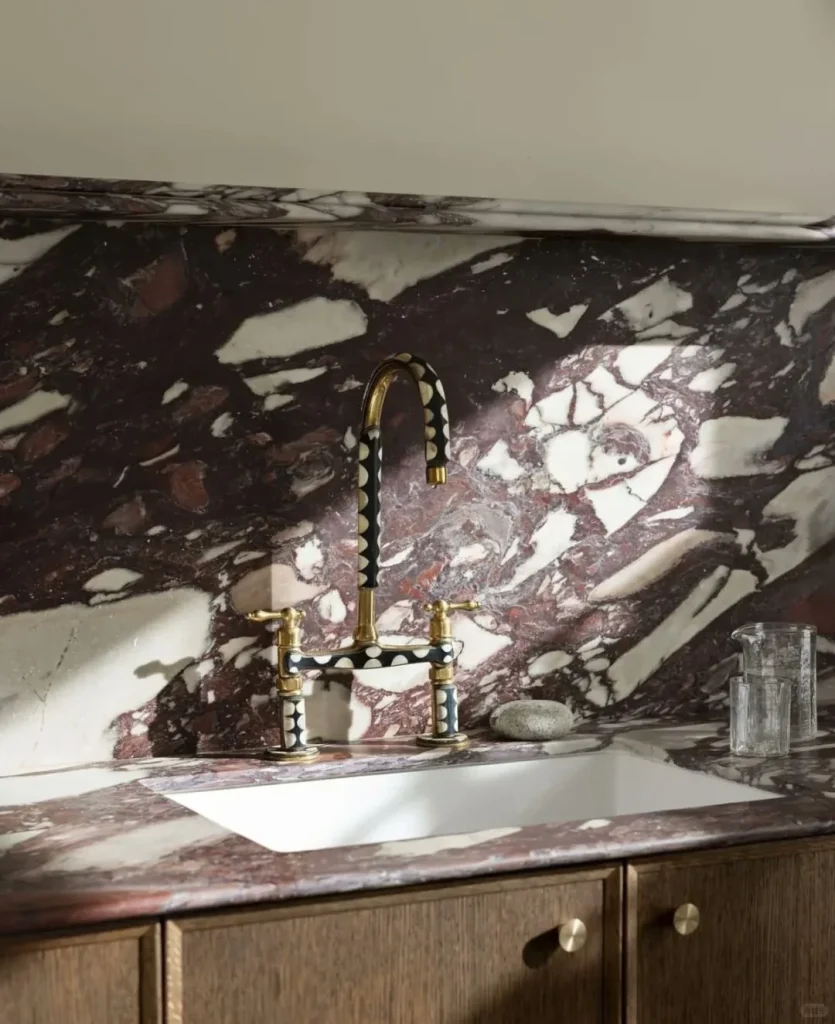
How can you tell alabaster from marble?
Start with the written mineral name, then compare translucency, edge condition and how the surface responds to an approved sample test. Appearance alone is unreliable because banded calcite alabaster can resemble marble.
| Check | Marble clue | Alabaster clue | What the check cannot prove |
|---|---|---|---|
| Label | Marble or a named marble variety | Alabaster plus gypsum or calcite mineral | A trade name can be used loosely |
| Translucency | Usually reads opaque at furniture thickness | Some pieces glow when backlit | Thin or resined marble may also transmit light |
| Pattern | Veins, breccia or mottling | Fine bands or cloudy translucency | Cut direction affects appearance |
| Edge | Can be polished like the face | May reveal softer layers, fissures or backing | Filler can hide the original edge |
When should you choose marble or alabaster?
Choose marble for furniture that needs a conventional tabletop and has a realistic acid-care plan. Choose alabaster only when the visual effect is essential and the furniture can remain protected, dry and light-duty.
| Choose marble if… | Choose alabaster if… |
|---|---|
| The table will carry food, drinks, lamps or everyday objects | The object is decorative or lightly used |
| The owner accepts prompt spill cleaning and etching risk | The design can control water, abrasion and impact |
| A standard slab thickness and tested base are available | A structural mock-up proves the thinner or carved form |
| The room calls for visible veins or broad color | Translucency or fine banding is the central design idea |
Where do these materials lead in the existing furniture range?
The current URL map has direct collections for marble furniture but no alabaster collection. Marble can be explored by color and form; any alabaster proposal should remain a custom material brief until the slab and structure are verified.
For marble, compare white marble coffee tables with the visually stronger Calacatta Viola coffee tables. For an alabaster request, start with the sample, finish and edge approval process before discussing a collection page.
Frequently asked questions about marble and alabaster
Is alabaster stronger than marble?
Usually not. Gypsum alabaster is softer and more water-sensitive than calcite marble, although calcite alabaster is a different material and can share marble’s hardness reference. Strength also depends on fissures, thickness, reinforcement and the furniture joint. Identify the mineral type and test the actual piece rather than judging from the white color.
Is alabaster a type of marble?
Not necessarily. The word alabaster can describe gypsum, a sulfate mineral, or a banded calcite material sometimes called onyx marble. Gypsum alabaster and calcite marble have different chemistry, hardness and water behavior. A trade label alone is insufficient, so confirm the mineral name, slab document and intended finish.
Can alabaster be used for a tabletop?
It can be used for a protected, light-duty table where translucency or carved detail is the main goal. A working dining top is harder to justify because gypsum alabaster is soft and water-sensitive. Use written design loads, a continuous base, sealed edges and a care protocol, then verify that the exact slab can carry the span.
Does water damage alabaster furniture?
Water is a serious concern for gypsum alabaster because the mineral is slightly soluble and can deteriorate with prolonged wetting. Calcite alabaster behaves differently but remains vulnerable to acidic etching. Keep drinks and planters off the surface, wipe promptly, protect edges and avoid wet cleaning unless the material supplier has approved the method.
Who wrote this marble and alabaster guide?
The Amazstone Editorial Team compared the mineral definitions, hardness references and care implications, then added the condition that commercial labels can be ambiguous. No general stone comparison can replace a slab-specific declaration.
- Marble is a metamorphic carbonate rock; its calcite content explains acid sensitivity and a Mohs reference of 3 for the mineral.
- Alabaster refers to gypsum or fine-grained calcite materials; the two types must not be assigned the same hardness or water-care rules.
- Mohs hardness gives gypsum a reference of 2 and calcite a reference of 3; these are mineral values, not furniture impact ratings.
- The 1,200 × 600 × 20 mm (47.2 × 23.6 × 0.79 in) marble weight example uses the site’s 2.7 t/m³ (168.6 lb/ft³) reference density and nominal dimensions; bases, backing and packaging add weight.