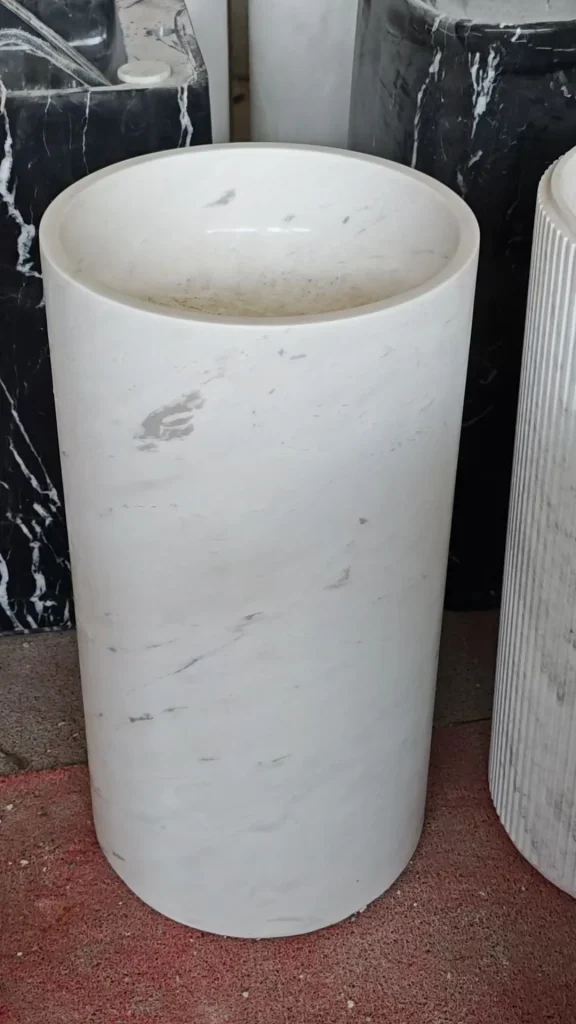
A vessel basin measures 400–500 mm (16–20 in) across, with an 800–900 mm (31–35 in) rim height. A pedestal sink uses a narrow stone column. A 400 mm (15.7 in) round, 20 mm (0.79 in) surface at 2.7 t/m³ (168.6 lb/ft³) weighs 6.8 kg (15.0 lb), before carving.
What pedestal and vessel sink sizes can I plan for?
Amazstone’s sink designs do not provide a standard outer size, bowl depth, drain position, net weight or mounting detail. A category name does not establish that every image is a carved single-stone bowl. Specify the installation on a measured drawing.
| Detail | Planning reference | Why the drawing must confirm it |
|---|---|---|
| Available sink dimensions | Not provided for the sink category | No size or weight can be inferred |
| Vessel basin width | 400–500 mm (16–20 in) | Faucet reach, deck space and hand access |
| Finished rim height | 800–900 mm (31–35 in) for many vanities | User height, cabinet and tap geometry |
| Pedestal support | Narrow floor contact | Stability, floor fixing and wall restraint |
| Drain and overflow | Not specified | Trap position, service access and overflow path |
| Minimum order | 1 piece | Approved commercial terms |
| Production timing | About 20 days production + about 30 days shipping; production starts after deposit receipt and drawing confirmation | Quotation with a defined start event |
| Price basis | basin quote on request through Contact | Comparable basin and delivery scope |
| Current stock | Yes, stock is available. | Sizes and quantities are not published |
Which sink form fits the vanity or floor plan?
A vessel sink sits above a counter and makes the bowl visible; a pedestal sink replaces the cabinet and uses a column for support. The first choice is therefore installation type, not stone colour.
- Stone vessel sinks for a counter-mounted bowl.
- Marble pedestal sinks for a freestanding basin and column.
- Marble bathroom vanities when the counter and storage are part of the project.
- Travertine vanities for a travertine counter direction.
Measure the rough-in before selecting a bowl. A larger vessel can look right on screen but leave too little room for the tap or hands.
Which sinks can I order for a small project?
Vessel and pedestal sinks can be supplied from stock or made to order, with a one-piece minimum. Send the installation type, rim size and stone choice to request the current sink list and a quote; the team replies within 24 hours.
Stock and custom production are available with a minimum order of 1 piece; request this category's product list.
Request product listThe bowl rim, wall, waste opening, overflow and underside are all useful drawing views because the visible top does not show how the basin drains or mounts.
Stone stone sinks in our collection
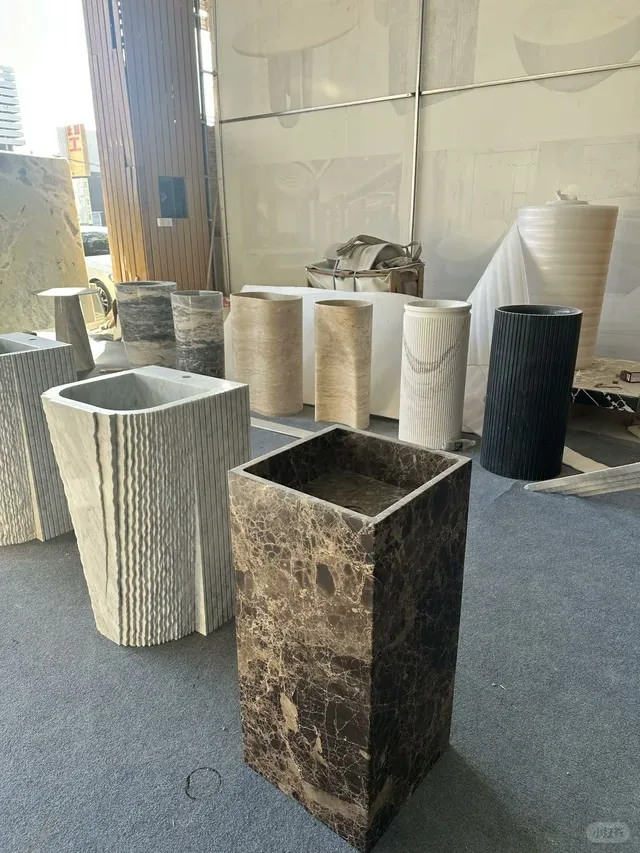
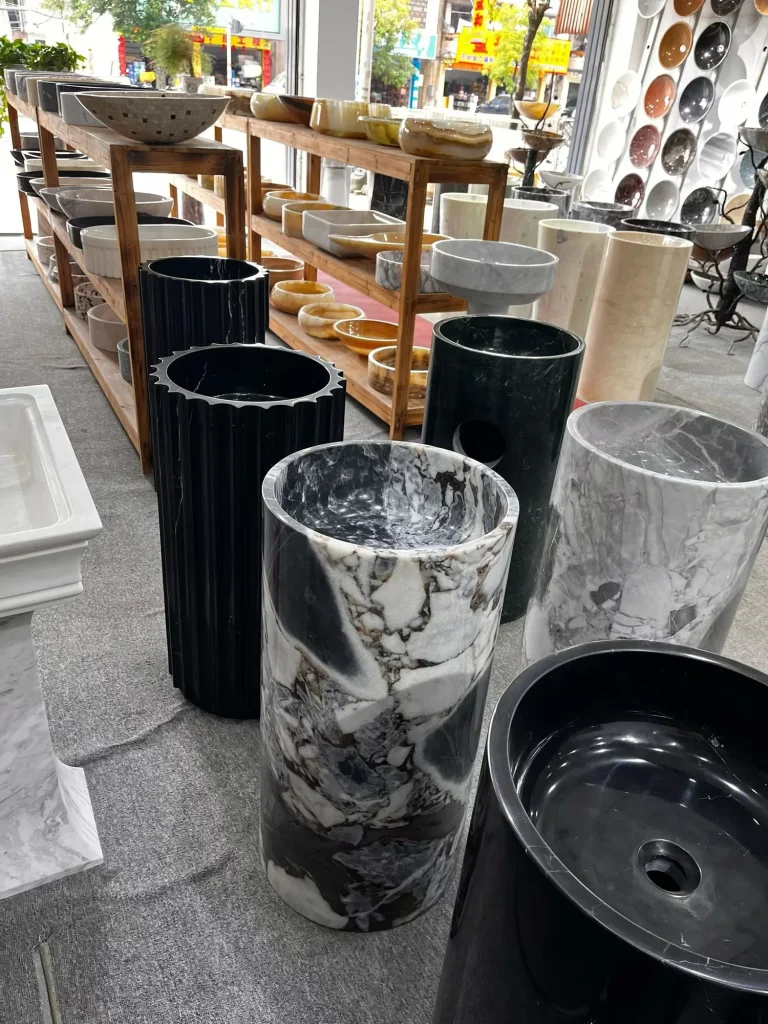
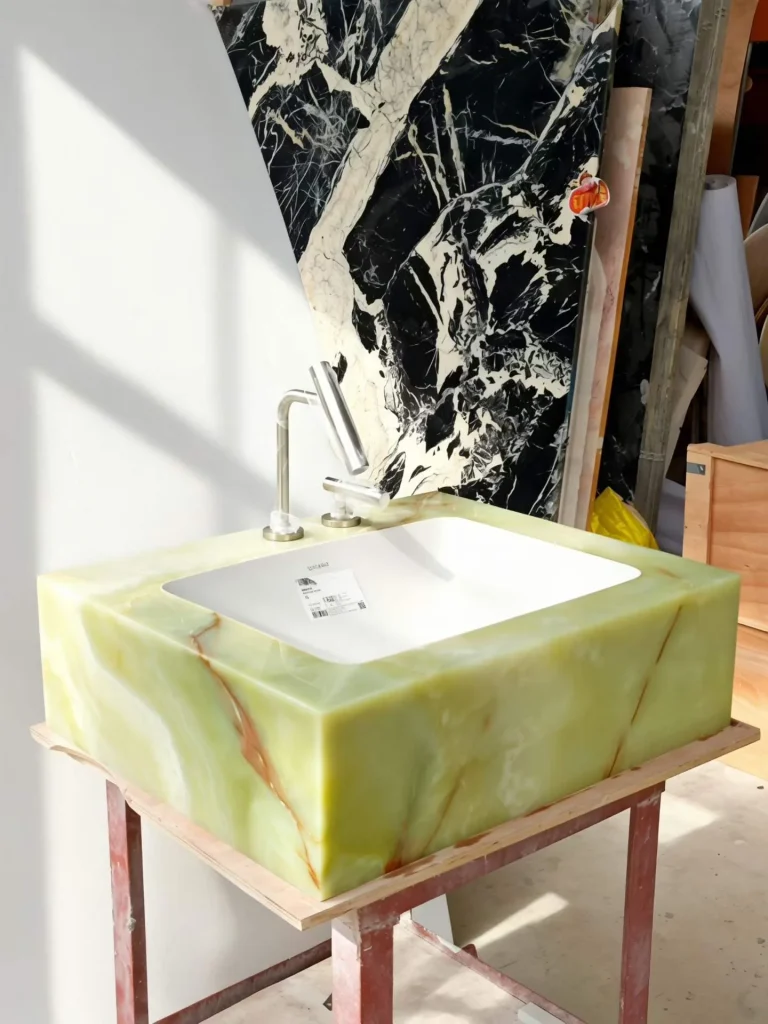
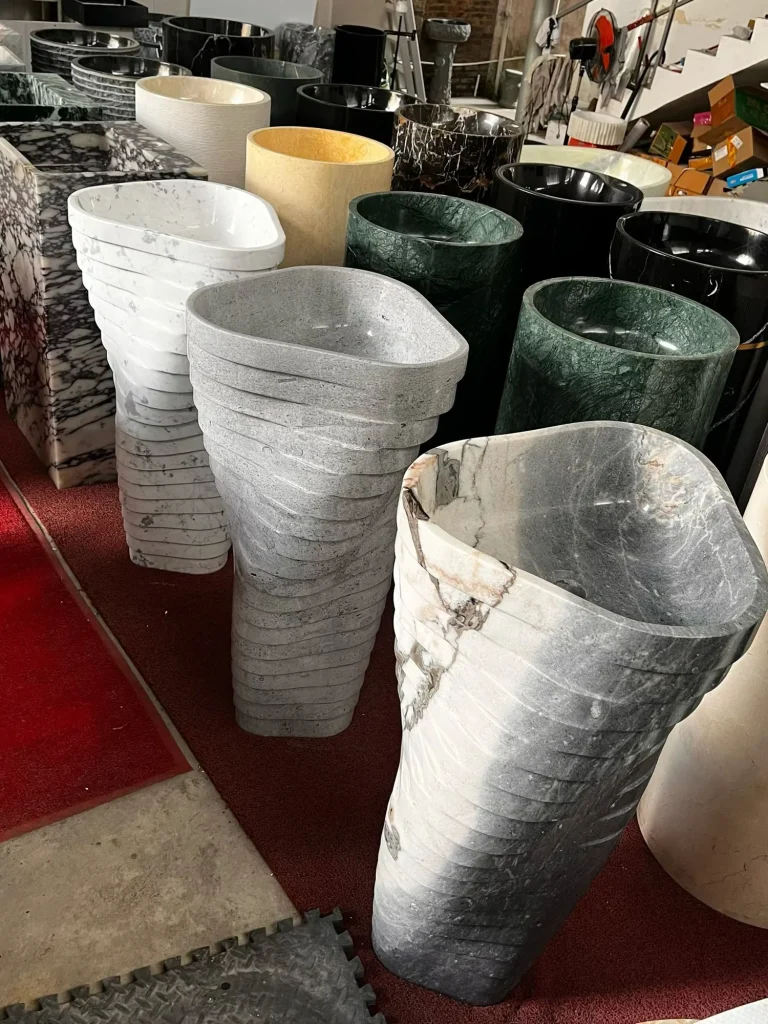
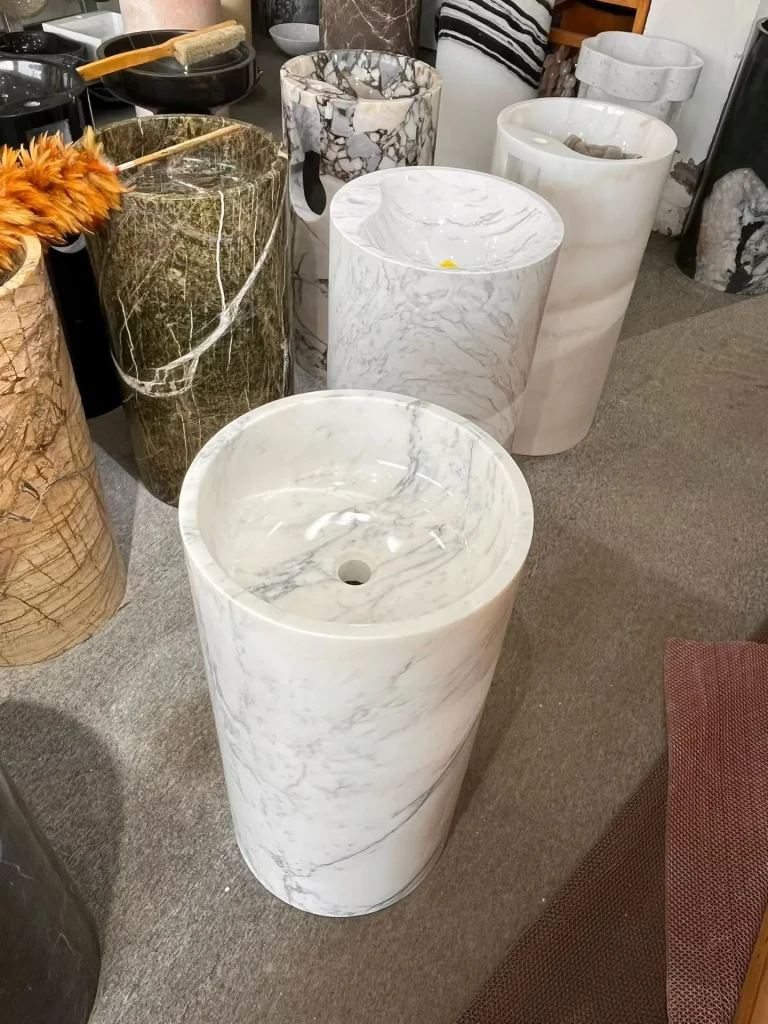
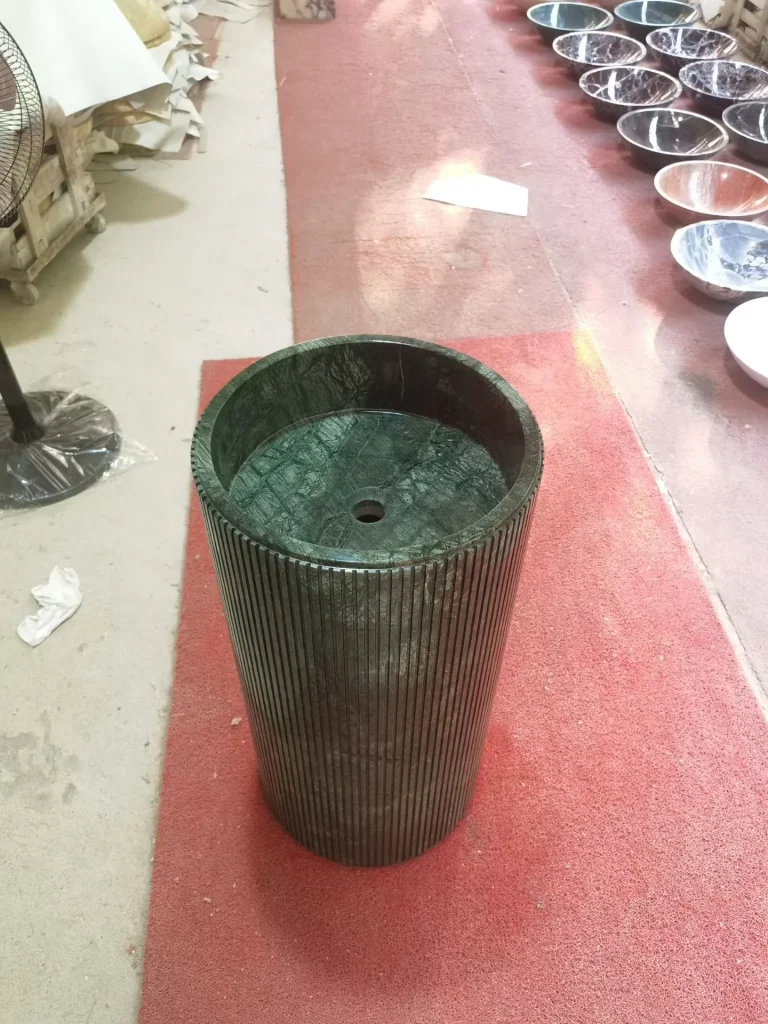
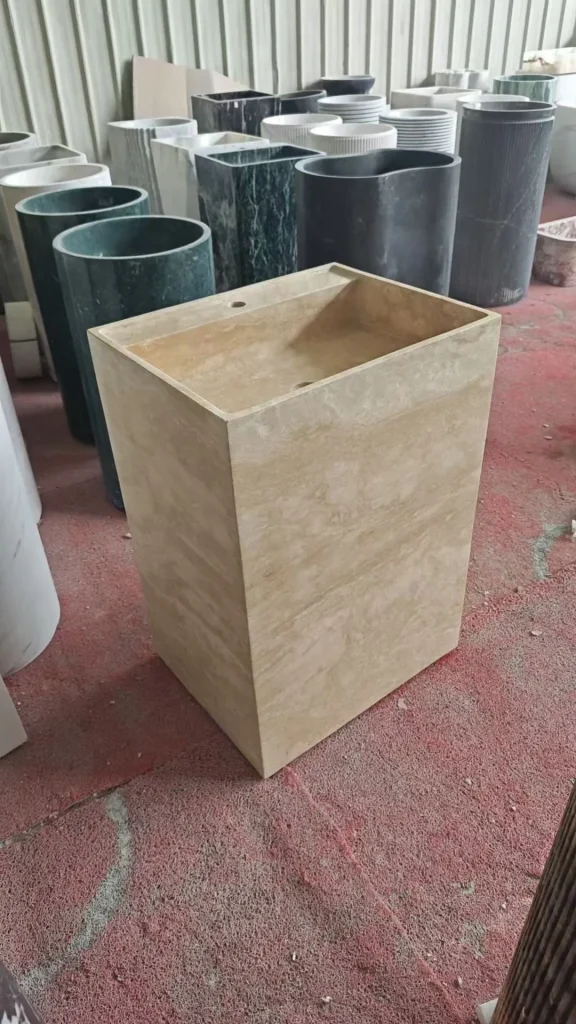
Which stone works in a wet basin?
Marble and filled travertine can work when sealed and cleaned carefully; onyx needs a structurally approved slab; quartzite offers a harder mineral reference but still needs a suitable finish. No family label makes a basin stain-proof or ready for every cleaner.
| Stone | Density reference | Wet-area risk | Suitable condition |
|---|---|---|---|
| Marble | 2.5–2.8 t/m³ (156.1–174.8 lb/ft³) | Acid etching and staining | Sealed basin; pH-neutral care |
| Travertine | 2.2–2.7 t/m³ (137.3–168.6 lb/ft³) | Open voids retain residue | Filled interior and maintained seal |
| Onyx | 2.4–2.7 t/m³ (149.8–168.6 lb/ft³) | Structure and colour vary | Approved slab and checked bowl wall |
| Quartzite | 2.6–2.9 t/m³ (162.3–181.0 lb/ft³) | Hard material; finish still matters | Tested wet grip and fabrication detail |
The ranges are reference data, not a test of an unnamed sink. See the ASTM C503 marble specification and Natural Stone Institute care guidance.
How should a vessel or pedestal basin be sized?
A vessel bowl needs deck space around it, a tap that reaches over the rim and a drain aligned with the cabinet cut-out. A pedestal sink needs enough floor area for the column and enough clearance to clean around it. Rim height alone is not a complete specification.
| Outer width | Typical condition | Check on the drawing |
|---|---|---|
| 400 mm (15.7 in) | Compact guest or powder room | Tap reach and hand clearance |
| 450 mm (17.7 in) | Common mid-size vessel | Counter depth and waste alignment |
| 500 mm (19.7 in) | More generous bowl | Deck space and user reach |
For a 400 mm (15.7 in) round surface at 20 mm (0.79 in) and 2.7 t/m³ (168.6 lb/ft³), the solid slab equivalent is about 6.8 kg (15.0 lb). That number does not include the bowl walls, base, tap or packaging. For a wall thickness or finished sink weight, measure the actual assembly.
How do drainage and mounting change the design?
The bowl needs a controlled slope toward the waste, a compatible drain seal and enough access to service the trap. An overflow, if specified, must follow the bowl geometry and not rely on an undisclosed cavity. A pedestal needs a stable floor contact and a structural connection to the basin.
Ask for a section through the wall, base, waste and fixing. Confirm whether the bowl is carved, built from pieces or paired with another material. The stone-weight calculator can check a simple stone volume, but not a hollow basin or the complete plumbing assembly.
How should a stone sink be cleaned?
Flush toothpaste, soap and acidic cosmetics with water, then wipe with a soft cloth and pH-neutral stone cleaner. Avoid vinegar, descalers, abrasive powder and bleach mixtures unless the stone supplier has approved them. Keep standing water away from the rim and underside.
Check the drain and overflow for leaks rather than assuming a drying mark is harmless. If a marble surface etches, the marble cleaning and etching guide explains why ordinary washing may not restore it.
What belongs in a custom sink drawing?
Show the outer and inner dimensions, bowl depth, rim thickness, drain centre, overflow, tap model, mounting method, weight and access. For a pedestal, include the floor contact, wall restraint and trap route. For a vessel, include the counter cut-out and deck clearances.
The custom stone furniture process describes the approval sequence. Commercial values remain in the quotation, and the sample must match the actual stone and finish.
Which sink questions matter before choosing stone?
The four questions below cover suitability, style, maintenance risk and material choice.
Is a marble sink a good idea?
Marble can work as a basin when the stone is sealed and cleaned with pH-neutral products. The interior must drain properly and remain accessible around the tap and waste. Marble is acid-sensitive, so toothpaste, descalers and some cosmetics need prompt rinsing. A honed surface is less gloss-sensitive than polish.
Are pedestal sinks still in style?
Pedestal sinks remain useful in small or period bathrooms and where a compact floor footprint matters. Their appearance matters less than rough-in location, tap reach, basin depth and access to plumbing. A stone pedestal also needs a checked floor support and wall restraint rather than being treated as a decorative object.
What are the downsides of using marble as a sink?
Marble can etch, stain and become slippery, while a carved bowl can be heavy and difficult to replace. Its absorbency and acid sensitivity vary by slab, so the chosen block and finish need approval. Drain cut-outs, overflow and cleaning access are more critical than on a simple tabletop.
What is the best material for a pedestal sink?
There is no single best material; vitreous china is common, while natural stone offers a heavier, visually specific basin. Travertine and marble need sealing and acid care, quartzite is harder but still needs a tested finish, and onyx requires slab approval. Choose by installation, cleaning tolerance and the approved sample.
Where should the bathroom project continue?
Project inquiry
Request a stone furniture quote
Send dimensions, material direction and quantity for a comparable reply.
Useful details include product type, finished dimensions, quantity and destination.
How was this sink guide researched?
The editorial team updated this page on 2026-10-27. The sink designs do not include dimensions, bowl depth or net weight, so the page treats installation values as planning conditions.