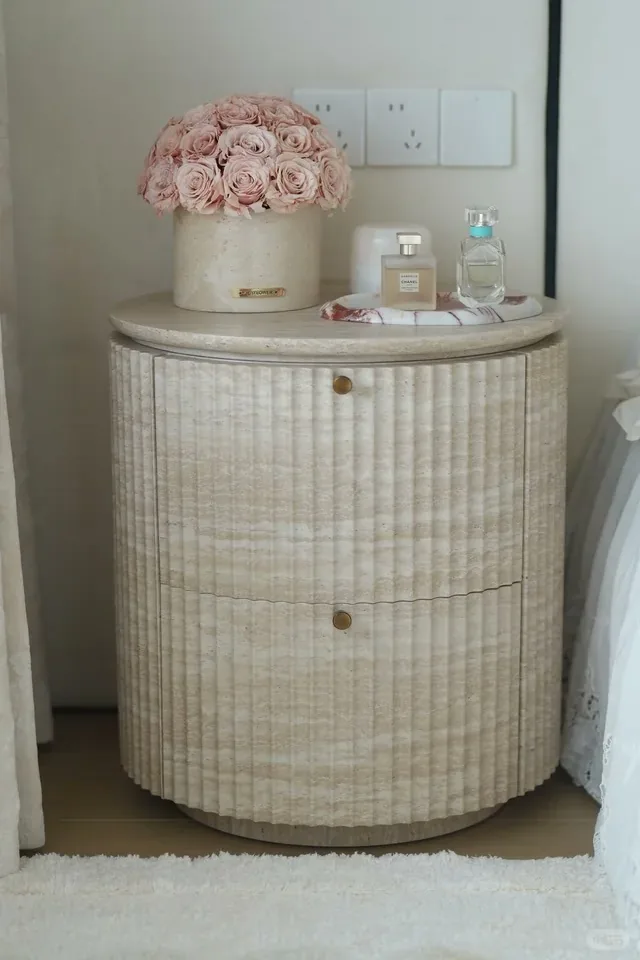
A stone nightstand is 500–600 mm (20–24 in) high, 400–500 mm (16–20 in) wide and 350–450 mm (14–18 in) deep; match mattress height and confirm drawer, switch and cable access. A 500 × 400 × 20 mm (19.7 × 15.7 × 0.79 in) top weighs 10.8 kg (23.8 lb), so keep base stable.
What changes the specification of a stone nightstand?
Mattress height, base footprint, storage and wall clearance change the specification more than stone colour. Start with usable top area and cable access.
| Specification | Planning basis |
|---|---|
| Finished height | Usually matched to the mattress top; check the assembled bed, not the mattress label alone |
| Width and depth | Allow lamp and book space while preserving access to drawers and bed circulation |
| Top thickness | 12 mm (0.47 in) for inset work, 20 mm (0.79 in) for a supported domestic top, 30 mm (1.18 in) where the edge should read as substantial |
| Finish and clearance | Honed reduces glare; check plug access, drawer swing and skirting |
| Stability | A narrow plinth base needs a wider bearing area or a designed wall restraint |
| Commercial terms | Confirm current pricing and availability in an approved quotation |
Which stone nightstand format fits my bed and floor plan?
Choose a drawer cabinet for concealed storage, or a plinth for a minimal bedside where the bed already has storage elsewhere. A stone-topped side table covers lamp, glass and book.
- Travertine nightstands pair linear voids with a warm neutral top.
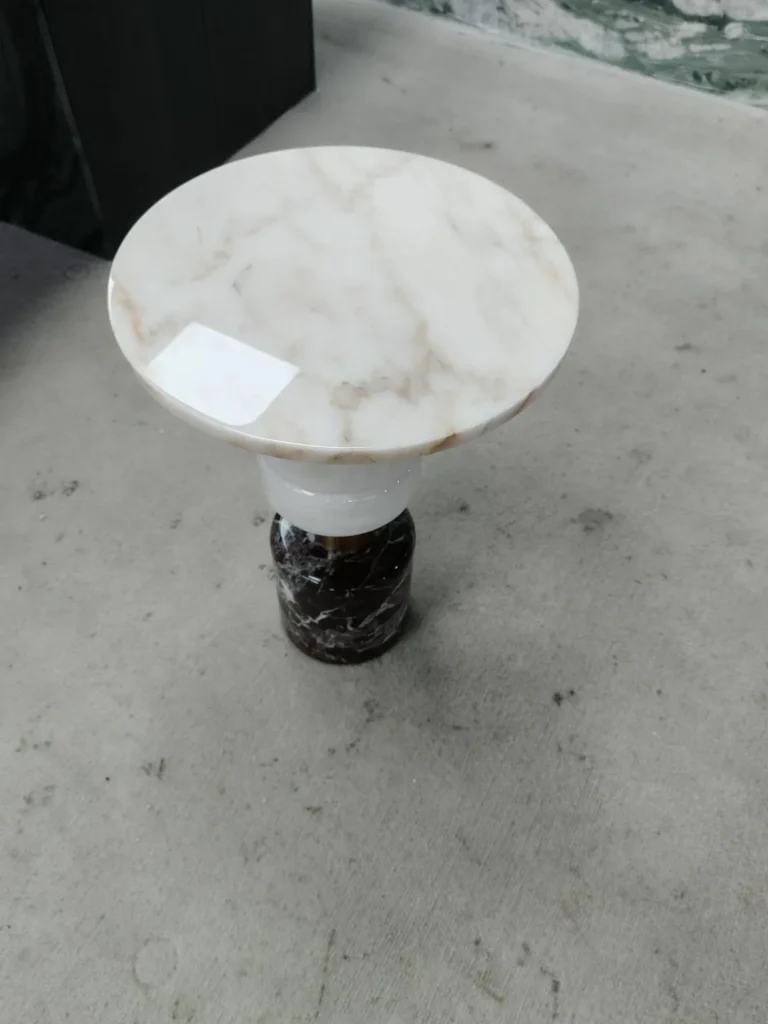
- Round marble side tables suit a compact bedside with no drawer requirement.
- Travertine vanities show how stone tops translate into a larger storage cabinet.
- Marble plinths and pedestals provide a simpler bedside volume when the base is correctly sized.
Which bedside storage design fits the room?
Compare construction, finished height and bearing area before choosing a stone pattern. A photograph cannot show drawer travel, fixing details or delivered weight.
Stock and custom production are available with a minimum order of 1 piece; request this category's product list.
Request product listStone nightstand in our collection
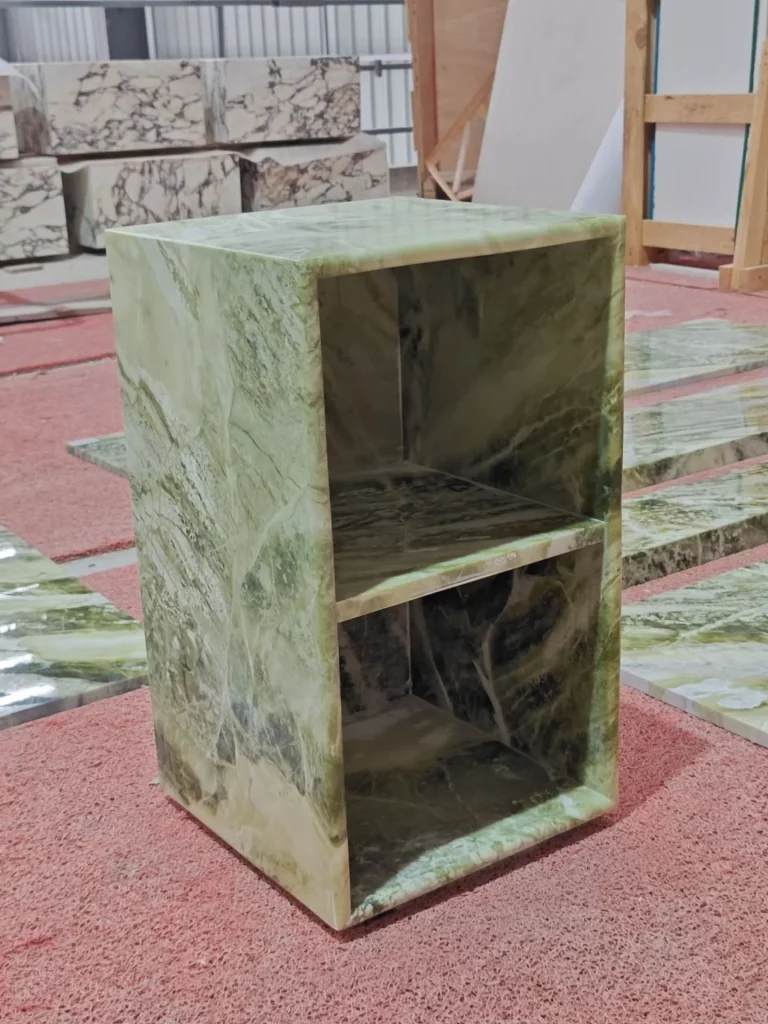
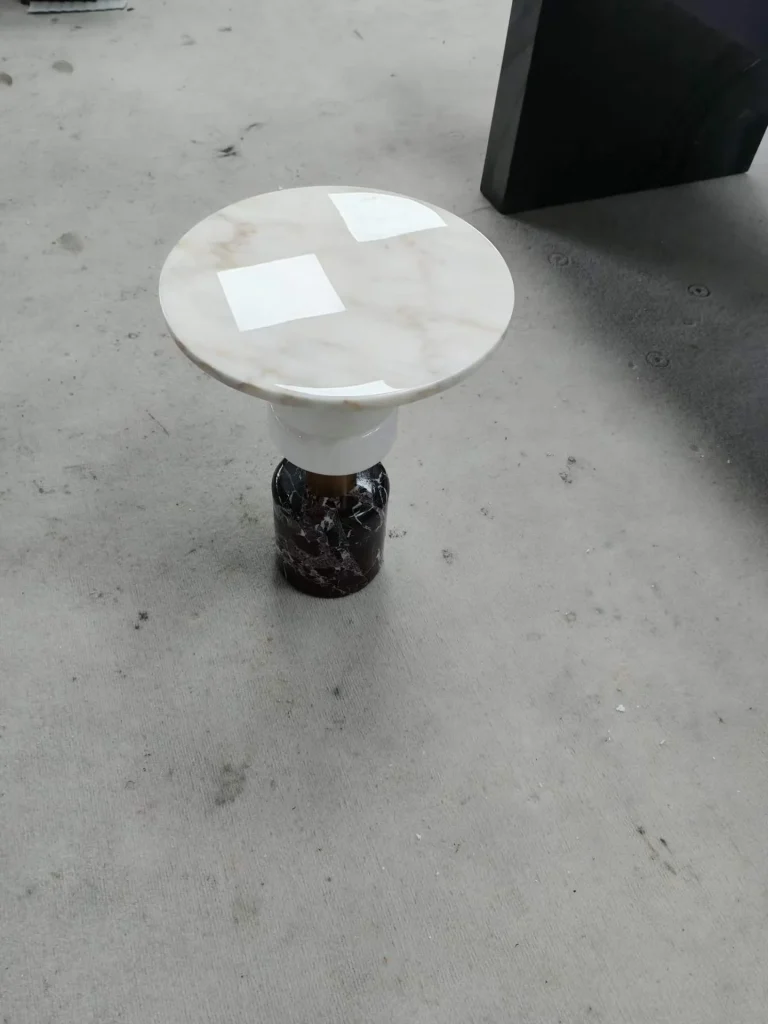

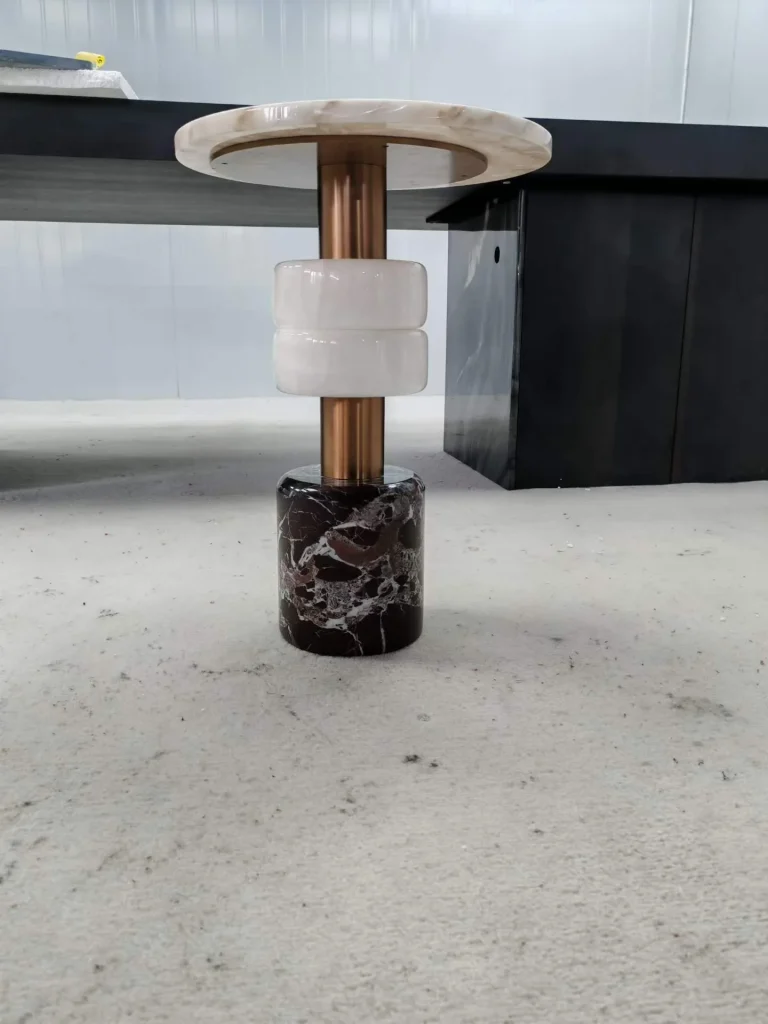
Which stone works best for a bedside table?
Marble gives the widest visual range, filled travertine reduces visible voids, and onyx is better reserved for a protected feature piece. The practical result depends on finish, edge exposure and careful sealing more than on colour alone.
| Stone | Recognisable appearance | Nightstand consideration |
|---|---|---|
| Marble | Veins, clouds, breccia or uniform fields | Calcite-based varieties are acid-sensitive; seal and wipe spills promptly |
| Travertine | Linear bands and natural pores | Filled and honed surfaces reduce catching around the bedside |
| Onyx | Translucent-looking bands or dramatic movement | Use where the top is protected from heavy objects and standing water |
| Quartzite | Often quartz-rich with crystalline movement | Specify a tested slab rather than assuming higher scratch resistance |
A busy slab can dominate a small bedside surface, so approve the pattern at full scale.
What size nightstand leaves useful bedside space?
A 500–600 mm (20–24 in) finished height suits many standard beds, but the mattress top is the real reference. Match the top within roughly 20 mm (0.8 in), then test the remaining floor clearance with a taped outline.
| Room condition | More forgiving nightstand size | What to check |
|---|---|---|
| Standard bedroom, one bedside lamp | 450–550 mm wide × 400–450 mm deep (17.7–21.7 × 15.7–17.7 in) | Drawer swing, switch reach and space between bed and wardrobe |
| Compact guest room | 350–450 mm wide × 300–400 mm deep (13.8–17.7 × 11.8–15.7 in) | Whether the drawer can open without crossing the bed |
Measure the bed frame, mattress overhang and obstruction before fixing a custom outline.
How should a stone nightstand support storage and cables?
Support the top continuously wherever it carries a lamp, books or water; a heavy slab should not bridge an open drawer box without a designed frame. Establish whether the visible body is solid stone, hollow stone, or a cabinet with applied stone before discussing fixing and moving.
For a drawer version, confirm runners, drawer stop and top clearance. Both formats need a cable path.
| Detail | Question to resolve before production |
|---|---|
| Top support | Is the slab supported around its perimeter or only at isolated brackets? |
| Body | Is weight reduced through a hollow core, and how are visible edges finished? |
| Drawer | What limits extension, and can the front be adjusted without stressing stone? |
| Floor and wall | Which levelling pads protect the floor, and which wall fixing suits the wall type? |
How do you care for a marble nightstand?
Wipe up water, coffee and wine before they sit, and use a pH-neutral stone cleaner rather than vinegar or acidic bathroom products. Keep the sides of a polished black or dark marble top dry to reduce visible marks.
- Use coasters; metal can leave rings when moisture is trapped.
- Blot spills instead of wiping across a vein or joint.
- Follow the supplier’s tested sealing method.
- Lift the base rather than pulling the stone top.
The marble cleaning, sealing and etching guide explains the next step when a dull acid mark appears.
What must a custom or trade nightstand quotation state?
A useful quotation fixes the bed height reference, finished outline, stone selection, top thickness, construction, drawer travel and cable positions. Confirm those variables before comparing prices or schedules.
| Decision | Information required |
|---|---|
| Order quantity | 1 piece |
| Production timing | About 20 days production + about 30 days shipping; production starts after deposit receipt and drawing confirmation |
| Budget | Nightstand quote on request through Contact |
| Availability | Yes, stock is available. Sizes and quantities are not published. |
Send a measured elevation with the bed, wall, skirting and cable outlet; for a pair, state whether grain must mirror.
What else should I check before ordering a stone nightstand?
Check the details that disappear in styled photographs: drawer travel, wall fixing, delivered weight and access to the room. These points decide whether the finished piece works every night.
Can stone nightstands have drawers?
Yes, but the drawer box is usually a wood or metal cabinet with a stone top, front or surround; a fully hollowed stone carcass would be much heavier and needs specialist slides. Check that the drawer can open beside the bed, that stops prevent it pulling out, and that the plinth does not block skirting. Confirm the construction rather than inferring it from a photograph.
How high should a marble nightstand be?
Set the nightstand top about level with the mattress top, commonly around 500–600 mm (20–24 in) finished height for standard beds, then check the actual mattress and bedding depth. Ten to twenty millimetres (0.4–0.8 in) below the mattress top usually leaves room for a lamp and a book while keeping the switch reachable from bed.
Does a stone nightstand need wall anchoring?
A tall or narrow stone nightstand should be assessed for wall anchoring, especially in homes with children or seismic movement. Confirm the base footprint, centre of gravity and mounting method. A low, deep cabinet may be stable by itself, while a slim plinth with a heavy top needs a designed restraint rather than loose adhesive pads alone.
Where can I continue comparing stone bedroom furniture?
Continue with the material family when colour variation matters, or move to a matching category when the room layout is already settled. These links follow the existing furniture and stone topic structure.
Project inquiry
Request a stone furniture quote
Send dimensions, material direction and quantity for a comparable reply.
Useful details include product type, finished dimensions, quantity and destination.
Who wrote this nightstand guide?
This guide combines bedroom-planning conventions with calculated top weights. Check the measurements against your selected bed and the final construction drawing.
- A 500 × 400 × 20 mm (19.7 × 15.7 × 0.79 in) marble top at 2.7 t/m³ (168.6 lb/ft³) calculates to 10.8 kg (23.8 lb) before the base. ASTM C503
- Marble is commonly 2.5–2.8 t/m³ (156.1–174.8 lb/ft³) in reference ranges; a specific slab can differ.
- Natural Stone Institute guidance supports prompt spill removal and pH-neutral care for stone surfaces. Stone care