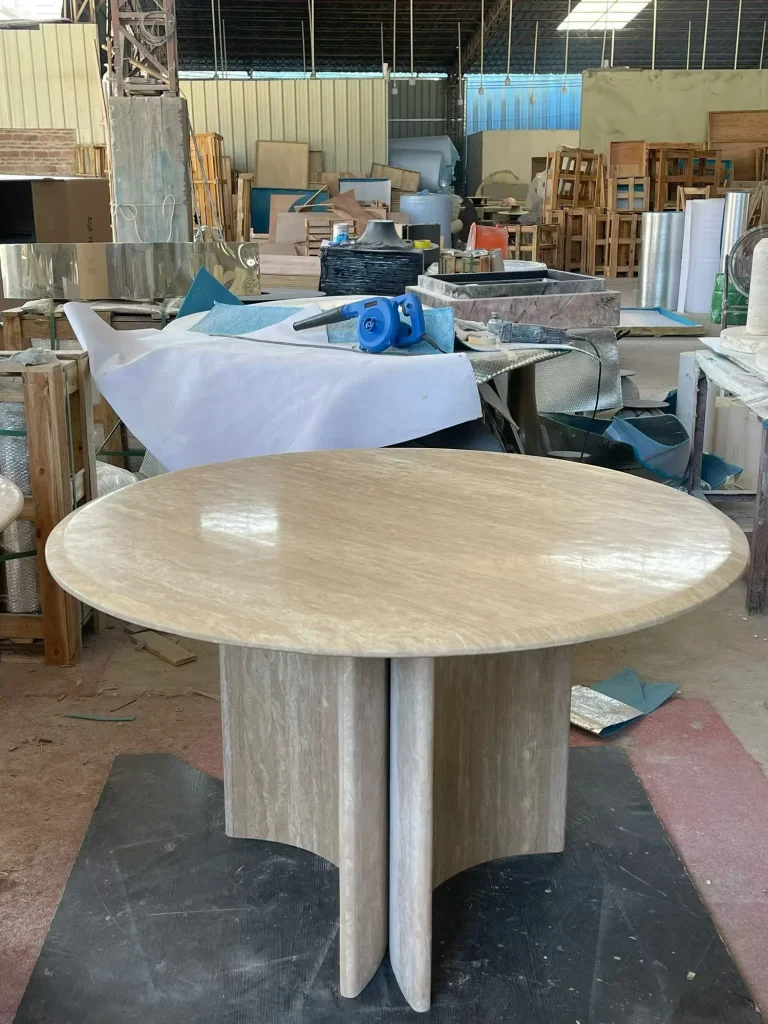
Marble handles brief contact with a warm mug, but it is not a hot-pan surface: calcite is about 3 on the Mohs scale and carbonate stone can etch or crack under localized heat. Use a dry trivet whenever cookware or an oven dish comes from the stove.
Which everyday heat situations need protection?
Use a trivet for any object that is hot enough to require a kitchen cloth. The action table focuses on the failure you are trying to prevent, not on an unverified temperature rating.
| Situation | Main risk | Safe working practice |
|---|---|---|
| Warm mug or teapot | Liquid ring more than simple warmth | Use a coaster with a dry base and wipe spills |
| Pan from the stove | Localized heat and thermal stress | Always use a dry, heat-resistant trivet |
| Oven dish | Large hot contact area and finish damage | Move to a trivet and let it cool gradually |
| Open flame or heating element | Extreme local heat; no tabletop protection | Never place either on or under a marble top |
| Cold water on a hot spot | Abrupt temperature change | Let the surface cool naturally before cleaning |
Why is marble not automatically heat-proof?
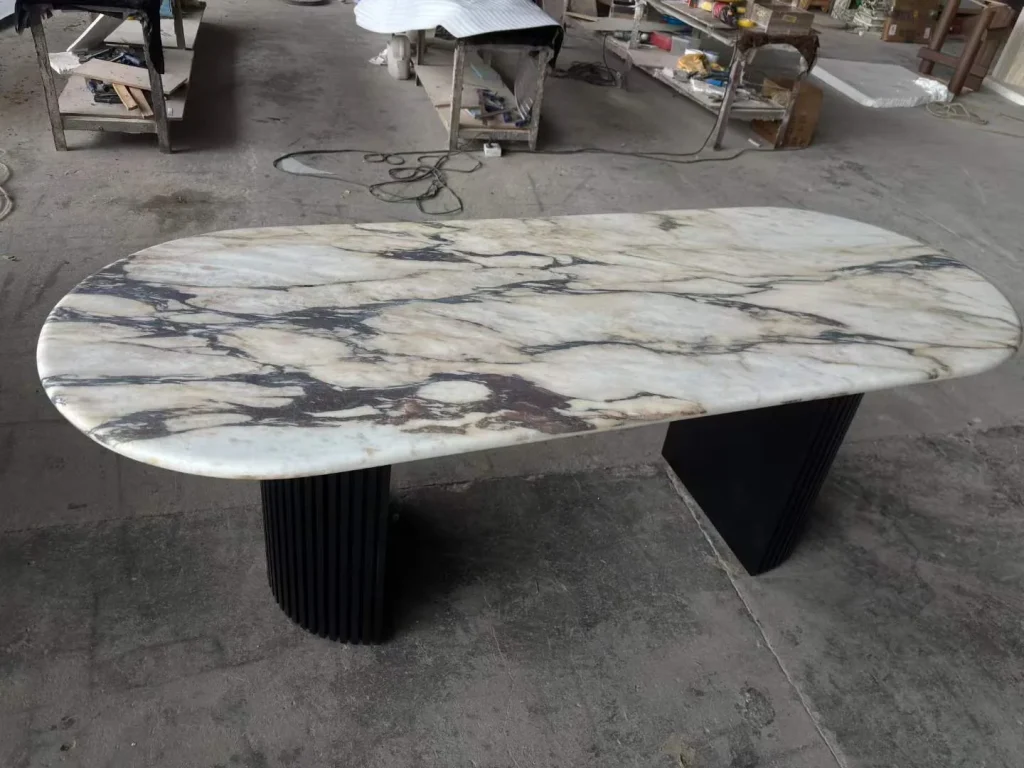
Marble is a carbonate stone, usually rich in calcite, and its response to heat depends on the whole assembly. A direct hot object creates a temperature difference between the heated face, cooler interior and nearby surface. That differential produces stress in brittle material.
What is the difference between warmth and thermal shock?
Warmth spreads gradually; thermal shock describes a sudden temperature change that creates internal stress. A room-temperature mug is a different condition from an oven dish or a hot pan. The larger and faster the local change, the more important it is to isolate the stone from the heat source.
The general mechanism is described in the thermal shock reference: different parts expand differently, producing strain, which can lead to fracture when the material cannot accommodate it. There is no single threshold that applies to every marble, thickness and backing.
Why can a hot pan be worse than a hot drink?
A pan can transfer heat over a broad, high-temperature contact area. Its base may also scratch or leave residue. A dry trivet separates the heat source and spreads the load; a folded towel can transfer heat, trap moisture and become a slip or fire risk near a hot pan.
Do not put a hot pan on the marble merely because the stone looks solid. A visible mark can be a burn in the finish rather than a change in the calcite, and resin-filled areas or backing may respond differently from the face.
Does a sealer or finish protect against heat?
Sealers are mainly used for liquid absorption, not heat resistance. A polished surface can show a dull heat mark more clearly, while a honed finish may conceal it less predictably. Ask for the heat limits of the sealer, filler, resin and any backing as separate products.
Does thickness change the answer?
Thickness is a construction decision, not a temperature rating. A 20 mm and 30 mm top can use different support and handling, but neither should be assumed safe for direct cookware contact. Compare the supplier’s test data and keep the same dry-trivet routine.
How can you verify heat performance before choosing a marble table?
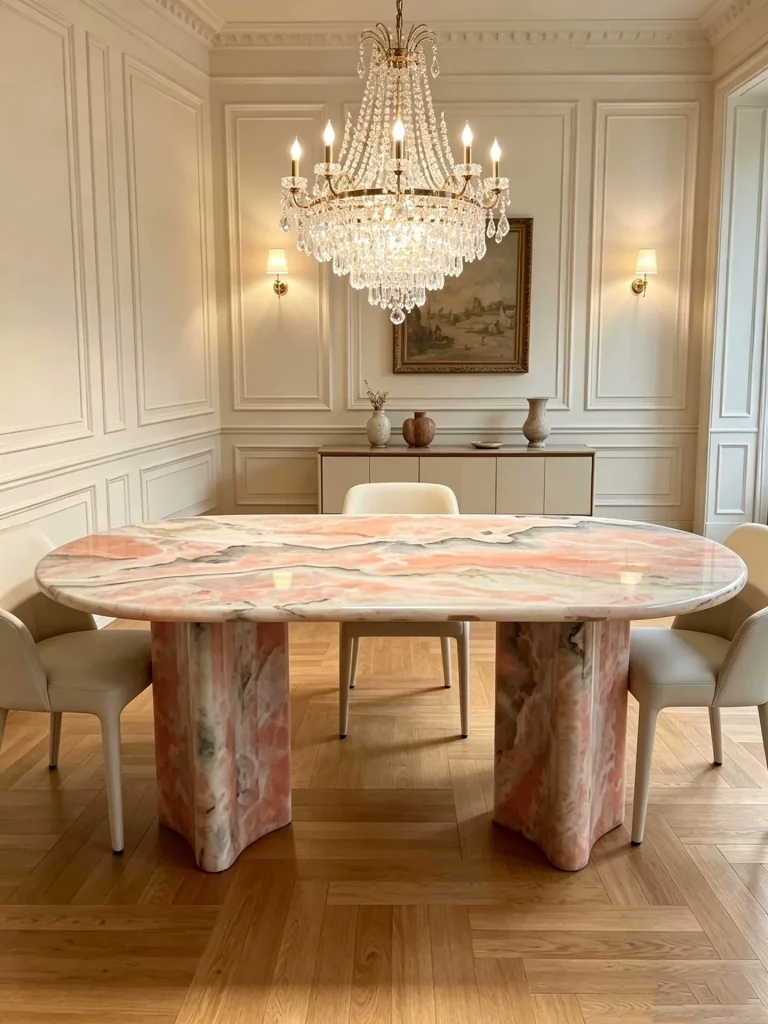
Appearance, density and acid guidance cannot establish a maximum safe contact temperature. Ask the supplier for heat or thermal-shock evidence for the exact stone, filler or resin, finish and backing, and check that the evidence matches the proposed specification.
Until that evidence is supplied, do not treat the marble name as proof that direct hot-pan contact is safe. Use a dry, heat-resistant trivet and approve any higher-temperature use against the written specification.
How should a marble table be protected in daily use?
Protect the top by controlling the object, the contact layer and the cooling rate. These protective steps apply to coffee and dining tables even when the stone has a sealer or a filled surface.
- Put a dry, heat-resistant trivet on the table before moving a hot pan or oven dish.
- Use a coaster whenever a mug, teapot or carafe may have a damp or staining base.
- Let cookware cool on the trivet rather than moving it onto a cold surface.
- Never pour cold water onto a hot region or use the tabletop as a cooling rack.
- After cooling, wipe with a pH-neutral stone product and inspect for dulling, residue or a new crack.
Which marble furniture pages explain the other risks?
The marble family guide explains carbonate stone and acid sensitivity. The tabletop thickness guide covers support and weight, while marble coffee tables and marble dining tables show the furniture contexts where heat exposure is most common.
Use the stone furniture weight calculator when thickness changes the handling plan. Heat protection remains separate from structural calculations: a supported top can still be damaged by a hot spot.
FAQ
Can I put a hot pan directly on a marble table?
No. Use a dry, heat-resistant trivet whenever cookware comes from the stove or oven. Marble can experience thermal stress when one area is much hotter than another, and its finish, filler or backing may tolerate direct heat less well than the stone. A towel is not a reliable barrier.
Will a hot mug leave a mark on marble?
The mug’s warmth is not the only possible cause. A ring can come from moisture, coffee, tea or another liquid that reaches the surface. Use a coaster under a mug with a damp or stained base, wipe the table promptly, and keep acidic drinks away from an unsealed marble surface.
Does heat make marble crack?
Heat can contribute to cracking through thermal stress, especially when a hot spot produces a sharp temperature difference across the stone. Chips, existing cracks, unsupported edges and abrupt cooling increase the risk. There is no universal safe temperature for every commercial marble and finish, so keep hot objects on a trivet.
Does sealing make marble heat-proof?
No. A penetrating sealer mainly helps limit liquid absorption; it is not a heat shield. It also does not stop acid etching or thermal stress. Confirm compatibility and heat limits for the sealer, filler, resin and backing separately, because those materials may have narrower tolerances than the stone.
Is thicker marble more resistant to heat?
Thickness is not a heat rating. A thicker top changes heat capacity, weight and support, and may influence how quickly a region heats, but the commercial slab, finish, repairs and backing still require testing. Use a trivet and review any measured heat test rather than relying on 20 mm versus 30 mm labels.
Sources, internal links and review note
- Thermal shock — temperature-gradient stress and brittle fracture.
- Marble — carbonate composition and acid reaction.
- Mohs scale — calcite hardness reference.
- Natural Stone Institute — stone-care guidance.